
Rock chips on your windshield or painted body panels are easy to ignore, but leaving them untreated turns a minor fix into a costly repair. A small chip can spread into a full windshield crack, or expose bare metal that rusts through surrounding paint within weeks.
This guide walks through why rock chips happen, how to tell if you need a repair or a full replacement, what the process actually involves, and what you should realistically expect to pay.
What Causes Rock Chips on Your Windshield and Paint
Rock chips happen when small debris, gravel, sand, or loose asphalt gets kicked up by tires and strikes your vehicle at speed. Highway driving, construction zones, and gravel or unpaved roads are the most common culprits, since higher speeds and looser road surfaces send more debris airborne.
Windshields take the brunt of the damage because they sit directly in the path of flying debris from vehicles ahead. Glass absorbs the impact differently than metal, which is why a small pebble can create a chip, crack, or star break instead of just a scratch. Painted panels like the hood, front bumper, fenders, and side mirrors are also vulnerable, especially on vehicles that spend a lot of time following trucks or driving on rural roads.
Several factors increase the odds of getting hit:
- Following distance that’s too close, especially behind trucks or gravel haulers
- Driving on freshly paved or chip-seal roads
- High speeds on highways and interstates
- Older windshields with existing pitting, which are more prone to chipping
- Temperature swings that stress glass already weakened by minor damage
Understanding where these chips come from makes it easier to spot early warning signs before a small chip becomes a bigger repair job.
How to Tell If a Rock Chip Needs Repair or Replacement
Not every chip requires the same fix, and knowing the difference can save you both money and time. Repair shops generally evaluate windshield damage based on size, depth, location, and how many chips or cracks are present.
| Factor | Likely Repairable | Likely Needs Replacement |
| Chip size | Smaller than a quarter (about 1 inch) | Larger than 1 inch or spreading |
| Crack length | Under 3 inches | Longer than 3 inches |
| Location | Outside the driver’s direct line of sight | Directly in the driver’s sightline |
| Number of chips | One or two isolated chips | Multiple chips or a cluster |
| Depth | Surface-level, hasn’t penetrated the inner layer | Reaches through both layers of glass |
| Edge proximity | At least 2 inches from the windshield edge | Near the edge, where structural integrity is compromised |
For paint chips on body panels, the decision is usually simpler. If the chip hasn’t reached bare metal, a touch-up or spot repair is often enough. If the metal underneath is exposed and starting to show rust, a more involved repair, including sanding, priming, and repainting, is typically necessary to stop corrosion from spreading.
Once you’ve identified the type and severity of the damage, the next step is understanding what the actual repair process looks like.
Windshield Rock Chip Repair: Process and What to Expect
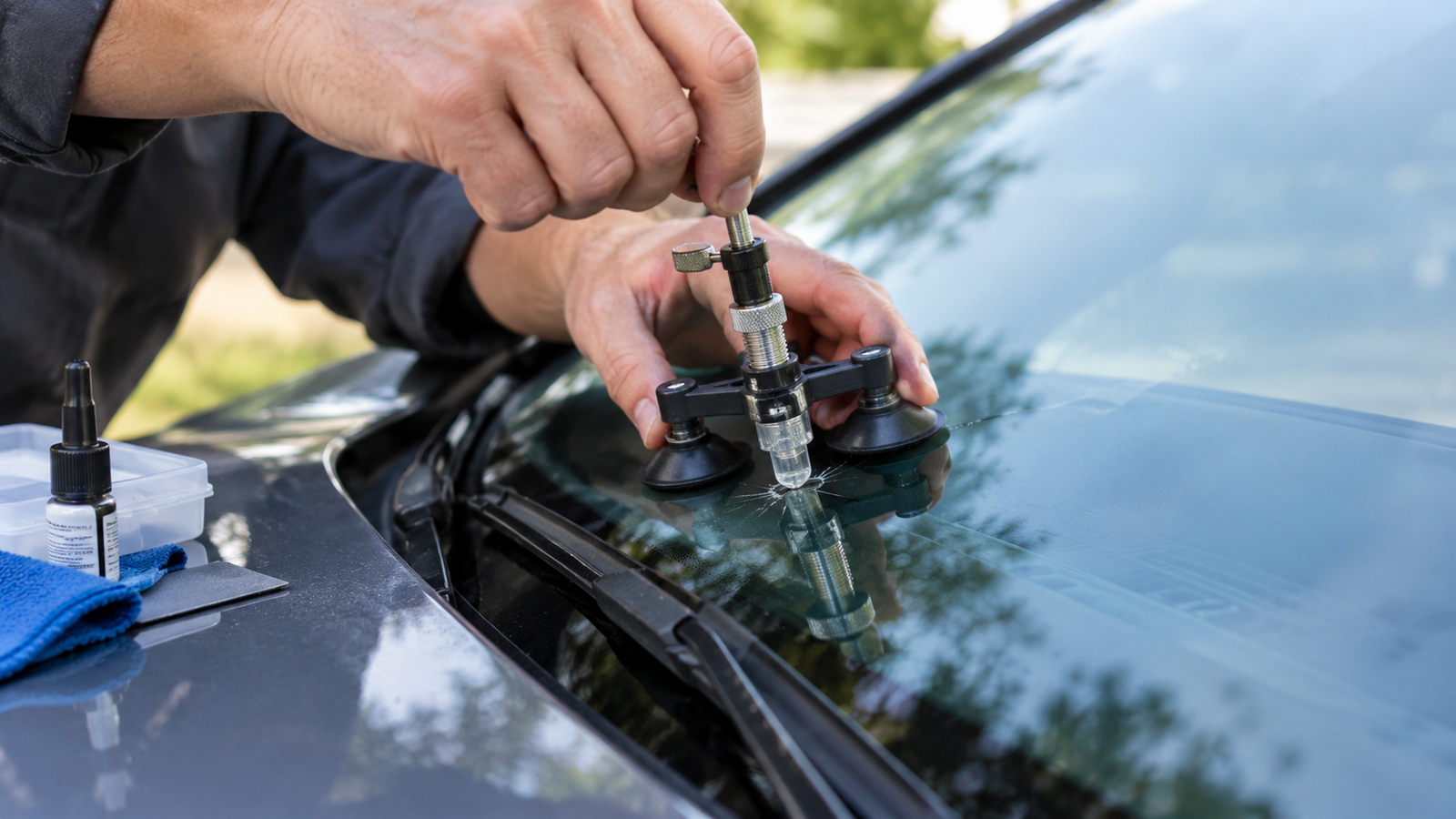
Modern windshield chip repair is a quick, non-invasive process that most auto glass shops and mobile technicians can complete in 20 to 30 minutes. The technique uses a resin injection system designed to restore clarity and structural strength.
The typical process includes:
- Cleaning the chip to remove dirt and debris from the damaged area
- Drilling a small pilot point if needed, to help resin reach the deepest part of the break
- Applying UV-curing resin using a specialized injector tool that removes trapped air and fills the crack
- Curing the resin with ultraviolet light, which hardens it and bonds it to the glass
- Polishing the surface so the repair sits flush with the rest of the windshield
A well-executed repair restores most of the windshield’s strength and significantly improves visibility, though a faint mark may still be visible. Many shops, including national chains like Safelite AutoGlass, offer mobile service so the repair can be done in a driveway or office parking lot.
If the damage is too extensive for resin repair, a full windshield replacement becomes necessary. This involves removing the damaged glass, cleaning the frame, applying new urethane adhesive, and installing OEM or aftermarket glass, followed by a curing period before the vehicle is safe to drive.
While windshield repair addresses glass damage, paint chips require a completely different set of tools and techniques.
Paint Chip Repair Options for Your Car’s Body
Paint chips are cosmetic but can lead to rust if ignored, especially in regions with road salt or high humidity. Repair options range from simple do-it-yourself fixes to full professional refinishing.
Touch-up paint pens and bottles work well for small, isolated chips. These kits typically include a color-matched paint layer and a clear coat, applied directly to the chip with a fine brush or pen tip. This method is best for chips smaller than a pencil eraser.
Paint correction and blending is used when several small chips are scattered across a panel. A technician wet-sands the area, applies primer and matched base coat, then blends the clear coat into the surrounding paint so the repair isn’t noticeable.
Full panel repaint becomes necessary when chips are widespread, deep, or have already caused surface rust. This involves stripping the affected panel, treating any corrosion, applying primer, base coat, and clear coat, then color-sanding and buffing for a seamless finish.
- Small, scattered chips without rust: touch-up kit or spot blending
- Chips exposing bare metal: rust treatment plus primer and paint
- Widespread chipping across a panel: full panel repaint recommended
- Chips on high-visibility areas like the hood: professional blending for the best cosmetic match
With repair options covered, the next logical question is what all of this actually costs.
Rock Chip Repair Costs: What You Can Expect to Pay
Repair costs across southwest Missouri run slightly below national averages. Body shop labor in this region typically runs $50 to $90 per hour, compared to the national range of $60 to $110, making quality repairs more accessible than in larger Missouri metros like St. Louis or Kansas City. Here’s what drivers across all eight of our service areas realistically pay.
| Repair Type | Missouri Price Range | Notes |
| Single windshield chip repair | $50 – $130 | Standard range across all 8 service areas |
| Multiple chips (same visit) | $15 – $35 per additional chip | Discounted per-chip rate when bundled |
| Full windshield replacement | $180 – $450 | Standard vehicles; OEM or aftermarket glass |
| Windshield replacement with ADAS recalibration | $280 – $850 | Required on vehicles with lane-keep assist or auto braking |
| DIY touch-up paint kit | $10 – $30 | Available at O’Reilly Auto Parts and AutoZone locations across the region |
| Professional paint chip repair (mobile technician) | $50 – $150 per chip | Covers all 8 service areas |
| Professional paint chip blending (body shop) | $100 – $300 per panel | Includes color matching and clear coat blending |
| Full panel repaint | $300 – $900 per panel | Necessary when rust or widespread chipping is present |
Missouri drivers benefit from labor rates approximately 9% below the national average. The same repair that costs $150 in St. Louis typically runs $50 to $130 across our southwest Missouri service area.
Rock Chip Repair Cost in Nixa, MO
Nixa drivers have solid access to both shop-based and mobile repair services, thanks to the area’s steady residential growth and proximity to the Springfield corridor.
What Nixa drivers typically pay:
- Windshield chip repair: $50 – $120
- Full windshield replacement: $180 – $430
- Paint chip repair (mobile): $50 – $140 per chip
- Paint chip blending (body shop): $100 – $280 per panel
- Full panel repaint: $300 – $850
Nixa residents with comprehensive auto insurance can often get windshield chip repairs covered at $0 out of pocket. Missouri does not mandate deductible waivers for glass repair, so confirm your coverage terms with your provider before booking.
Rock Chip Repair Cost in Springfield, MO
Springfield has the highest concentration of auto glass and body repair shops in southwest Missouri, which drives competitive pricing and faster appointment availability across the city.
What Springfield drivers typically pay:
- Windshield chip repair: $50 – $130
- Full windshield replacement: $180 – $450
- Windshield replacement with ADAS recalibration: $280 – $850
- Paint chip repair (mobile): $55 – $150 per chip
- Paint chip blending (body shop): $100 – $300 per panel
- Full panel repaint: $300 – $900
Springfield is home to national providers like Safelite AutoGlass, which works directly with most Missouri insurance carriers. Vehicles with advanced driver assistance systems, increasingly common on newer Springfield-area trucks and SUVs, should budget for ADAS recalibration costs on top of replacement pricing.
Rock Chip Repair Cost in Ozark, MO
Ozark residents have convenient access to repair services through both local shops and Springfield-area providers, keeping pricing competitive and wait times manageable.
What Ozark drivers typically pay:
- Windshield chip repair: $50 – $120
- Full windshield replacement: $185 – $440
- Paint chip repair (mobile): $50 – $140 per chip
- Paint chip blending (body shop): $100 – $275 per panel
- Full panel repaint: $300 – $875
Ozark’s mix of highway commuters and rural road drivers means rock chips are especially common here. Chip-seal road surfaces on county routes around the Finley River area are a frequent culprit, acting quickly on new chips before temperature swings cause them to spread is particularly important in this area.
Rock Chip Repair Cost in Republic, MO
Republic’s fast-growing residential base has brought more service providers to the area, keeping repair costs in line with the broader southwest Missouri market.
What Republic drivers typically pay:
- Windshield chip repair: $50 – $120
- Full windshield replacement: $180 – $430
- Paint chip repair (mobile): $50 – $135 per chip
- Paint chip blending (body shop): $100 – $270 per panel
- Full panel repaint: $295 – $860
Republic drivers commuting on Highway 60 and James River Freeway are regularly exposed to highway debris from trucks and construction traffic, two of the most common sources of windshield and paint chip damage in the region.
Rock Chip Repair Cost in Battlefield, MO
Battlefield sits between Springfield and Republic, giving residents straightforward access to the full range of southwest Missouri repair options without long drives.
What Battlefield drivers typically pay:
- Windshield chip repair: $50 – $120
- Full windshield replacement: $180 – $430
- Paint chip repair (mobile): $50 – $135 per chip
- Paint chip blending (body shop): $100 – $270 per panel
- Full panel repaint: $295 – $860
Mobile repair technicians serving the Battlefield area offer a convenient alternative to shop visits for minor chip repairs, particularly useful for drivers who can’t leave their vehicle at a shop during the workday.
Rock Chip Repair Cost in Rogersville, MO
Rogersville drivers typically access repair services through Springfield-area shops, where the same competitive regional labor rates apply. Mobile technicians covering this corridor may add a modest travel fee.
What Rogersville drivers typically pay:
- Windshield chip repair: $55 – $130
- Full windshield replacement: $190 – $450
- Paint chip repair (mobile): $60 – $150 per chip
- Paint chip blending (body shop): $110 – $285 per panel
- Full panel repaint: $310 – $875
Rogersville’s rural road network sees significant gravel and loose surface debris, making rock chips more frequent here than in more urbanized parts of the service area. Prompt repair is especially important, Missouri’s seasonal temperature swings cause untreated chips to spread faster than in more temperate climates.
Rock Chip Repair Cost in Strafford, MO
Strafford sits just east of Springfield along Interstate 44, giving residents quick access to the Springfield repair market. I-44 traffic and construction activity in this corridor are frequent sources of windshield damage.
What Strafford drivers typically pay:
- Windshield chip repair: $55 – $130
- Full windshield replacement: $185 – $445
- Paint chip repair (mobile): $55 – $145 per chip
- Paint chip blending (body shop): $105 – $280 per panel
- Full panel repaint: $305 – $875
Drivers along the I-44 corridor near Strafford are particularly exposed to debris from commercial truck traffic. Following distance on this stretch of interstate directly affects how often windshield chips occur, and how frequently you’ll need repair service.
Rock Chip Repair Cost in Willard, MO
Willard residents have convenient access to Springfield-area shops to the southeast, with mobile technicians also regularly serving this part of the region.
What Willard drivers typically pay:
- Windshield chip repair: $55 – $130
- Full windshield replacement: $185 – $445
- Paint chip repair (mobile): $55 – $145 per chip
- Paint chip blending (body shop): $105 – $280 per panel
- Full panel repaint: $305 – $880
Willard’s exposure to northwest Missouri wind patterns means road debris can travel farther and faster than in more sheltered parts of the service area. Paint chips that expose bare metal should be addressed before winter, road salt used during Missouri ice events accelerates rust formation significantly on untreated chips.
DIY Rock Chip Repair Kits vs Professional Repair
DIY windshield repair kits are widely available at auto parts retailers and typically cost between $10 and $20. They include a basic resin, an adhesive pedestal, and a syringe-style injector. The table below compares how DIY and professional repair stack up across the factors that matter most.
| Factor | DIY Repair Kit | Professional Repair |
| Cost | $10 to $20 per kit | $50 to $150 per chip |
| Best suited for | Very small, shallow chips | Any size, especially larger or deeper chips |
| Resin quality | Basic, slower-curing resin | Higher-grade, faster-curing resin |
| Air removal | Manual injection, less effective | Vacuum-based injection, removes air more thoroughly |
| Risk of spreading | Higher if resin doesn’t fully fill the chip | Lower, due to better bonding and technique |
| Workmanship warranty | None | Often guaranteed against further cracking |
| Tool precision | Prone to overdrilling or resin discoloration | Purpose-built tools reduce these risks |
| Ideal use case | Temporary stabilization until a proper repair | Long-term, reliable fix |
For paint, DIY touch-up pens are fine for minor cosmetic chips, but color matching can be tricky since factory paint often has subtle variations by production batch. Professional shops use spectrophotometer tools to match paint precisely, which typically produces a more seamless result.
Regardless of which route you choose, it’s worth checking whether your insurance policy can help offset the cost before paying out of pocket.
Does Insurance Cover Rock Chip Repair?
Many comprehensive auto insurance policies cover windshield rock chip repair, often with no deductible at all. Comprehensive coverage, unlike collision coverage, applies to damage from road debris, weather, and other non-collision events.
Key points to understand:
- Comprehensive coverage typically covers windshield chip repair and replacement, though replacement may be subject to your deductible.
- Some states, including Florida, Kentucky, and South Carolina, have laws requiring insurers to waive the deductible specifically for windshield repair.
- Filing a claim for a simple chip repair rarely raises your premium, since it’s a low-cost claim, but replacement claims can sometimes be treated differently depending on the insurer.
- Paint chip repair is less commonly covered unless it resulted from a specific covered event, such as a hailstorm or a falling object.
It’s worth calling your insurance provider directly, since coverage details vary by state and by policy. Once you know your coverage, prevention becomes the next best investment to reduce future claims and repair costs.
How to Prevent Rock Chips While Driving
While no vehicle is completely immune to rock chips, a few habits and products can meaningfully reduce your risk.
Increase Your Following Distance
Keeping extra space between your vehicle and the one ahead, especially trucks, trailers, and vehicles hauling gravel or construction materials, gives debris more time to fall before it reaches your windshield or hood.
Avoid Driving Directly Behind Vehicles on Gravel or Chip-Seal Roads
Freshly paved chip-seal surfaces and unpaved gravel roads kick up loose stones more easily. Shifting lanes slightly or hanging back further on these road types reduces your exposure.
Apply a Windshield Protection Film
A clear polyurethane film applied to the windshield acts as a buffer layer, absorbing the impact of small debris before it reaches the glass itself. It’s a low-cost, largely invisible upgrade for drivers who log a lot of highway miles.
Use Paint Protection Film (PPF) on Exposed Panels
The hood, front bumper, and side mirrors take the brunt of road debris impacts. Paint protection film on these panels shields the factory finish and can be removed or replaced without affecting the underlying paint.
Keep Your Windshield Well-Maintained
Existing pits and micro-scratches weaken the glass structure, making it easier for a new impact to turn into a spreading crack. Regular cleaning and prompt attention to minor wear help the glass hold up better over time.
Replace Worn Wiper Blades
Worn or cracked wiper blades can drag debris across the glass surface instead of clearing it. On a windshield with existing minor damage, this dragging motion can turn a small chip into a larger crack.
These habits won’t eliminate risk entirely, but they meaningfully lower how often you’ll need repairs. Still, it’s worth understanding what happens if a chip does slip through and gets ignored.
What Happens If You Ignore a Rock Chip
Delaying a rock chip repair rarely makes the problem go away, and in most cases, it gets worse. Temperature changes cause glass to expand and contract, which puts pressure on existing chips and often causes them to spread into full cracks. A crack that reaches the edge of the windshield compromises structural integrity, since the windshield contributes to the vehicle’s overall crash resistance.
For paint chips, moisture and road salt can seep into exposed metal, starting a rust cycle that spreads under the surrounding paint. What could have been a $20 touch-up often becomes a several-hundred-dollar panel repair once corrosion sets in.
There’s also a practical cost consideration: many shops will repair a small chip for free or a nominal fee if you have insurance coverage, but once it becomes a crack requiring full replacement, you’re often responsible for a deductible. Acting quickly is almost always the more affordable path.
Final Thought
Rock chips are one of those small annoyances that are far cheaper to deal with early than to ignore. A quick resin repair or a touch-up paint application, often costing less than $150, can prevent the need for a full windshield replacement or panel repaint down the road. Check your chip’s size and location, look into your comprehensive insurance coverage, and get it addressed within a few days of noticing it. That single step can save you both money and the hassle of a bigger repair later.
FAQs
How Long Can I Drive With A Windshield Chip Before It Needs Repair?
There’s no strict timeline, but most technicians recommend repairing a chip within a few days to a couple of weeks. Temperature swings, humidity, and road vibration can cause a stable chip to spread into a crack surprisingly fast, especially in areas with hot days and cool nights.
Can A Rock Chip Repair Fail?
Yes, though it’s uncommon with professional repairs. Failure can happen if the resin doesn’t fully cure, if the chip was too deep or contaminated with dirt before repair, or if the vehicle experiences a significant temperature shock shortly after the repair. Most reputable shops offer a warranty that covers further cracking of a repaired chip.
Does A Small Rock Chip Affect My Car’s Resale Value?
A single small, professionally repaired chip usually has minimal impact on resale value. However, multiple unrepaired chips, visible cracks, or paint chips with rust can noticeably lower a buyer’s or appraiser’s assessment, since they signal deferred maintenance.
Is It Safe To Drive With A Chipped Windshield?
It depends on the chip’s size and location. A small chip outside your direct line of sight is generally safe for short-term driving, but any crack longer than a few inches, or damage near the edge of the glass, can compromise structural strength and should be addressed before continued driving.
Will My Insurance Rates Go Up If I File A Claim For A Rock Chip?
Comprehensive claims for chip repairs are typically low-cost and rarely trigger a rate increase, since insurers view road debris damage as outside the driver’s control. Frequent claims of any kind, however, can affect renewal pricing over time, so it’s worth checking your specific policy’s history clause.
Can I Repair A Rock Chip Myself With A Kit From An Auto Parts Store?
Yes, for small, shallow chips, a DIY kit can work reasonably well as a temporary or permanent fix. For larger or deeper damage, or chips located in the driver’s line of sight, professional repair is recommended for better clarity and long-term durability.
How Much Does It Cost To Fix A Rock Chip In Car Paint?
Minor paint chip repair using a touch-up pen typically costs $10 to $30 if done yourself, while professional spot blending runs $75 to $250 per panel. Full panel repainting, often needed when rust has developed, generally costs $300 to $900 depending on the vehicle and panel size.
What’s The Difference Between A Windshield Chip And A Windshield Crack?
A chip is a small, localized impact point where a piece of glass has broken away or fractured without spreading. A crack is a line that extends across the glass, sometimes originating from an untreated chip. Chips are generally repairable, while long cracks usually require full replacement.
Do All Auto Glass Shops Offer Mobile Rock Chip Repair?
Many national and regional auto glass companies, including Safelite AutoGlass and various local shops, offer mobile repair services where a technician comes to your home or workplace. This is convenient for chip repairs, which take less time and don’t require special equipment beyond what fits in a service van.
Can Rock Chips Be Prevented With A Windshield Protection Film?
Yes, clear polyurethane protection films are designed to absorb minor impacts from small debris, reducing the frequency and severity of chips. They’re a worthwhile investment for drivers who frequently travel on highways, gravel roads, or areas with heavy truck traffic.