
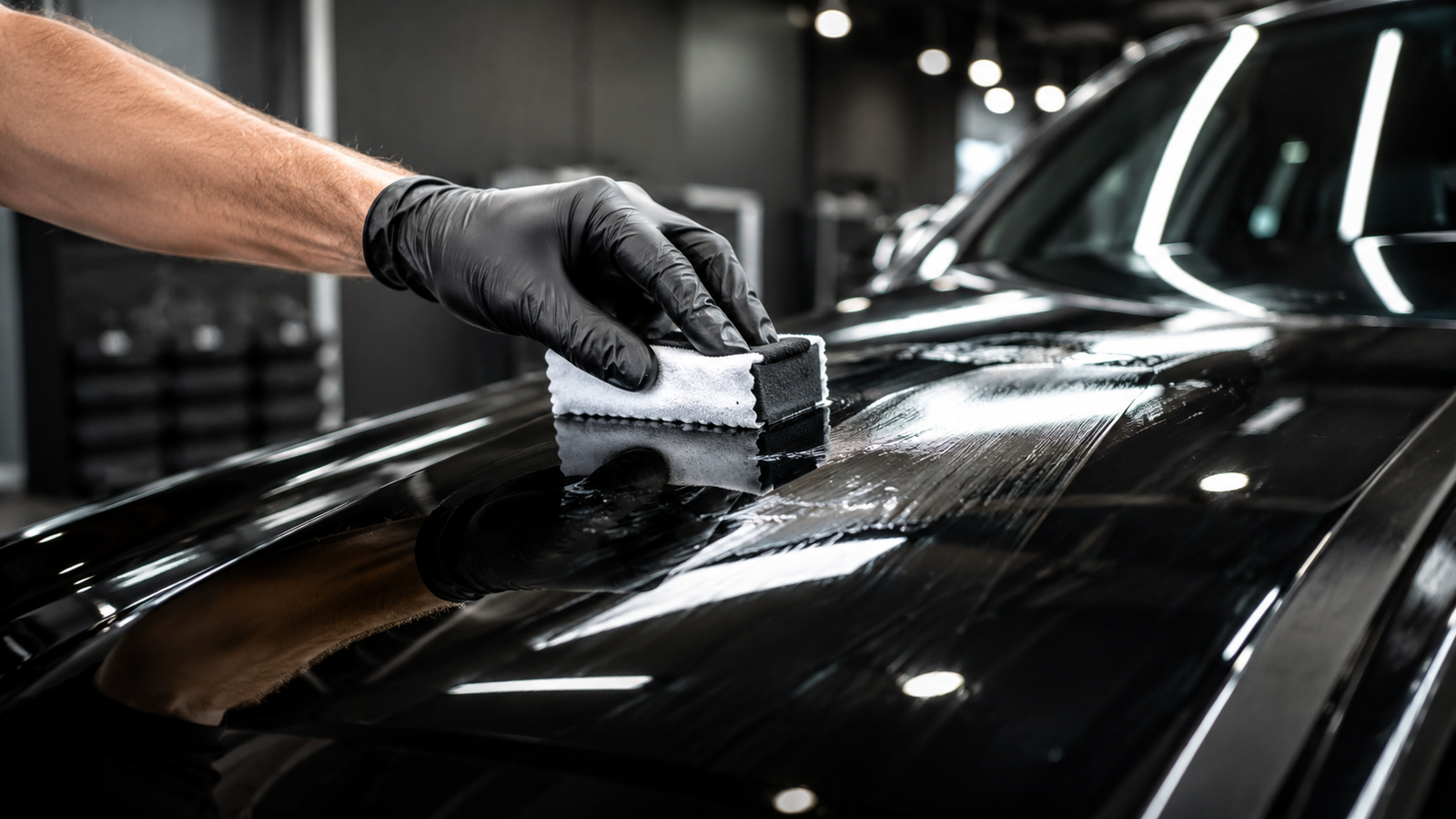
Missouri weather is brutal on vehicle paint, scorching summers, icy winters, and road salt create a year-round battle. Ceramic coating offers a powerful, long-lasting defense against all of it. This guide covers everything Missouri drivers need to know, whether ceramic coating is worth the investment, what it costs, how long it lasts, and what to watch out for before booking an installer.
Is Ceramic Coating Worth It for Missouri Drivers?
Missouri weather puts vehicle paint through a genuine year-round test. Scorching summers, heavy road salt in winter, spring pollen, and freeze-thaw cycles break down traditional waxes and sealants far faster than most drivers realize.
Ceramic coating bonds directly to your clear coat at a molecular level, creating a semi-permanent hydrophobic barrier. Unlike traditional wax that fails within 2 to 3 months under Missouri’s harsh conditions, a professionally applied ceramic coating lasts 5 to 10 years with proper maintenance.
Drivers across southwest Missouri face different paint threats depending on their location and driving habits. The table below breaks down exactly what each community deals with and how ceramic coating addresses it directly.
| Location | Primary Paint Threats | How Ceramic Coating Helps |
| Nixa, MO | UV heat, pollen, tree sap, humidity | Hydrophobic barrier repels organic contaminants, UV blockers prevent oxidation |
| Springfield, MO | Industrial fallout, traffic grime, hail, road salt | Chemical resistance neutralizes fallout, hydrophobic surface speeds up winter cleaning |
| Ozark, MO | Freeze-thaw cycles, road salt, intense summer sun | Thermal-stable formula maintains integrity across all four seasons |
| Republic, MO | Gravel roads, agricultural dust, farm chemical overspray | Hardened ceramic layer minimizes micro-abrasions, repels chemical mists |
| Battlefield, MO | Road salt corrosion, UV fading, clear coat oxidation | UV blockers reflect harmful rays, hydrophobic surface prevents salt bonding |
| Rogersville, MO | Construction debris, gravel, heavily salted winter roads | Semi-permanent protection replaces repeated waxing, preserves resale value |
| Strafford, MO | Seasonal temperature extremes, spring pollen, ice and sleet | SiO2/TiO2 formula maintains structural integrity from below-freezing to peak summer heat |
| Willard, MO | Daily highway debris, bug impacts, road contaminants | Reduces wash time, prevents paint degradation from high-mileage commuter exposure |
For Missouri drivers across all of these communities, ceramic coating is not a luxury upgrade, it is practical, long-term armor for a climate that tests every product in the automotive care market every single year.
Key Advantages of Ceramic Coating for Missouri Drivers
Across all Missouri communities, Nixa, Springfield, Ozark, Republic, Battlefield, Rogersville, Strafford, Willard, and beyond the core advantages of ceramic coating remain consistent:
- Hydrophobic Effect: Water, mud, and road spray bead off instantly, keeping your vehicle cleaner between washes
- UV Protection: Blocks harmful ultraviolet rays that cause paint fading, oxidation, and clear coat degradation
- Chemical Resistance: Protects against road salt, bird droppings, tree sap, bug acids, and fuel spills
- Scratch Resistance: The 9H hardness rating of premium coatings adds meaningful resistance to light swirl marks and scratches
- Long Lifespan: Professional coatings last 5–10 years vs. 2–3 months for wax
- Enhanced Gloss: Produces a deep, candy-like shine that dramatically improves vehicle appearance
- Cost Efficiency: Reduces long-term detailing costs and helps preserve resale value
- Low Maintenance: pH-neutral washes are all that’s needed no waxing, no polishing, no seasonal re-application
Missouri’s climate is essentially a stress test for every product in the automotive care market. Ceramic coating consistently passes that test with flying colors pun intended.
Common Ceramic Coating Mistakes Missouri Vehicle Owners Should Avoid
Even the best ceramic coating can underperform if applied or maintained incorrectly. Missouri drivers should be aware of these common pitfalls:
1. Skipping paint correction before application
Ceramic coating locks in whatever is underneath it. If your paint has swirl marks, oxidation, or water spots, they will be permanently sealed under the coating. Always have paint correction performed first.
2. Choosing consumer-grade DIY kits without proper preparation
Many over-the-counter ceramic sprays marketed as “ceramic coatings” offer minimal protection. True ceramic coatings require isopropyl alcohol (IPA) panel wipes, IR curing lamps, and precise application temperatures typically 60°F 85°F which can be tricky in Missouri’s weather extremes.
3. Washing too soon after application
Most professional coatings require a 24-72 hour cure window without any water exposure. Missouri’s unpredictable spring and summer rain makes timing critical.
4. Using the wrong soap or automatic washes
Brush-type automatic car washes and dish soap will prematurely degrade your ceramic coating. Always use pH-neutral, ceramic-safe car wash products and opt for touchless washes only.
5. Expecting ceramic coating to be scratch-proof
Ceramic coating adds hardness and scratch resistance, but it is not scratch-proof. Deep scratches from keys or gravel will still penetrate the coating. Pair it with paint protection film (PPF) on high-impact areas for maximum protection.
6. Neglecting annual inspections
Even professional coatings benefit from annual professional inspections. Detailers can identify areas where the coating has thinned and apply topper products to extend service life.
Avoiding these mistakes ensures Missouri vehicle owners get the full value out of their ceramic coating investment.
Best Applications and Uses of Ceramic Coating in Missouri Weather Conditions
Ceramic coating isn’t just for sports cars and showroom vehicles. Here’s where Missouri drivers get the most value from the product:
- Daily drivers and commuter vehicles: These take the most abuse. Ceramic coating protects the paint of high-mileage commuters from highway bugs, road salt, and UV exposure every single day.
- Trucks and SUVs: Missouri’s pickup truck and SUV culture is strong. These vehicles frequently encounter gravel roads, job sites, and all-weather conditions all of which ceramic coating handles with ease.
- Classic and collector cars: For Missouri car show enthusiasts, ceramic coating preserves the pristine finish of classic vehicles between events while protecting against garage humidity and dust.
- New vehicles: Applying ceramic coating within the first 30 days of vehicle ownership is ideal before environmental contamination has a chance to bond to the fresh paint.
- Leased vehicles: Ceramic coating protects against the minor scratches and paint damage that result in costly lease-end charges, making it a financially wise choice for leasing customers.
- Wheels and glass: Beyond paint, ceramic coating can be applied to wheels to prevent brake dust and road salt corrosion, and to windshields to dramatically improve water beading and visibility in Missouri rainstorms.
No matter what you drive or how you use it, there’s a ceramic coating solution designed for your specific Missouri lifestyle.
Final Thoughts
Missouri’s climate doesn’t take it easy on vehicles and neither should you when it comes to paint protection. From the UV-saturated summers of Springfield to the salt-slicked winter roads of Ozark and the storm-prone springs across every corner of the state, ceramic coating stands alone as the most comprehensive, longest-lasting paint protection solution available.
Whether you’re in Nixa or Willard, Republic or Rogersville, Battlefield or Strafford, the investment in a professional ceramic coating is an investment in your vehicle’s appearance, longevity, and resale value. It’s not a luxury purchase, it’s smart automotive ownership.
If you’re ready to give your vehicle the protection it deserves, seek out a certified ceramic coating installer in the Springfield metro area, ask to see their portfolio, and get ready to fall in love with your vehicle all over again, one hydrophobic water bead at a time.
FAQs
How much does ceramic coating cost in Missouri?
Professional ceramic coating in Missouri typically ranges from $500 to $2,000 depending on vehicle size, coating tier (single-layer vs. multi-layer), and whether paint correction is needed beforehand. Entry level single-stage coatings start around $500, while premium 5–10 year packages for larger SUVs and trucks can reach $1,500–$2,000.
How long does ceramic coating last in Missouri’s climate?
A professionally applied ceramic coating in Missouri lasts 3–7 years on average, depending on coating quality, application conditions, and maintenance habits. High-grade coatings from reputable brands can last up to 10 years with proper care and annual inspections.
Does ceramic coating protect against road salt in Missouri winters?
Yes. Ceramic coating creates a hydrophobic barrier that causes road salt and brine to bead off rather than bonding to the paint surface. While it doesn’t provide complete corrosion protection for undercarriage components, it significantly reduces salt-related paint damage on body panels throughout Missouri’s winter season.
Can I apply ceramic coating myself, or do I need a professional?
DIY ceramic coating kits are available, but professional application is strongly recommended for optimal results. Proper application requires paint correction, meticulous panel preparation with IPA wipes, precise application temperatures, and often an IR curing lamp. Mistakes during DIY application can lock in paint defects or create high spots that require costly correction.
Will ceramic coating prevent scratches and chips on my vehicle?
Ceramic coating adds a hardened layer (rated up to 9H on the hardness scale) that resists minor swirl marks, light scratches, and wash-induced marring. However, it is not a replacement for paint protection film (PPF) when it comes to rock chips and deep scratches. For comprehensive protection, many Missouri vehicle owners combine ceramic coating with PPF on the front bumper, hood, and mirrors.
How do I maintain a ceramic-coated vehicle in Missouri?
Maintaining a ceramic coating in Missouri is simple: wash with a pH-neutral, ceramic-safe shampoo every 2–4 weeks, avoid automatic brush car washes (use touchless only), and apply a spray ceramic topper every 6–12 months to refresh hydrophobic properties. Annual professional inspections are also recommended.
Is ceramic coating worth it on older vehicles with existing paint damage?
It depends on the severity of existing damage. Minor swirl marks and light oxidation can be corrected before application. However, if a vehicle has significant rust, deep scratches, or heavily deteriorated clear coat, those issues must be addressed first; ceramic coating cannot repair damage, only protect against future damage. Consult a local detailer for a paint inspection before committing.
What’s the difference between ceramic coating and car wax?
Car wax is a temporary topical protectant that sits on top of paint and lasts 2–3 months before breaking down. Ceramic coating chemically bonds to the paint’s clear coat at a molecular level, creating a permanent (or semi-permanent) protective layer. Ceramic coating is significantly more durable, more hydrophobic, more resistant to UV and chemicals, and far longer-lasting than traditional wax.
Can ceramic coating be applied to more than just paint?
Absolutely. Ceramic coating can be applied to wheels (protecting against brake dust and road salt), windshields and glass (improving water beading and nighttime visibility in rain), plastic trim (preventing UV fading and graying), leather and fabric interiors (adding stain resistance), and even chrome accents. A comprehensive full-vehicle ceramic coating package offers protection from every angle.
How do I find a reputable ceramic coating installer near Springfield, MO?
Look for installers who are certified by the coating brand they use (e.g., Gtechniq, Ceramic Pro, IGL Coatings, XPEL Fusion). Ask to see before-and-after photos, verify they perform paint correction prior to application, and check Google and Facebook reviews from local customers. A legitimate installer will always conduct a thorough vehicle inspection and walk you through the process before beginning work.