
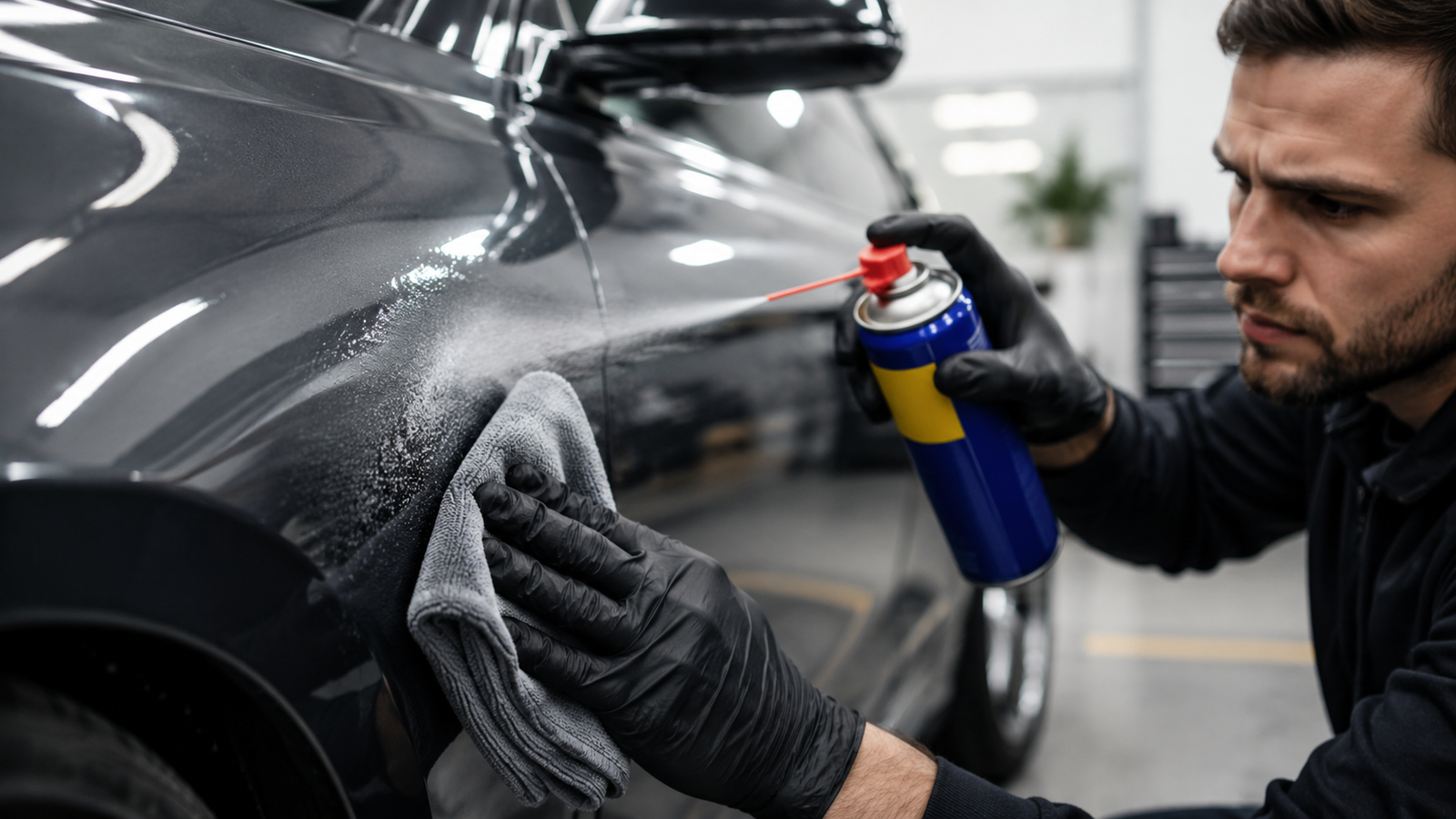
WD-40 is a versatile product commonly used for loosening rusted parts, stopping squeaks, and protecting metal surfaces. Many car owners wonder whether it is safe for automotive paint. The good news is that WD-40 is generally safe for most modern paint finishes when used correctly. It can effectively remove tar, tree sap, adhesive residue, and other stubborn contaminants without causing immediate damage.
However, problems may arise if it is left on the paint for too long or used as a replacement for proper car-care products. Understanding how WD-40 interacts with your vehicle’s finish is important before applying it. This guide explains its benefits, potential risks, proper usage methods, and alternative solutions to help maintain your car’s paint and appearance.
Is WD-40 Safe for Modern Automotive Paint Finishes?
For most modern vehicles with intact clear coat and factory paint, WD-40 is generally safe when used correctly and removed promptly. Modern automotive paint systems, typically consisting of a base coat and a protective clear coat layer, are reasonably resistant to short-term contact with petroleum-based products like WD-40.
The key word is short-term. A quick application to loosen tar, sap, or adhesive residue, followed by an immediate wipe-down and a proper car wash, poses minimal risk to a healthy paint finish. The product’s lubricating and solvent properties make it genuinely effective for removing stubborn contaminants that standard car shampoo can’t break down.
However, “safe” comes with important conditions:
- Intact clear coat is essential: WD-40 applied to a healthy, undamaged clear coat causes little to no harm with brief contact. The same cannot be said for oxidized, chipped, or heavily worn paint.
- Prompt removal is non-negotiable: The longer WD-40 sits on any paint surface, the greater the risk of wax and sealant degradation.
- Matte and satin finishes are exceptions: WD-40 is not safe for specialty matte or satin paint finishes under any circumstances. It creates permanent glossy patches that cannot be reversed without repainting.
- Surrounding materials matter: Even when the paint itself is unaffected, nearby rubber seals, plastic trim, and weather stripping are more vulnerable to petroleum-based products.
Used as an occasional spot treatment, not a routine product, WD-40 sits in a safe gray zone for modern automotive paint. The problems arise not from the product itself, but from improper use, prolonged exposure, or applying it to paint that isn’t in good enough condition to handle it.
When Using WD-40 on Car Paint Can Cause Problems
While occasional use is relatively harmless, there are specific situations where WD-40 can become a problem for your car’s exterior:
- Leaving It On Too Long
WD-40 left to sit on paint for hours or days can begin to break down wax and sealant layers. Over time, it may soften the surface and make it more vulnerable to contaminants, UV damage, and scratching.
- Using It on Older or Damaged Paint
Older vehicles with oxidized, chipped, or repainted surfaces are far more susceptible to damage from solvents. If the clear coat is already compromised, WD-40 can seep into micro-cracks and worsen the condition.
- Applying It Near Rubber Seals and Trim
WD-40 can cause rubber seals, weather stripping, and plastic trim to swell, crack, or discolor over time. While the paint may survive, surrounding components might not.
- Using Too Much Product
Over application creates a heavy oily film that traps dirt and can be difficult to fully remove. This residue buildup can cause swirl marks or dullness if scrubbed off without proper technique.
- Failure to Wash Afterward
Skipping a proper wash after using WD-40 is perhaps the most common mistake. The oily film it leaves behind will attract road grime, bird droppings, and dust, all of which can damage paint over time.
WD-40 becomes a problem not because of what it is, but because of how it’s used.
How to Safely Use WD-40 on Car Paint
If you decide to use WD-40 on your car’s paint, following the right process is essential to avoid any unintended damage:
- Step 1:
Work on a Cool, Shaded Surface: Never apply WD-40 on a hot car or in direct sunlight. Heat causes it to evaporate too quickly, leaving behind an oily residue that’s harder to clean. - Step 2:
Apply a Small Amount: Less is more. Spray a small amount onto a clean microfiber cloth rather than directly onto the paint. Direct spraying can result in overspray on tires, rubber seals, or brake components. - Step 3:
Gently Work It In: Use light, circular motions to work the WD-40 into the affected area whether it’s tar, sap, or a water stain. Don’t scrub aggressively. - Step 4: Wipe Off Thoroughly:
Once the contaminant is loosened, wipe the area clean with a fresh microfiber cloth immediately. Don’t let WD-40 sit on the surface. - Step 5: Wash the Area with Car Soap:
After wiping, wash the treated area with a pH-neutral car shampoo and water to remove all oily residue. Rinse thoroughly. - Step 6: Reapply Wax or Sealant:
WD-40 strips away any wax or paint sealant in the area. After washing, reapply a car wax or paint sealant to restore protection.
Following these steps ensures you get the benefit of WD-40 without compromising your paint’s finish or protection.
What Can WD-40 Remove from Car Paint?
WD-40 is surprisingly effective at removing a range of stubborn contaminants from car paint. Here’s a breakdown of what it can tackle:
| Contaminant | Effectiveness |
| Road tar & asphalt | Excellent |
| Tree sap | Excellent |
| Bird droppings | Very Good |
| Bug splatter | Very Good |
| Water spots / hard water stains | Good |
| Adhesive / sticker residue | Good |
| Light scuff marks | Moderate |
| Grease and grime | Good |
| Oxidation | Not effective |
| Deep scratches | Not effective |
| Paint swirl marks | Not effective |
WD-40 works best as a pre-cleaner for organic and sticky contaminants. It is not a polish, scratch remover, or oxidation treatment. For those issues, you’ll need dedicated automotive products.
Benefits of Using WD-40 on Your Vehicle’s Exterior
Despite its risks, WD-40 has several legitimate and proven uses on a vehicle’s exterior. When applied carefully and cleaned off afterward, it can be genuinely useful:
- Removes Water Spots: Hard water stains left by rain or sprinklers can be stubborn. WD-40 helps dissolve the mineral deposits behind these spots without scratching the paint surface.
- Loosens Tar and Asphalt Splatter: Road tar is notoriously difficult to remove and can cause scratches if scrubbed dry. WD-40 softens and loosens tar splatter, making it easy to wipe away safely.
- Removes Tree Sap: Fresh or hardened tree sap can bond to paint and attract dirt. A small amount of WD-40 applied to the sap breaks it down quickly without damaging the finish.
- Helps Remove Bird Droppings and Bug Splatter: Acidic bird droppings and bug residue can etch into paint if left too long. WD-40 helps loosen them for easier removal, reducing the risk of scratching during cleanup.
- Prevents Rust on Exposed Metal: On exposed metal areas, like door edges or underneath the vehicle, WD-40 provides a temporary barrier against moisture and rust.
- Removes Scuff Marks and Stickers: Stubborn bumper stickers, adhesive residue, and light scuff marks respond well to WD-40, coming off with minimal effort.
Used for these specific tasks, WD-40 is a handy tool in your vehicle care arsenal, just not a substitute for dedicated car care products.
Alternatives to WD-40 for Car Paint Care
While WD-40 can be useful in a pinch, there are purpose-built products that are safer, more effective, and designed specifically for automotive paint care:
Tar and Bug Remover Sprays
Products like Meguiar’s Bug and Tar Remover or Chemical Guys Bug & Tar Heavy Duty Car Wash Shampoo are formulated specifically for paint-safe removal of tar, sap, and bug splatter without stripping wax.
Isopropyl Alcohol (IPA)
Diluted IPA (around 10–15%) is excellent for removing adhesive residue, wax, and surface contaminants before polishing. It evaporates cleanly and leaves no residue.
Clay Bar Treatment
A clay bar used with a clay lubricant is one of the best ways to remove embedded contaminants like industrial fallout, tar spots, and overspray. It leaves paint smooth and ready for waxing.
Goo Gone Automotive
This adhesive remover is specifically formulated to be safe on car paint and is excellent for stickers, sap, and tar without the greasy residue of WD-40.
Detailing Sprays and Quick Detailers
For light dust, fingerprints, and minor grime, a quality quick detailer spray maintains shine and protection without the risks associated with petroleum-based products.
Paint Sealants and Ceramic Coatings
For long-term paint protection, a ceramic coating or polymer paint sealant far outperforms anything WD-40 can offer. These products bond to the clear coat and provide UV protection, hydrophobic properties, and chemical resistance.
Common Mistakes to Avoid When Applying WD-40
Even experienced car owners make these errors. Avoid them to protect your paint:
- Spraying Directly onto Paint: Direct spraying causes uneven application and risks getting WD-40 on rubber, plastic trim, or glass. Always spray onto a cloth first.
- Using It as a Substitute for Car Wax: Some people apply WD-40 thinking it will shine and protect their paint like wax. It doesn’t. It offers zero UV protection and will strip existing wax, leaving your paint more vulnerable.
- Forgetting to Wash After Use: This is the 1 mistake. The oily film WD-40 leaves behind attracts dirt and grime like a magnet. Always follow up with a proper car wash.
- Using It on Hot Paint: Applying WD-40 to a hot or sun-baked car causes it to dry unevenly and leaves a stubborn residue that’s difficult to remove.
- Using It on Matte or Satin Finishes: WD-40 is NOT safe for matte or satin paint finishes. It will create shiny patches and permanently alter the appearance of these specialty finishes.
- Applying to Cracked or Damaged Paint: Chipped, peeling, or cracked paint gives WD-40 an entry point that can worsen paint adhesion issues. Repair damaged areas before treating the surface.
- Using It Near Brake Components: Overspray near wheels can contaminate brake pads and rotors, creating a serious safety hazard. Be precise in your application.
Avoiding these mistakes will ensure you get the benefits of WD-40 without any costly consequences.
Final Thoughts:
WD-40 is a capable and versatile product that has a place in your car care kit but only as a situational tool, not a regular maintenance product. When used correctly, it can make quick work of tar, sap, and stubborn stains. When misused, it can strip wax, attract dirt, and leave your paint worse off than before. The safest approach is to use it sparingly, follow it up with a proper wash, and reach for dedicated automotive products whenever possible.
FAQs
Can WD-40 Damage Car Paint If Left On Overnight?
Yes, leaving WD-40 on your car’s paint overnight can cause damage. It strips away the protective wax layer, attracts dirt and grime, and may soften the clear coat over extended exposure. Always wipe it off immediately after use and follow up with a proper car wash.
Is WD-40 Safe To Use On A New Car’s Paint?
WD-40 can be used on a new car for specific tasks like removing tar or sap, but with extra caution. New car paint still has a fresh clear coat that should be protected. It’s safer to use purpose-built automotive cleaners on newer vehicles to avoid any risk of voiding paint warranties.
Will WD-40 Remove Scratches From Car Paint?
No, WD-40 does not remove scratches. It may temporarily make light surface scratches appear less visible by filling them with oil, but this effect disappears once cleaned. For actual scratch removal, you need a rubbing compound, polish, or professional paint correction service.
Can I Use WD-40 On Matte Car Paint?
Absolutely not. WD-40 is not safe for matte or satin finishes. It will create unwanted glossy patches and permanently alter the flat appearance of the paint. For matte finishes, always use products specifically labeled as matte-safe.
Does WD-40 Remove Car Wax?
Yes, WD-40 strips car wax. Because it is a petroleum-based solvent, it breaks down wax and paint sealants on contact. This is why it’s important to reapply wax or a paint sealant to any area treated with WD-40 after washing the car.
How Do I Remove WD-40 Residue From Car Paint?
To remove WD-40 residue, wash the treated area with a pH-neutral car shampoo and warm water. Use a clean microfiber cloth or wash mitt to gently clean the surface. Rinse thoroughly and dry with a soft cloth. If residue remains, a small amount of diluted isopropyl alcohol on a microfiber cloth can help.
Can WD-40 Remove Bird Droppings From Car Paint?
Yes, WD-40 is effective at loosening and removing bird droppings, especially dried ones. Spray a small amount on a microfiber cloth, gently dab the affected area, let it sit for 30 seconds, then wipe clean. Wash the area immediately afterward since bird droppings are acidic and WD-40 alone does not neutralize that acidity.
Is There A Better Alternative To WD-40 For Removing Tar From Car Paint?
Yes. Dedicated tar and bug remover sprays such as those made by Meguiar’s or Chemical Guys are safer and more effective for removing tar from car paint. They are pH-balanced, paint-safe, and designed to dissolve tar without stripping wax or leaving an oily residue behind.
Can WD-40 Cause Paint To Peel?
WD-40 is unlikely to cause paint to peel on a healthy, intact paint surface. However, on older vehicles with already compromised, cracked or chipped paint, prolonged exposure to WD-40 can worsen adhesion issues and accelerate peeling. Always inspect the paint condition before applying any solvent based product.
How Often Can I Safely Use WD-40 On My Car’s Exterior?
WD-40 should only be used on car paint as an occasional spot treatment, not as a regular maintenance product. Using it more than once or twice a month on the same area increases the risk of wax depletion and surface dullness. For routine car care, always opt for products specifically formulated for automotive paint.