
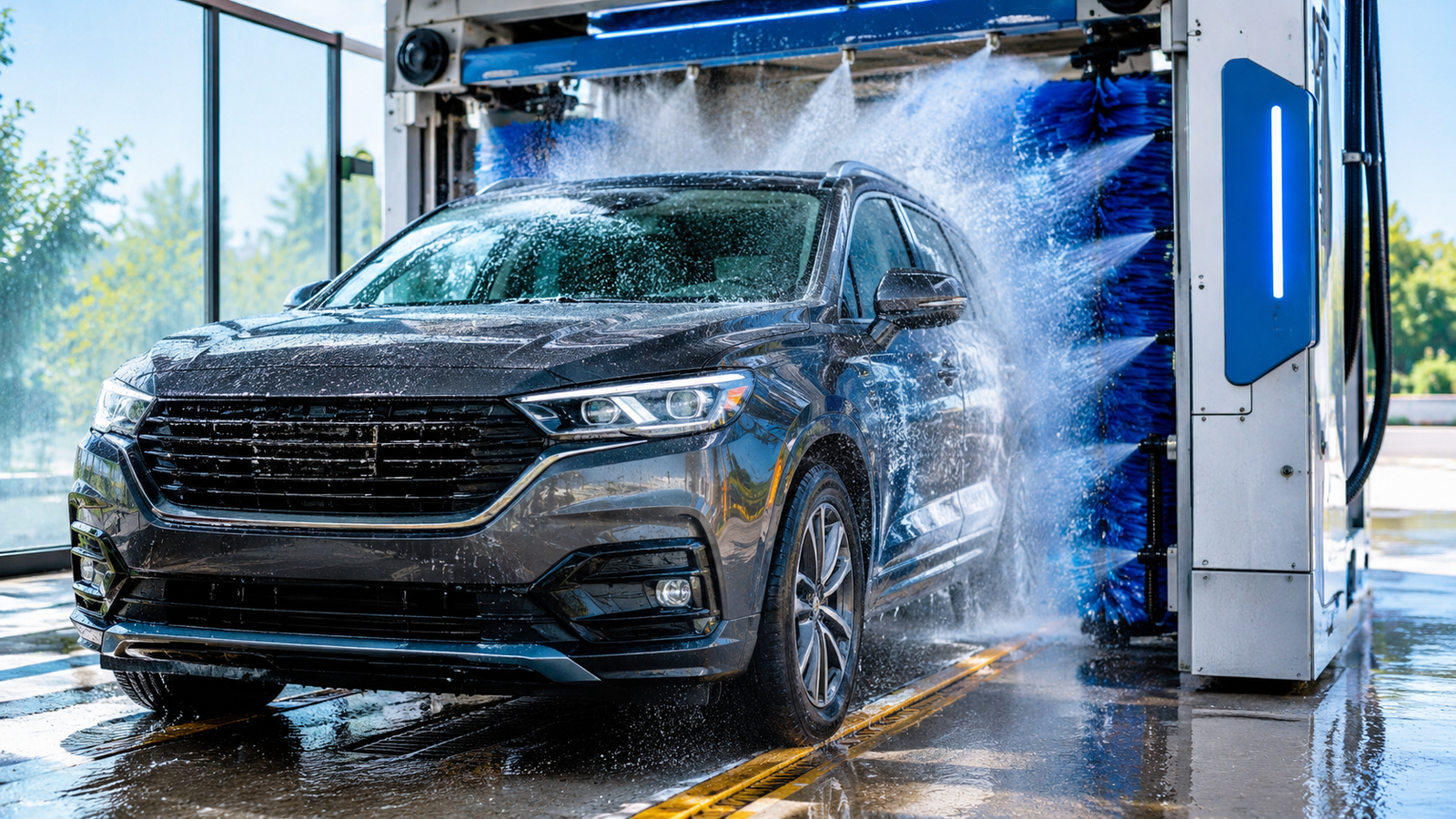
If you have ever pulled up to a car wash and noticed one lane advertising “touchless” cleaning with no spinning brushes in sight, you have probably wondered whether it actually gets your car clean or if it is just a marketing gimmick. Touchless car washes rely on high-pressure water and strong detergents instead of physical scrubbing.
This guide breaks down how they work, whether they are safe for your paint, and how their cleaning results compare to traditional friction washes.
What Is a Touchless Car Wash and How Does It Work?
A touchless car wash cleans your vehicle without any brushes, cloth strips or mitts ever touching the surface. Instead, it relies entirely on high-pressure water jets combined with specially formulated detergents to lift dirt, road grime, and debris away from the paint.
Most touchless systems operate in stages. First, a pre-soak or foam application coats the vehicle and begins breaking down surface contaminants. Next, high-pressure water, typically in the range of 1,000 to 1,500 PSI, blasts the loosened dirt off the body panels. A rinse cycle follows, sometimes with a spot-free rinse using deionized water to prevent mineral spots from forming as the car dries.
Because there is no physical contact, touchless washes depend heavily on chemistry. The detergents used are often more concentrated and higher in pH than those used in soft-touch washes, since the cleaning agents need to do the work that a brush would normally handle. This is the tradeoff at the center of the touchless debate: less mechanical risk, but stronger chemical exposure.
Are Touchless Car Washes Actually Safe for Your Vehicle’s Paint?
Touchless car washes are generally considered safer for paint in terms of physical damage, since there is no brush contact that could cause swirl marks or micro-scratches. This makes them a popular choice for owners of black vehicles, luxury cars, and freshly ceramic-coated paint, where swirl marks are especially noticeable under sunlight.
That said, “no scratches” does not automatically mean “no risk.” The high pH detergents used in touchless systems can be harsh on certain surfaces if used too frequently. Potential concerns include:
- Wax and sealant stripping: Strong detergents can break down protective coatings faster than gentler soap formulas, meaning wax may need reapplication more often.
- Rubber and trim degradation: Repeated exposure to high alkaline chemicals can dry out rubber seals, trim, and plastic components over time.
- Water spotting: If the facility does not use a spot-free rinse, mineral deposits from tap water can etch into paint if left to dry under sun exposure.
- Incomplete cleaning in tight areas: Water pressure alone cannot always reach into wheel wells, mirror housings, or grille gaps the way a brush or hand wash can.
For most daily drivers, occasional touchless washes pose minimal risk. The concern grows with frequency, since weekly touchless washes may strip wax and dry out trim faster than monthly visits would.
How Effective Are Touchless Car Washes at Cleaning Dirt and Grime?
Touchless washes are effective at removing loose dirt, dust, and light road film, especially when paired with a quality pre-soak. However, their cleaning power has limits compared to methods involving physical agitation.
Heavier contaminants such as baked-on bug residue, tree sap, bird droppings, or caked mud often require some form of contact, whether from a brush, a hand wash mitt, or a clay bar treatment, because water pressure and chemicals alone may not fully break the bond between the residue and the paint. This is one reason detailing professionals often recommend a touchless wash for routine maintenance but a hand wash or two-bucket method for deeper periodic cleaning.
A simple way to think about it:
| Contaminant Type | Touchless Wash Effectiveness |
| Dust and loose dirt | High |
| Road film and light grime | High |
| Bug splatter and tree sap | Moderate to low |
| Bird droppings (fresh) | Moderate |
| Bird droppings (dried/etched) | Low |
| Brake dust on wheels | Moderate |
| Salt residue (winter driving) | High, if rinsed promptly |
Because results vary by contaminant, many drivers use touchless washes for frequent quick cleans and reserve a full hand wash for deeper seasonal maintenance.
Touchless vs Soft-Touch (Friction) Car Washes: Key Differences
Understanding how touchless washes compare to soft-touch or friction washes helps clarify which option fits your needs.
| Factor | Touchless Wash | Soft-Touch (Friction) Wash |
| Cleaning method | Water pressure and chemicals only | Foam brushes or cloth strips combined with soap |
| Paint scratch risk | Essentially zero brush-induced swirl risk | Some risk, particularly if brushes aren’t properly maintained and cleaned |
| Chemical strength | Typically stronger, higher pH detergents | Can use milder formulas since brushes assist with lifting dirt |
| Cleaning depth | Good for surface dirt, weaker on stuck-on grime | Generally removes stuck-on grime more effectively due to physical agitation |
| Best for | Vehicles with delicate coatings or owners concerned about swirl marks | Heavily soiled vehicles needing a deeper clean |
| Wax and coating longevity | Wax tends to last longer due to less physical friction, though strong chemicals can offset some of that benefit | Wax wears faster from brush friction, but milder chemicals reduce chemical-based breakdown |
Neither method is universally better. The right choice depends on how dirty the vehicle typically gets, what type of paint protection is applied, and how often the vehicle is washed.
Pros and Cons of Touchless Car Washes
Pros:
- No risk of brush-induced swirl marks or scratches
- Faster wash cycle in most automated tunnels
- Good option for vehicles with ceramic coatings or fresh paint correction
- Reduces cross-contamination risk from shared brushes used on other vehicles
Cons:
- Stronger detergents may degrade wax, trim, and rubber seals over time
- Less effective on heavily soiled vehicles or stubborn contaminants
- May miss tight spots like wheel wells and grille areas
- Frequent use without a spot-free rinse can lead to water spotting
Weighing these tradeoffs makes it easier to decide if touchless washing fits your needs, and the answer often comes down to the type of vehicle you drive.
Which Vehicles Benefit Most from Touchless Washing?
Certain vehicles and paint conditions gain more from touchless cleaning than others:
Black and Dark-Colored Vehicles
Swirl marks show up prominently on dark paint, making scratch-free washing especially valuable for these vehicles.
Ceramic-Coated Vehicles
Coatings are chemical-resistant but can be damaged by aggressive brush contact, so touchless washing preserves the coating’s slickness and gloss.
Newly Painted or Recently Corrected Vehicles
Fresh paint or a recent paint correction is more vulnerable to marring from physical contact, making a contact-free wash the safer choice during this period.
Luxury and Exotic Vehicles
Owners of these vehicles often prioritize scratch prevention over aggressive cleaning power, which makes touchless washing a natural fit.
Vehicles with Delicate or Aging Clear Coat
Older clear coats can be more susceptible to marring, making a contact-free method preferable to reduce further wear.
Vehicles that regularly encounter heavy mud, off-road debris, or dense insect residue, such as trucks used for farm or rural driving, often need supplemental hand washing since touchless alone may not fully clean these surfaces.
Tips to Get the Best Results from a Touchless Car Wash
Getting the most out of a touchless wash comes down to a few practical habits:
- Choose a wash with a spot-free rinse to avoid mineral deposits from tap water.
- Avoid daily or near-daily washing, since frequent exposure to strong detergents can wear down wax and trim faster.
- Apply a quality wax or sealant regularly to help protect the paint from harsh chemical exposure between washes.
- Hand wash stubborn areas like wheel wells, door jambs, and the front bumper periodically, since these areas often collect grime touchless systems cannot fully reach.
- Check the facility’s chemical maintenance, since well-run touchless systems calibrate detergent concentration and pH more carefully than poorly maintained ones.
Following these habits helps you get consistent, safer results, but it also helps to know which claims about touchless washing are accurate and which ones are simply myths.
Common Myths About Touchless Car Washes
A few misconceptions persist around touchless washing:
- Myth: Touchless washes never damage paint: In reality, chemical exposure can still affect wax, sealants, and trim, even without physical scratching.
- Myth: Touchless washes clean just as deeply as hand washing: Hand washing with proper technique generally removes more stubborn grime due to controlled agitation.
- Myth: All touchless washes use the same chemicals: Detergent formulas and pH levels vary widely between car wash brands and franchises, affecting both safety and cleaning power.
- Myth: Touchless washes are always more expensive: Pricing varies by location and is often comparable to, or even cheaper than, soft-touch tunnel washes.
Separating these myths from reality makes it easier to set the right expectations, which brings us to how touchless washing fits into a complete car care routine.
Final Thought
Touchless car washes are a safe and convenient option for regular maintenance, particularly for drivers concerned about swirl marks on dark paint, ceramic coatings, or freshly corrected surfaces. They are not, however, a complete substitute for hand washing when dealing with heavy grime, baked-on residue, or hard-to-reach areas. The best approach for most vehicle owners is a combination: touchless washing for routine upkeep, paired with occasional hand washing or detailing for a deeper clean and better long-term paint protection.
FAQs
Do Touchless Car Washes Remove Wax?
Yes, touchless washes can gradually strip wax and sealants because they rely on stronger, higher pH detergents to compensate for the lack of physical scrubbing. Reapplying wax every one to two months helps maintain a protective layer between washes.
Are Touchless Car Washes Bad For Ceramic Coatings?
Touchless washes are generally considered safe for ceramic coatings since there is no brush contact to mar the surface. However, using a pH-neutral or coating-safe wash formula helps preserve the coating’s hydrophobic properties longer than harsh alkaline detergents.
Can A Touchless Car Wash Remove Bird Droppings And Bug Residue?
Fresh bird droppings and light bug splatter can often be removed with a touchless wash, but dried or baked-on residue typically requires additional scrubbing or a dedicated bug and tar remover applied by hand.
Is Touchless Or Soft-Touch Better For A Black Car?
Touchless washing is usually recommended for black cars since swirl marks and light scratches are far more visible on dark paint. A well-maintained soft-touch wash can still work, but the risk of marring is higher.
How Often Should I Use A Touchless Car Wash?
Washing every one to two weeks is a reasonable balance for most vehicles. Washing more frequently, especially without reapplying wax, can accelerate the breakdown of protective coatings due to repeated chemical exposure.
Do Touchless Car Washes Cause Water Spots?
Water spots can occur if the facility does not use a spot-free or deionized rinse. Choosing a car wash that specifically advertises a spot-free final rinse significantly reduces this risk.
Are Touchless Car Washes Safe For Vinyl Wraps And Decals?
Touchless washes are generally considered one of the safer options for vinyl wraps since there is no brush friction to lift edges or cause abrasion. Extremely high pressure settings pointed directly at wrap edges, however, can still cause peeling over time.
Why Do Touchless Car Washes Use Stronger Chemicals?
Since there is no physical brush or cloth to help dislodge dirt, touchless systems rely on higher-concentration, higher pH detergents to break down grime through chemical action alone.
Can Touchless Washes Damage Rubber Seals And Trim?
Repeated exposure to strong alkaline detergents can dry out and crack rubber seals and plastic trim over time. Applying a trim protectant periodically helps counteract this effect.
Is A Touchless Car Wash Worth It Compared To Hand Washing At Home?
Touchless washes offer speed and convenience with minimal scratch risk, making them a solid choice for routine cleaning. Hand washing at home typically provides a more thorough clean and better control over products used, making it a good complement rather than a full replacement.