
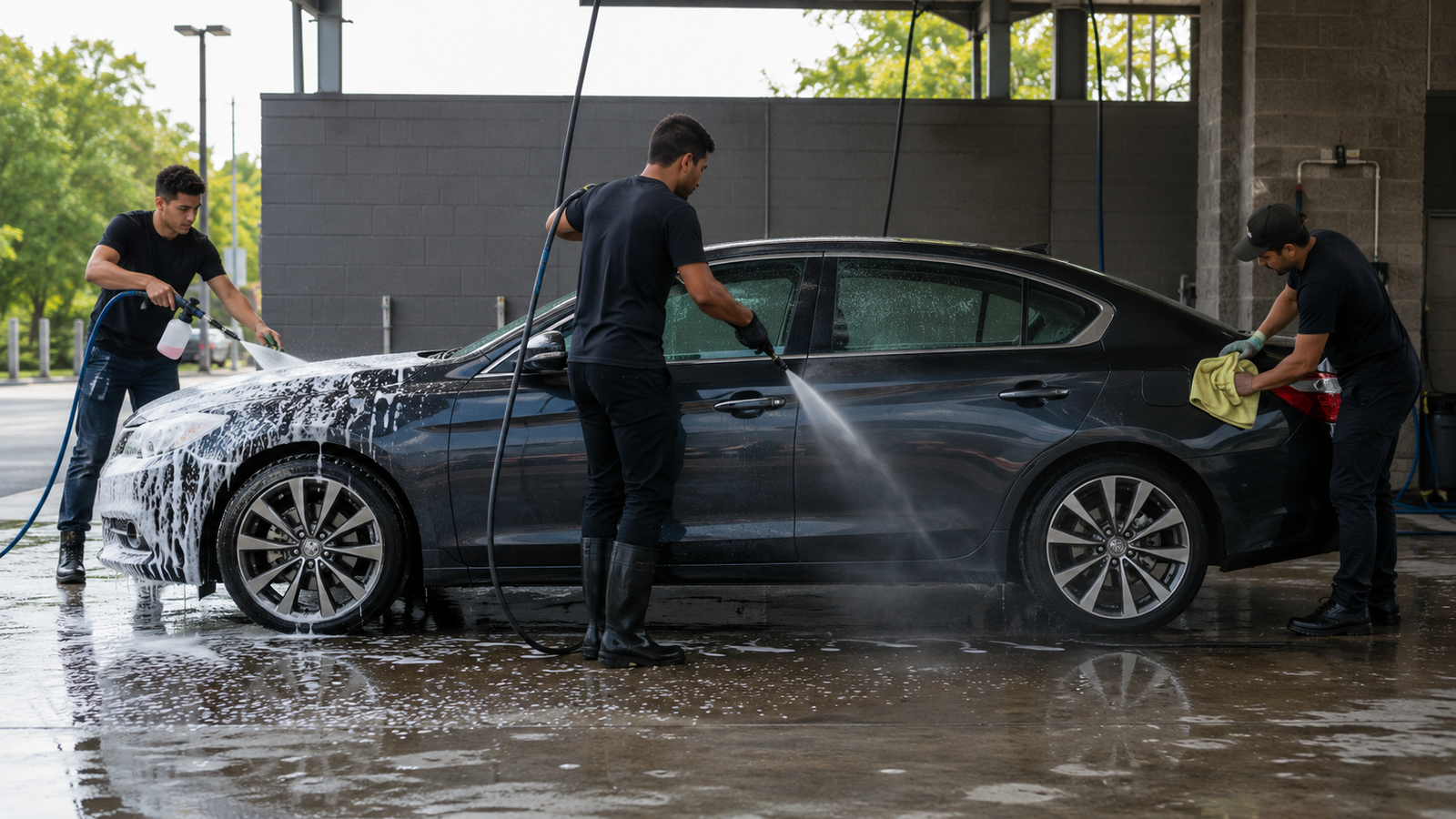
Choosing the right car wash method matters more than most drivers realize. The wrong technique can scratch your paint, strip protective coatings, or leave your vehicle looking worse than before. Whether you drive a brand-new sedan, a daily commuter truck, or a weekend SUV, understanding the different types of car wash services helps you make a smarter, more informed decision every time your vehicle needs cleaning.
What Are the Different Types of Car Wash Services?
Not all car washes are created equal. Each method uses different equipment, techniques, and levels of human involvement. Here is a breakdown of every major car wash type available today.
Automatic Car Wash
An automatic car wash is a machine-operated facility where your vehicle moves through a tunnel of rotating brushes, high-pressure water jets, and drying blowers. You stay in the car or hand over the keys depending on the setup.
How it works:
- Vehicle is pulled through on a conveyor belt or driven through manually
- Rotating brushes or cloth strips apply soap and scrub the surface
- High-pressure rinse removes soap and loosened dirt
- Automated air dryers finish the process
Pros:
- Fast and convenient, usually 5–10 minutes
- Affordable, typically $6 – $15
- Widely available across most cities
Cons:
- Rotating brushes can cause fine scratches and swirl marks over time
- Limited cleaning around tight areas like door jambs and wheel wells
- Not ideal for vehicles with custom paint, wraps, or ceramic coatings
Best suited for drivers who prioritize speed and convenience over perfection.
Hand Car Wash
A hand car wash involves trained staff manually washing your vehicle using microfiber mitts, pH-balanced soaps, and careful technique. It is widely considered the safest and most thorough method for most vehicles.
How it works:
- Pre-rinse to loosen surface dirt
- Hand washing with microfiber mitts and quality car shampoo
- Wheel and tire cleaning with dedicated brushes
- Hand drying with microfiber towels to prevent water spots
Pros:
- Gentler on paint than automated brushes
- More thorough cleaning around panels, trim, and wheels
- Suitable for coated, wrapped, or high-value vehicles
Cons:
- More expensive than automated options, typically $15 – $45
- Takes longer, usually 30–60 minutes
- Quality varies depending on the staff and shop
Best suited for vehicle owners who care about paint condition and long-term finish preservation.
Touchless Car Wash
A touchless car wash uses high-pressure water jets and strong chemical detergents to clean the vehicle without any physical contact. No brushes, no mitts, nothing touches the paint.
How it works:
- High-pressure pre-soak loosens dirt and contaminants
- Strong chemical detergents break down road grime and grease
- Powerful rinse jets remove soap and debris
- Automated air dryers complete the process
Pros:
- No physical contact means zero brush-related scratches
- Safe for vehicles with ceramic coatings, PPF, or custom wraps
- Quick and convenient, similar to automatic wash timing
Cons:
- Strong chemicals used repeatedly can degrade wax and sealants over time
- Less effective on heavy mud, bird droppings, or road tar
- May leave water spots if drying system is inadequate
Best suited for coated or wrapped vehicles where paint contact must be avoided entirely.
Self-Service Car Wash
A self-service car wash gives you access to a bay equipped with a pressure washer, soap foam brush, rinse setting, and sometimes a spot-free rinse. You do the work yourself at your own pace.
How it works:
- Insert coins or card to activate the equipment
- Select from settings: pre-soak, soap, scrub, rinse, spot-free rinse, wax
- Wash the vehicle yourself using the available tools
- Pay per minute or per cycle depending on the facility
Pros:
- Lowest cost option, typically $2 – $6 per use
- You control the pressure, time, and areas of focus
- Good for quick rinses between full washes
Cons:
- Requires your own time and physical effort
- Shared foam brushes may carry dirt from previous vehicles
- No drying equipment in most bays, increasing water spot risk
Best suited for budget-conscious drivers who do not mind putting in the work themselves.
Mobile Car Wash Service
A mobile car wash brings the equipment and products directly to your home, office, or any convenient location. The detailer arrives with water, supplies, and tools, no facility visit required.
How it works:
- Book an appointment online or by phone
- Detailer arrives at your preferred location
- Vehicle is washed, rinsed, and dried on-site
- Premium mobile services may include interior cleaning, waxing, and detailing add-ons
Pros:
- Maximum convenience, no travel required
- Often uses waterless or low-water techniques that are eco-friendly
- Personalized service with direct communication about your vehicle’s needs
Cons:
- More expensive than facility-based washes, typically $35 – $100+
- Availability depends on your area and the provider’s schedule
- Weather conditions can affect appointment reliability
Best suited for busy professionals, luxury vehicle owners, and anyone who values convenience above all else.
Full-Service Car Wash
A full-service car wash combines exterior washing with interior cleaning in a single visit. Staff handle everything from vacuuming the cabin to wiping down the dashboard while the exterior is washed and dried.
How it works:
- Exterior wash using automatic or hand washing method
- Interior vacuuming of seats, floor mats, and trunk
- Dashboard, console, and door panel wipe-down
- Interior glass cleaning and window treatment
- Optional add-ons like tire shine, wax, or air freshener
Pros:
- Comprehensive inside and outside cleaning in one stop
- Saves time compared to doing interior and exterior separately
- Good value when bundled services are included
Cons:
- Quality varies significantly between providers
- Takes longer than express options, typically 30–90 minutes
- Higher cost, usually $20 – $55 depending on vehicle size and add-ons
Best suited for drivers who want a complete refresh of their vehicle without visiting multiple service providers.
Express Car Wash
An express car wash is a faster, lower-cost version of the full-service wash. It focuses primarily on the exterior using automated equipment with minimal staff involvement, getting your car clean in under 10 minutes.
How it works:
- Vehicle enters an automated tunnel
- Exterior wash, rinse, and drying completed by machine
- Minimal or no interior service unless added separately
- Some express facilities offer monthly membership plans
Pros:
- Very fast, usually 5–8 minutes from entry to exit
- Affordable pricing, typically $8 – $20
- Membership plans offer good value for frequent washers
Cons:
- Little to no interior cleaning included
- Automated brushes carry the same scratch risk as standard automatic washes
- Not suitable for heavily soiled vehicles or those needing detailed attention
Best suited for drivers who need a quick, affordable exterior refresh on a regular basis.
Which Car Wash Type Is Best for Your Vehicle?
The right car wash method depends on your vehicle type, condition, and how much you value paint protection. Use this table as a quick reference guide:
| Vehicle Type / Situation | Recommended Wash Method |
| Daily commuter, normal condition | Automatic or Express Car Wash |
| New or high-value vehicle | Hand Car Wash |
| Ceramic coated or PPF-wrapped vehicle | Touchless or Hand Car Wash |
| Budget-conscious driver | Self-Service Car Wash |
| Busy professional, no time to travel | Mobile Car Wash |
| Full interior and exterior refresh needed | Full-Service Car Wash |
| Frequent washer on a budget | Express with Monthly Membership |
| Heavily soiled or muddy vehicle | Hand Car Wash or Self-Service first |
One important rule applies across all vehicle types: avoid automatic brush washes on freshly painted, ceramic coated, or vinyl-wrapped surfaces. The physical contact from rotating brushes introduces micro-scratches that compound over time and dull your finish.
Which Car Wash Method Is Best for a New Car?
A new car deserves extra care, especially in the first few months when the paint and any applied protective coatings are still settling. Here is what to know:
Best options for new cars:
- Hand car wash is the gold standard for new vehicles. Trained staff using clean microfiber mitts and pH-neutral shampoo will not harm factory paint or dealership-applied coatings.
- Touchless car wash is a safe alternative when a hand wash is not available. No physical contact means no brush-induced scratches.
What to avoid with a new car:
- Automatic brush washes, rotating bristles create swirl marks that are visible under direct light
- Self-service foam brushes, shared brushes collect grit from other vehicles and drag it across your paint
- Harsh chemical detergents, strip factory wax and sealants applied at the dealership
If your new car has paint protection film or a ceramic coating applied, always confirm with your installer which wash methods are safe before visiting any facility. Some coatings require specific pH-balanced products to maintain their protective properties.
How Often Should You Wash Your Car?
Washing frequency depends on your driving environment, local weather, and how the vehicle is used. General guidance:
| Usage / Condition | Recommended Wash Frequency |
| Daily commuter in normal conditions | Every 1–2 weeks |
| Vehicle parked outdoors regularly | Every 1–2 weeks |
| Driving in winter with road salt exposure | Weekly during salt season |
| Vehicle parked in a garage, light use | Every 3–4 weeks |
| Driving on dirt or gravel roads | After each exposure |
| Coastal areas with salt air exposure | Every 1–2 weeks minimum |
| Post-bird dropping or tree sap contact | Immediately, do not leave it |
A good rule of thumb: wash your car before it looks dirty, not after. Contaminants like road salt, bird droppings, tree sap, and industrial fallout are chemically active and begin damaging paint and clear coat within hours to days of contact.
Common Mistakes to Avoid During Car Washing
Even well-intentioned washing routines can cause damage. Watch out for these common errors:
- Using the wrong products: Dish soap and household cleaners strip protective wax, sealants, and ceramic coatings. Always use a dedicated car shampoo formulated for automotive paint surfaces.
- Washing in direct sunlight: Sunlight heats the surface and causes soap to dry before rinsing, leaving behind water spots and soap residue that bond to the paint. Wash in shade or during cooler parts of the day.
- Using a single bucket: Dipping a dirty mitt back into your wash bucket reintroduces grit to the paint surface. Always use the two-bucket method, one for soapy water, one for rinsing the mitt.
- Wiping with the wrong materials: Old towels, paper towels, and low-quality cloths cause scratches. Only use clean, soft microfiber towels for drying and wiping.
- Neglecting wheels and tires first: Wheels carry the heaviest contamination, brake dust, road grime, and tar. Always clean wheels first with dedicated wheel brushes before washing the body panels.
- Skipping the pre-rinse: Applying a wash mitt to a dry, dusty surface drags abrasive particles across the paint. Always pre-rinse thoroughly to loosen and remove loose dirt before contact washing begins.
- Leaving water to air dry: Air drying leaves mineral deposits and water spots, particularly in hard water areas. Always dry immediately with a clean microfiber towel or a controlled air blower.
Avoiding these washing mistakes consistently protects your paint, extends your protective coatings, and keeps your vehicle looking newer for longer.
Benefits of Choosing the Right Car Wash Method
Selecting the appropriate wash method for your specific vehicle delivers real, measurable advantages beyond just a cleaner appearance.
- Paint and finish protection: Gentle washing methods preserve your clear coat, wax, sealant, or ceramic coating, extending the life of your paint protection investment significantly.
- Better resale value: A vehicle with a well-maintained, swirl-free exterior commands a higher price during a private sale or trade-in. Consistent, correct washing is one of the easiest ways to protect resale value.
- Reduced long-term repair costs: Avoiding brush-induced scratches, water spot etching, and chemical damage from harsh detergents means fewer paint correction services needed over the vehicle’s lifetime.
- Healthier vehicle surfaces: Regular removal of road salt, industrial fallout, bird droppings, and tree sap prevents these contaminants from etching into the clear coat or causing corrosion on exposed metal surfaces.
- Maintained protective coatings: Ceramic coatings, paint protection film, and wax sealants last longer when maintained with compatible, gentle washing techniques rather than aggressive automated systems.
The right wash method chosen consistently is one of the simplest investments you can make in your vehicle’s long-term appearance and value.
Final Thoughts
Choosing the right car wash method is one of the simplest and most effective ways to protect your vehicle’s appearance and long-term value. From quick express washes for daily drivers to careful hand washes for coated or high-value vehicles, there is a method that fits every need and budget. Avoid the common mistakes, match your wash routine to your vehicle’s specific requirements, and stay consistent. A little regular care goes a long way in keeping your car looking its best for years ahead.
FAQs
What Is The Safest Car Wash Type For My Paint?
A hand car wash using microfiber mitts, pH-neutral shampoo, and the two-bucket method is the safest option for most vehicles. Touchless car wash is the next safest for coated or wrapped vehicles where no contact is preferred.
Are Automatic Car Washes Bad For Your Car?
Frequent use of brush-based automatic car washes can cause fine scratches and swirl marks over time. They are not ideal for new, coated, or high-value vehicles but are acceptable for standard daily drivers when used occasionally.
Is A Touchless Car Wash Better Than An Automatic Brush Wash?
For paint safety, yes. Touchless washes eliminate the risk of brush-related scratches. However, the strong chemicals used in touchless systems can gradually strip wax and sealants with repeated use.
How Much Does A Full-Service Car Wash Cost?
Full-service car wash pricing typically ranges from $20 – $55 depending on vehicle size, location, and included services. Add-ons like waxing, tire shine, or interior detailing increase the total.
Can I Use A Self-Service Car Wash On A Ceramic-Coated Vehicle?
You can use the pressure washer rinse setting, but avoid the shared foam brushes as they may carry grit from previous vehicles. Use your own microfiber mitt and pH-neutral shampoo if contact washing is needed.
How Long Does A Mobile Car Wash Take?
A standard mobile exterior wash takes 30–60 minutes. A full mobile detail including interior cleaning, waxing, and paint decontamination can take 2–4 hours depending on vehicle size and condition.
Is Washing Your Car Every Week Too Often?
No, weekly washing is appropriate and recommended for vehicles exposed to road salt, bird droppings, tree sap, or heavy daily use. Using a gentle method each time prevents any cumulative damage from frequent washing.
What Car Wash Method Is Best For An SUV Or Truck?
Hand car wash or full-service car wash works best for larger vehicles. Self-service bays are also practical for trucks and SUVs, giving you control over hard-to-reach areas like wheel arches and running boards.
Do Car Washes Damage Ceramic Coatings?
Brush-based automatic washes can compromise ceramic coatings over time. Touchless washes using strong alkaline chemicals can also degrade coating performance. Hand washing with a pH-neutral, coating-safe shampoo is always the recommended method for ceramic-coated vehicles.
What Is The Difference Between An Express Car Wash And A Full-Service Car Wash?
An express car wash focuses on exterior cleaning only, using automated equipment for a fast, affordable result. A full-service car wash includes both interior and exterior cleaning, with staff handling vacuuming, window cleaning, and surface wipe-downs as part of the service.