
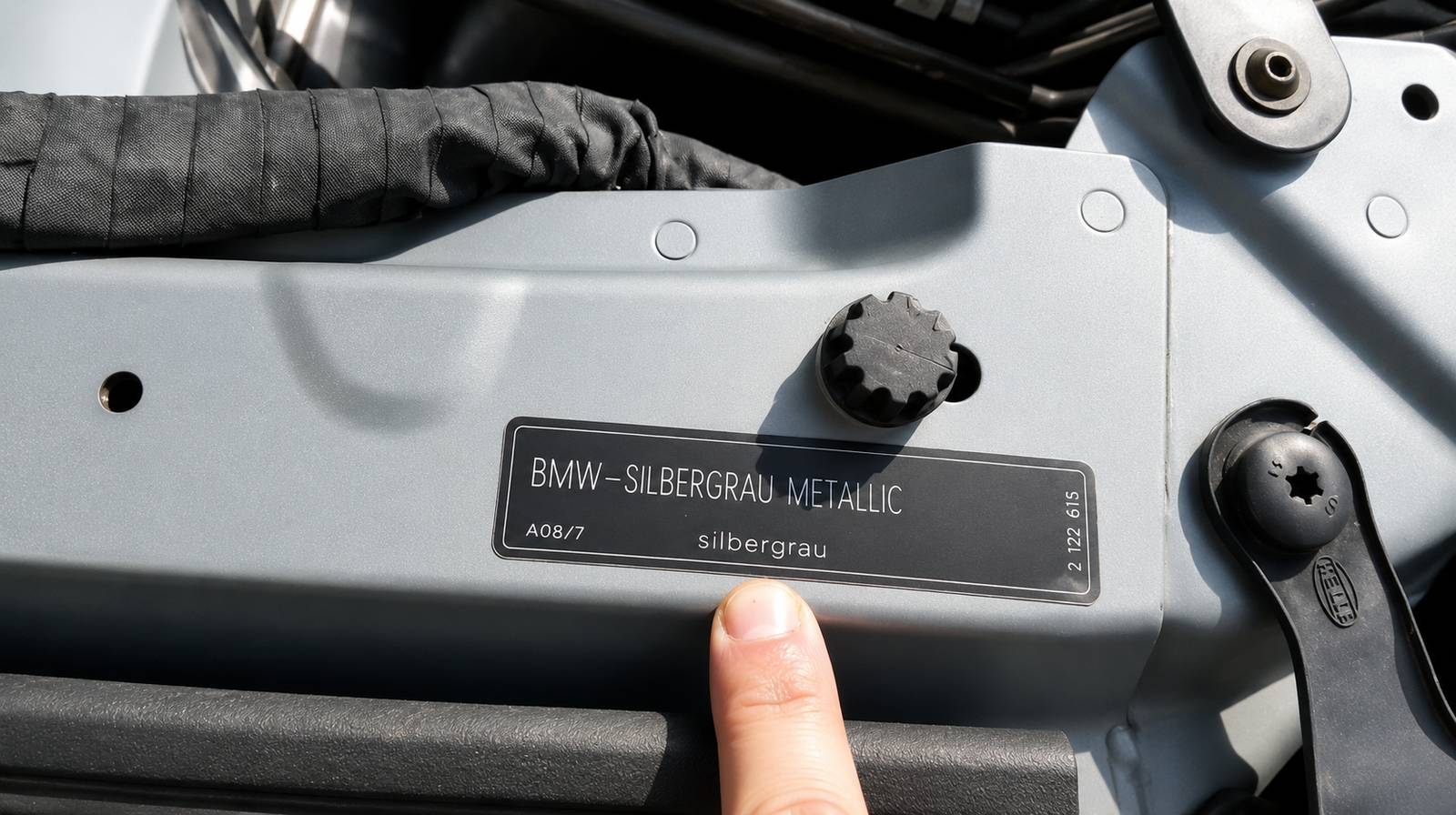
Trying to match your car’s paint for a touch-up or repair and not sure where to start? Your vehicle’s VIN, Vehicle Identification Number, holds more information than most drivers realize, including a direct link to your factory paint color code. Whether you’re dealing with a scratch, a door ding, or a full panel respray, knowing how to decode your car’s paint color through the VIN saves time, money, and the frustration of a mismatched finish.
This guide walks through the entire process, from locating your VIN to understanding paint codes and finding accurate color-matching services close to home.
How to Look Up Car Paint Color by VIN
Looking up your car’s paint color by VIN is a straightforward process once you know where to go. Here’s how to do it:
Step 1 — Locate your VIN: Your 17-character VIN is unique to your vehicle and can be found in several locations.
Step 2 — Use an online VIN decoder: Several trusted online tools allow you to enter your VIN and retrieve your vehicle’s factory specifications, including the paint color code:
- NHTSA VIN Decoder (vpic.nhtsa.dot.gov), free government tool
- Autozone VIN Lookup links paint codes to parts availability
- Paint Ref (paintref.com), dedicated automotive paint code database
- Car Paint Code Lookup by Manufacturer: Most OEM websites offer a VIN-based spec lookup tool
Step 3 — Locate the paint code from the results: The VIN decoder will return your vehicle’s factory build sheet data. Look for the paint or color code, typically a 2–6 character alphanumeric string like “WA8555” for GM vehicles or “NH-578” for Honda.
Step 4 — Use the paint code to source matching paint: Take the paint code to a professional body shop, detailing studio, or automotive paint supplier. They use the code to mix a batch of color-matched paint using a spectrophotometer or manufacturer formula database.
Step 5 — Verify before application: Always request a test spray on a hidden panel or cardboard before applying matched paint to your vehicle. Paint can shift slightly with age, UV exposure, and clear coat oxidation, a test spot confirms the match before committing.
Where to Find Your VIN on Your Vehicle
Your VIN appears in multiple locations on your vehicle. Here’s exactly where to look:
| Location | How to Access It |
| Driver’s side dashboard | Visible through the windshield at the base, look from outside the car |
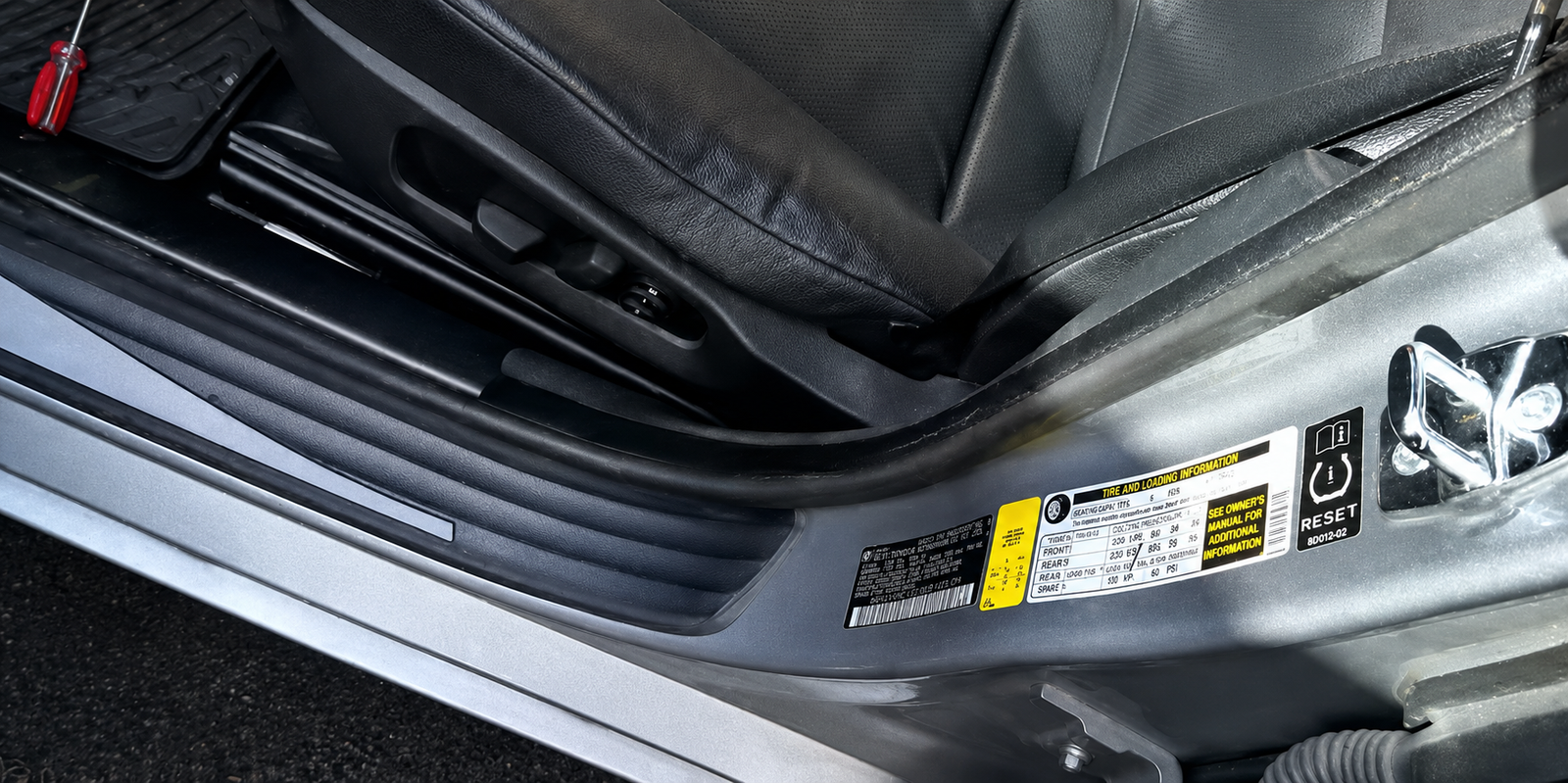
| Driver’s door jamb sticker | Open the driver’s door, label on the door frame or B-pillar |
| Vehicle title and registration | Printed on all official ownership documents |
| Insurance card | Listed on your current insurance documentation |
| Engine bay | Stamped on the engine block or firewall plate |
| Rear wheel well | Stamped on the frame rail in some older vehicles |
| Under the spare tire | Found in the trunk area of some models |
The most accessible locations are the dashboard VIN plate (visible through the windshield) and the door jamb sticker. The door jamb sticker is particularly useful because it often also lists the paint code directly, saving you the step of running a VIN decoder entirely.
Pro tip: Before searching online, check your driver’s door jamb sticker first. Many manufacturers print the color code right there alongside other factory build information. Look for labels marked “Color,” “Paint,” “Ext. Color,” or “BC/CC.”
How Car Paint Codes Are Linked to Your VIN
Your VIN is essentially a factory build record for your specific vehicle. Each section of the 17-character code contains encoded data about your car’s manufacturing details.
Here’s what the VIN structure contains:
| VIN Position | Characters | Information Encoded |
| 1–3 | World Manufacturer Identifier (WMI) | Country of manufacture and automaker |
| 4–8 | Vehicle Descriptor Section (VDS) | Model, body style, engine type |
| 9 | Check digit | Validation character |
| 10 | Model year | Year of manufacture |
| 11 | Plant code | Assembly plant location |
| 12–17 | Production sequence number | Unique unit identifier |
While the VIN itself doesn’t directly encode the paint code within its characters, it links to the vehicle’s manufacturer build sheet, a factory record that includes every option and specification chosen at the time of production, including exterior color and paint formula.
When a dealer, body shop, or VIN decoder queries your number against the manufacturer’s database, it pulls this full build record, including the original paint code, color name, and in some cases the exact tint formula used during production.
How Much Does Car Paint Color Matching Cost in Nixa, MO?
Paint color matching costs in the Nixa, MO area vary depending on the service type, match complexity, and whether it’s part of a broader repair or touch-up service.
| Service Type | Estimated Cost in Nixa Area |
| VIN-based paint code lookup (online/DIY) | Free |
| Touch-up paint pen (color matched) | $15 – $40 |
| Professionally mixed touch-up paint (small bottle) | $30 – $80 |
| Spray can (color matched, professional grade) | $20 – $60 |
| Professional spot repair with color matching | $100 – $350 |
| Panel repaint with spectrophotometer matching | $300 – $900 |
| Full vehicle color-matched respray | $1,500 – $5,000+ |
Southwest Missouri body shops and detailing studios, including those serving Nixa, Ozark, Republic, and Battlefield, generally offer more competitive rates than major metro markets. Labor rates in the Springfield area typically run $50 to $95 per hour, making professional paint matching more accessible than in larger cities.
Factors that affect matching cost:
- Paint type, solid, metallic, pearl, tri-coat, and specialty finishes each vary in matching complexity
- Vehicle age, older vehicles with UV-faded or oxidized paint require blend matching rather than direct code matching
- Panel size and location, larger or harder-to-reach panels cost more to prep and paint
How Accurate Is VIN-Based Paint Color Matching?
VIN-based paint lookup is highly accurate for identifying your vehicle’s original factory color code, but there are important nuances to understand before assuming a perfect match.
What VIN-based lookup gets right:
- Identifies the exact OEM color name and manufacturer paint code
- Confirms the base formula used during factory production
- Works reliably for vehicles with no previous repaints
Where limitations exist:
- Paint fade and oxidation: Vehicle paint shifts in color over time due to UV exposure, environmental contaminants, and clear coat degradation. A factory code match may appear slightly different when applied next to aged paint on an older vehicle.
- Previous resprays: If any panel has been repainted after the original factory application, the VIN code reflects the original color, not the current shade on that panel.
- Batch variation: Factory paint is mixed in large batches, and minor variations between production runs mean even two vehicles with the same color code can have slight differences.
- Aftermarket modifications: Custom paint jobs, color wraps, or plasti-dip applications override the factory color entirely.
For vehicles more than 3–4 years old, professional detailers and body shops recommend combining VIN-based lookup with spectrophotometer scanning of the actual paint surface for the most accurate match result.
VIN vs Paint Code – What’s the Difference?
These two terms are related but serve different purposes. Understanding the distinction helps you communicate accurately with body shops and paint suppliers.
| Feature | VIN | Paint Code |
| Length | 17 characters | 2–6 characters (varies by manufacturer) |
| Purpose | Identifies the full vehicle and build history | Identifies the specific color formula |
| Where found | Dashboard, door jamb, documents | Door jamb sticker, glove box, trunk lid |
| Used for | Full vehicle history, registration, insurance | Paint ordering, touch-up matching, body shop use |
| Changes with repaint | No | Yes — repainted vehicles may no longer match original code |
| Required for paint matching | Helps identify code | Directly used by paint suppliers |
In practice: The VIN gets you to the paint code. The paint code gets you to the paint. For most straightforward touch-up and repair needs, once you have the paint code, whether from a VIN decoder or directly from your door jamb sticker that’s the number your body shop or paint supplier needs.
Common Mistakes When Finding Car Paint Color by VIN
Avoiding these errors saves time and prevents costly mismatches:
- Using the wrong VIN source: Always verify your VIN from a physical location on the vehicle, dashboard plate or door jamb sticker. VINs entered manually from memory or copied incorrectly from documents introduce character errors that return wrong build data.
- Confusing the color name with the paint code: “Midnight Black” is a color name. “WA8555” is a paint code. Body shops and paint suppliers work with codes, not names. Always provide the alphanumeric paint code rather than the descriptive color name, different manufacturers use the same color names for entirely different formulas.
- Assuming the VIN code matches current paint on repainted vehicles: If any panel on your vehicle has been professionally repainted after purchase, the VIN-decoded factory color may not match that panel. Always visually compare the decoded color against your actual paint before ordering.
- Skipping the spectrophotometer scan on older vehicles: On vehicles more than 3–4 years old, UV-related color shift means the factory code alone isn’t enough for a seamless match. Skipping a professional scan leads to visible color differences between the repair and the surrounding paint.
- Ordering touch-up paint online without professional verification: Online paint mixing services vary widely in formula accuracy. A color that looks right on screen can differ significantly in person, particularly with metallic, pearl, and tri-coat finishes that contain directional light-reflecting particles.
Avoiding these mistakes ensures your paint repair blends seamlessly and saves you from costly do-overs.
Final Thoughts
Finding your car’s paint color by VIN is one of the quickest ways to get an accurate factory color match for touch-ups and repairs. Locate your VIN, decode the paint code, and work with a professional who uses spectrophotometer scanning alongside the code for the most precise result, especially on older or previously repainted vehicles. For drivers in Nixa, Springfield, Ozark, Republic, and Battlefield, professional paint matching is accessible, affordable, and well worth the investment to keep your vehicle’s finish looking sharp and consistent.
FAQs
Can I find my car’s exact paint color using just the VIN?
Yes, in most cases. Your VIN links to your vehicle’s factory build record, which includes the original paint code. Use a free VIN decoder or check your door jamb sticker directly for the paint code. For older vehicles with UV-faded paint, combine the VIN lookup with a professional spectrophotometer scan for the most accurate match.
Where is the paint code located on my car?
The paint code is most commonly found on the driver’s door jamb sticker. Depending on your vehicle’s make, it may also appear inside the glove box, on the trunk lid, or under the hood on the firewall. Look for labels marked “Color,” “Paint,” “Ext. Color,” or “BC/CC” followed by an alphanumeric code.
How much does paint color matching cost in the Nixa, MO area?
Basic touch-up paint matching starts around $15–$40 for a color-matched touch-up pen. Professional spot repair with color matching runs $100–$350. Full panel repaints with spectrophotometer matching typically cost $300–$900 in the Nixa and Springfield area, depending on panel size and paint complexity.
Is VIN paint lookup accurate for older vehicles?
VIN lookup accurately identifies the original factory color, but older vehicles experience paint fade and oxidation that causes the current color to drift from the original formula. For vehicles more than 3–4 years old, spectrophotometer scanning of the actual paint surface, combined with the VIN code, delivers the most accurate match.
What’s the difference between a paint code and a color name?
A color name (like “Pearl White” or “Graphite Gray”) is a marketing description. A paint code is a specific alphanumeric identifier (like “NH-578” or “WA8555”) that references the exact formula used to mix that color. Body shops and paint suppliers use codes, not names, for accurate matching.
Can I use my VIN to order touch-up paint online?
Yes. Many online automotive paint suppliers allow you to enter your VIN or paint code to order color-matched touch-up paint. However, for metallic, pearl, or tri-coat finishes, and for vehicles with noticeable paint fade, professional mixing and on-site spectrophotometer verification is more reliable than online ordering alone.
Do all vehicles have their paint code linked to the VIN?
Most modern vehicles manufactured after the mid-1980s have paint codes accessible through VIN-based manufacturer database lookups. Some older, classic, or limited-production vehicles may have incomplete records. In those cases, direct paint scanning with a spectrophotometer is the most reliable matching method available.