
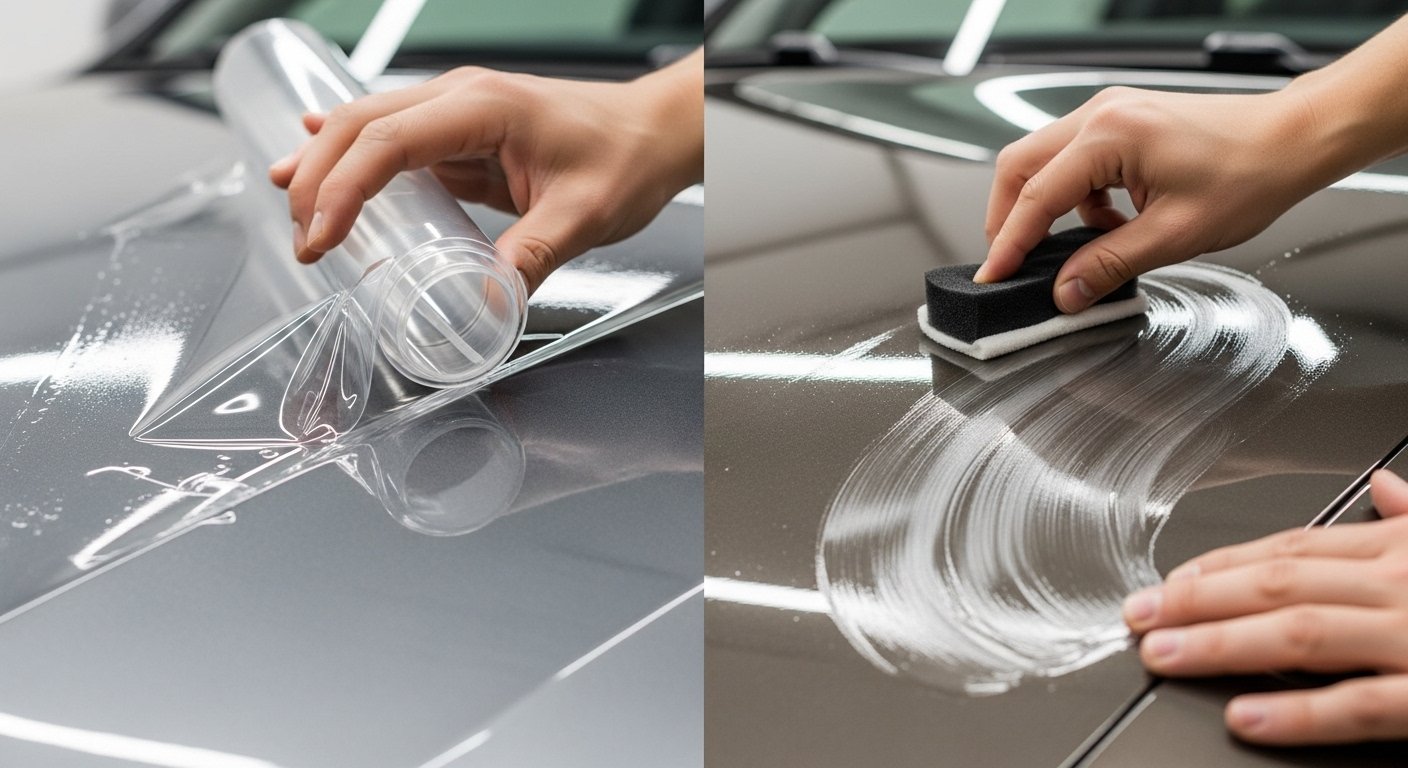
When it comes to protecting your car’s paint, two options dominate the conversation: ceramic coating and paint protection film (PPF). Both are legitimate, proven solutions, but they work differently, cost differently, and suit different driving needs.
Choosing the wrong one could mean spending money on protection that doesn’t match your lifestyle. This guide breaks down everything you need to know, from how each product works to cost, durability, and when to use both together, so you can make the right call for your vehicle.
What Is Paint Protection Film (PPF) and How Does It Work?
Paint protection film, commonly called PPF or clear bra, is a thermoplastic urethane (TPU) film that is physically applied over the vehicle’s painted surfaces. It’s a thick, flexible, optically clear material that absorbs physical damage before it reaches the paint underneath.
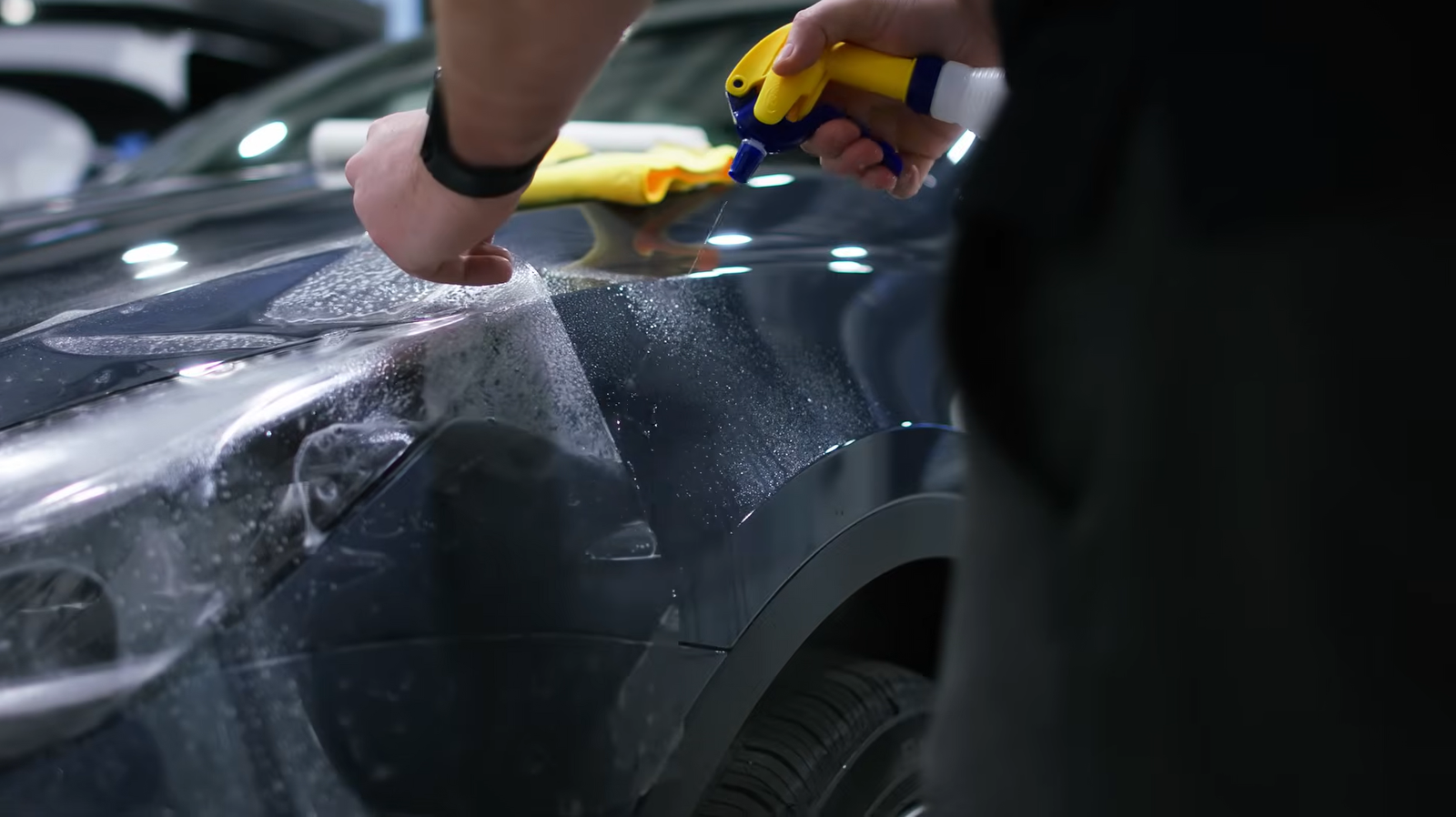
How it protects your paint:
- Acts as a physical barrier against rock chips, road debris, and gravel impact
- Absorbs scratches and minor abrasions without transferring damage to the paint
- Self-healing technology in premium PPF allows light scratches to disappear with heat exposure
- Resists yellowing and staining from UV exposure (in high-quality films)
- Conforms to complex body panel curves when professionally installed
PPF is significantly thicker than ceramic coating, typically 6 to 8 mils (about 150–200 microns). That physical thickness is what makes it the go-to solution for stone chip protection, especially on high-impact areas like the hood, front bumper, and side mirrors.
What Is Ceramic Coating and How Does It Work?
Ceramic coating is a liquid polymer, typically made from silicon dioxide (SiO₂) or titanium dioxide (TiO₂) that chemically bonds with your vehicle’s clear coat when applied. Unlike traditional wax or sealant, it doesn’t sit on top of the paint. It integrates with the surface at a molecular level, forming a semi-permanent, hydrophobic layer.
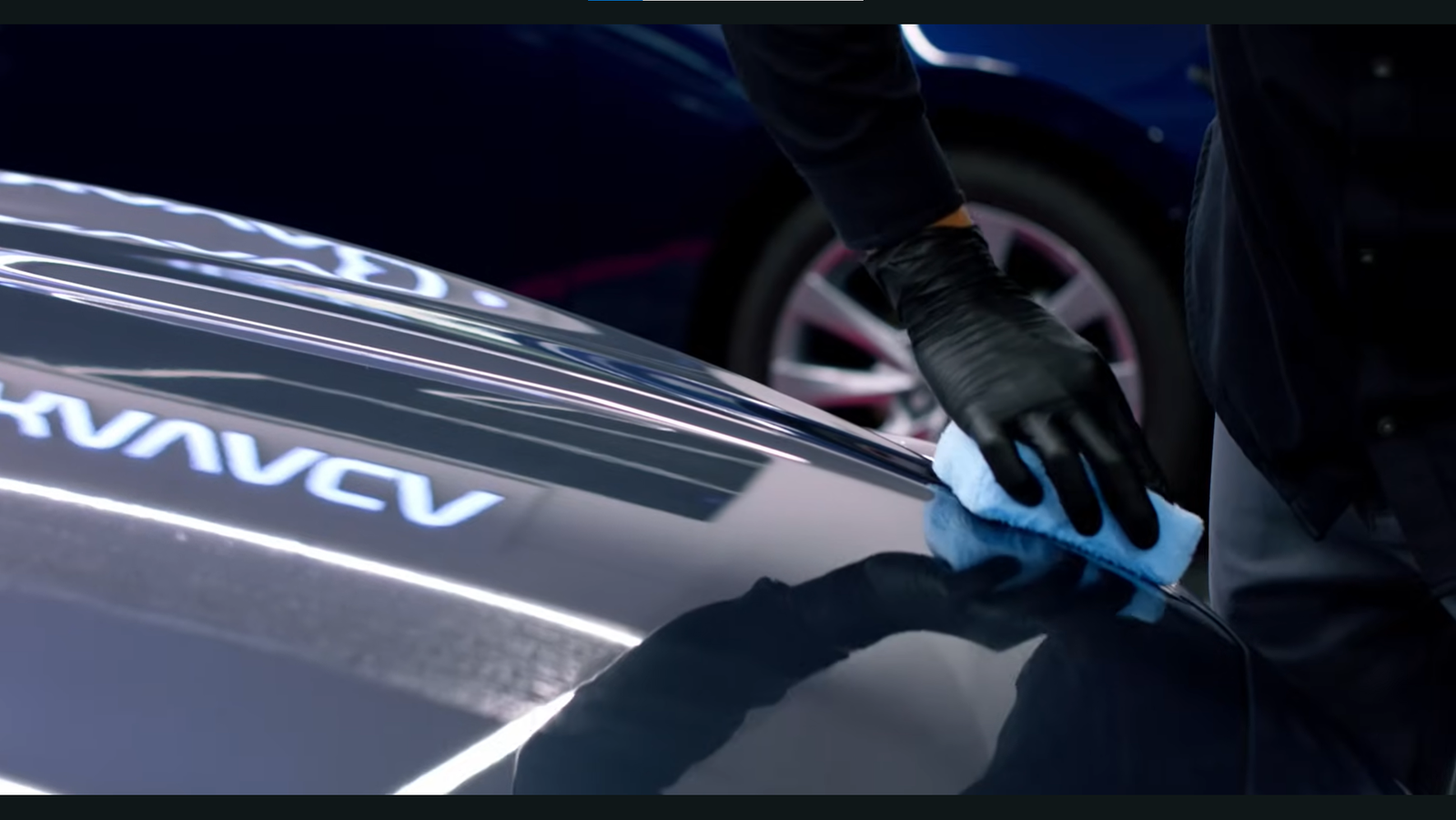
How it protects your paint:
- Creates a hard, glass-like surface over the clear coat
- Repels water, dirt, road grime, and environmental contaminants
- Resists UV radiation, which causes paint oxidation and fading
- Provides chemical resistance against bird droppings, tree sap, and light acid rain
- Enhances gloss and depth, giving the paint a “wet look” finish
Ceramic coating does not add physical thickness to the paint surface. It’s measured in microns, a very thin protective shell. That’s why it excels at chemical protection and surface enhancement but has limits when it comes to physical impact resistance.
Which Offers Better Protection: Ceramic Coating or PPF?
This depends entirely on what type of protection you need. Neither product is universally “better”, they protect against different threats.
| Protection Type | Ceramic Coating | PPF |
| Rock chips and stone impact | Minimal | Excellent |
| Scratch resistance | Moderate | Excellent |
| UV protection | Excellent | Good |
| Chemical resistance | Excellent | Good |
| Water and contaminant repellency | Excellent | Moderate |
| Bird droppings and tree sap | Very Good | Good |
| Self-healing ability | No | Yes (premium films) |
| Gloss enhancement | Excellent | Moderate |
Bottom line: If your biggest concern is paint chips from highway driving or gravel roads, PPF wins. If you want long-term chemical protection, UV defense, and a showroom-quality shine, ceramic coating is the stronger performer. Most detailing professionals recommend both together for complete coverage.
Cost Comparison: Ceramic Coating vs PPF
Budget is often the deciding factor for most vehicle owners. Here’s a realistic breakdown of what each option costs:
| Service | Entry-Level | Mid-Range | Premium |
| Ceramic Coating | $400 – $700 | $700 – $1,500 | $1,500 – $3,000+ |
| PPF (Partial) | $500 – $900 | $900 – $1,500 | $1,500 – $2,500 |
| PPF (Full Vehicle) | $2,000 – $3,500 | $3,500 – $5,500 | $5,500 – $10,000+ |
| Ceramic + PPF Combined | $2,500 – $4,000 | $4,000 – $7,000 | $7,000 – $12,000+ |
PPF is considerably more expensive, especially for full-vehicle coverage, because of the material cost, the precision cutting required, and the skill needed for proper installation. Ceramic coating is more accessible for budget-conscious owners who still want meaningful paint protection.
Partial PPF (hood, front bumper, mirrors, door edges) is a popular middle-ground option that protects the most vulnerable areas without the full-vehicle price tag.
Durability and Lifespan – Which Lasts Longer?
Both products are long-term investments, but their lifespan varies based on product quality, installation, and maintenance.
Ceramic Coating Lifespan:
- Entry-level consumer-grade: 1–2 years
- Professional-grade single layer: 3–5 years
- Multi-layer professional application: 5–9 years
- Graphene-enhanced ceramic coating: up to 7–10 years
PPF Lifespan:
- Standard PPF films: 5–7 years
- Premium TPU films with self-healing: 7–10 years
- High-end manufacturer-backed films: up to 10–12 years with proper care
In terms of raw longevity, high-quality PPF edges out ceramic coating, especially when you factor in the self-healing properties that extend the film’s functional life. However, ceramic coating requires simpler maintenance and is easier to reapply when needed.
Both products benefit from regular pH-neutral washes, avoiding automatic car washes with harsh brushes, and periodic inspection by a professional detailer.
Which Option Is Better for Your Driving Needs?
Your lifestyle and how you use your vehicle should drive this decision more than anything else.
Choose ceramic coating if you:
- Primarily drive in urban or suburban environments with less road debris
- Want to enhance your car’s gloss and visual appearance
- Are working with a tighter budget but still want professional-grade protection
- Own a daily driver that faces chemical contaminants, bird droppings, and UV exposure
- Want a low-maintenance solution that simplifies regular washing
Choose PPF if you:
- Frequently drive on highways, gravel roads, or construction zones
- Own a luxury, exotic, or high-value vehicle where paint damage is costly to repair
- Want physical impact protection against rock chips and road debris
- Are concerned about scratches from car washes, keys, or parking lot contact
- Live in a region with harsh road conditions or heavy truck traffic
Choose both if you:
- Own a high-value vehicle and want maximum protection
- Drive in varied conditions, city commutes and highway travel
- Want a full-coverage solution that handles both chemical and physical threats
Whatever your driving habits, the right protection choice today will save you from costly paint repairs and lost resale value tomorrow.
Can You Use Ceramic Coating and PPF Together?
Yes, and many professional detailers actually recommend combining both. This is considered the gold standard in vehicle paint protection.
The typical approach is:
- Apply PPF first to the most vulnerable areas, hood, front bumper, fenders, mirrors, and door edges
- Apply ceramic coating over the PPF and remaining painted surfaces for a unified protective layer
This combination delivers the best of both worlds. The PPF handles rock chips, scratches, and physical impacts. The ceramic coating over the top adds hydrophobic properties, UV resistance, and gloss enhancement, while also making the PPF surface easier to clean and maintain.
Ceramic coating applied over PPF also slows the degradation of the film itself, extending its service life and keeping it looking optically clear longer.
Pros and Cons of Ceramic Coating vs PPF
Before making a final decision, weighing the trade-offs of each option side by side gives you a clearer picture of what you’re actually paying for.
Ceramic Coating
| Pros | Cons |
| Enhanced gloss and visual finish | No protection against rock chips |
| Strong UV and chemical resistance | Requires paint correction before application |
| Lower cost than PPF | Does not self-heal |
| Easier maintenance and washing | Thinner protection layer |
| Long-lasting with proper care | Professional application recommended |
Paint Protection Film (PPF)
| Pros | Cons |
| Excellent rock chip and scratch protection | Significantly higher cost |
| Self-healing properties (premium films) | Complex installation process |
| Thick physical barrier | Can yellow or peel if poorly installed |
| Protects against door dings and debris | Requires professional removal |
| Long lifespan with proper care | Less gloss enhancement than ceramic |
Neither option is perfect on its own, your driving conditions, budget, and vehicle value should ultimately determine which trade-offs you’re willing to accept.
Is Ceramic Coating or PPF Worth It for Your Car?
For most vehicle owners, the answer is yes, but the right choice depends on what you value most.
If you’re driving a brand-new vehicle, a luxury car, or a truck that regularly takes highway miles through debris-heavy roads, PPF is a worthwhile investment that can save you hundreds in paint repair costs over the years. Rock chip repairs, paint touch-ups, and panel resprays add up fast, and PPF prevents most of that damage from happening in the first place.
If you want to maintain your car’s appearance, protect against environmental damage, and simplify weekly washing without breaking the bank, ceramic coating delivers excellent value at a fraction of PPF’s cost.
Both products protect your vehicle’s resale value. A car with well-maintained, protected paint consistently commands a higher price in the used vehicle market, making either option a smart long-term investment.
Final Thoughts
Ceramic coating and PPF each solve a different problem. Ceramic coating excels at chemical resistance, UV protection, and gloss, while PPF delivers unmatched physical protection against chips, scratches, and road debris. For everyday drivers on a budget, ceramic coating is the practical choice. For high-value vehicles or aggressive driving conditions, PPF, or ideally both combined, is worth every penny. Know your driving habits, weigh the costs, and choose the protection that fits your vehicle and lifestyle.
FAQs
Can Ceramic Coating Prevent Rock Chips?
No. Ceramic coating is a chemical barrier, not a physical one. It cannot absorb the impact of rocks or road debris. PPF is the correct solution for rock chip protection.
Which Is More Expensive, Ceramic Coating Or Ppf?
PPF is considerably more expensive, especially for full-vehicle coverage. Full PPF can cost $3,500 to $10,000+, while professional ceramic coating typically ranges from $700 to $3,000.
Does Ppf Make Your Car Look Different?
High-quality PPF is optically clear and virtually invisible. Some films are available in matte finish if you want to change the sheen. Gloss PPF preserves your original paint color and finish.
How Long Does Ppf Last Compared To Ceramic Coating?
Premium PPF can last 7–12 years. Professional ceramic coating typically lasts 3–9 years depending on the product and number of layers applied.
Can I Apply Ceramic Coating Over Ppf?
Yes, and it’s actually recommended. Ceramic coating over PPF adds hydrophobic properties and UV protection to the film’s surface, making it easier to clean and extending its lifespan.
Which Is Better For A Daily Driver?
Ceramic coating is generally the better value for a daily driver used in city or suburban conditions. If your daily commute includes significant highway driving or gravel roads, partial PPF on the front end combined with ceramic coating offers the best protection.
Do Both Products Require Professional Installation?
Professional installation is strongly recommended for both. DIY ceramic kits exist but are prone to application errors. PPF requires precision cutting tools and professional technique to avoid bubbles, lifting edges, and misalignment.