
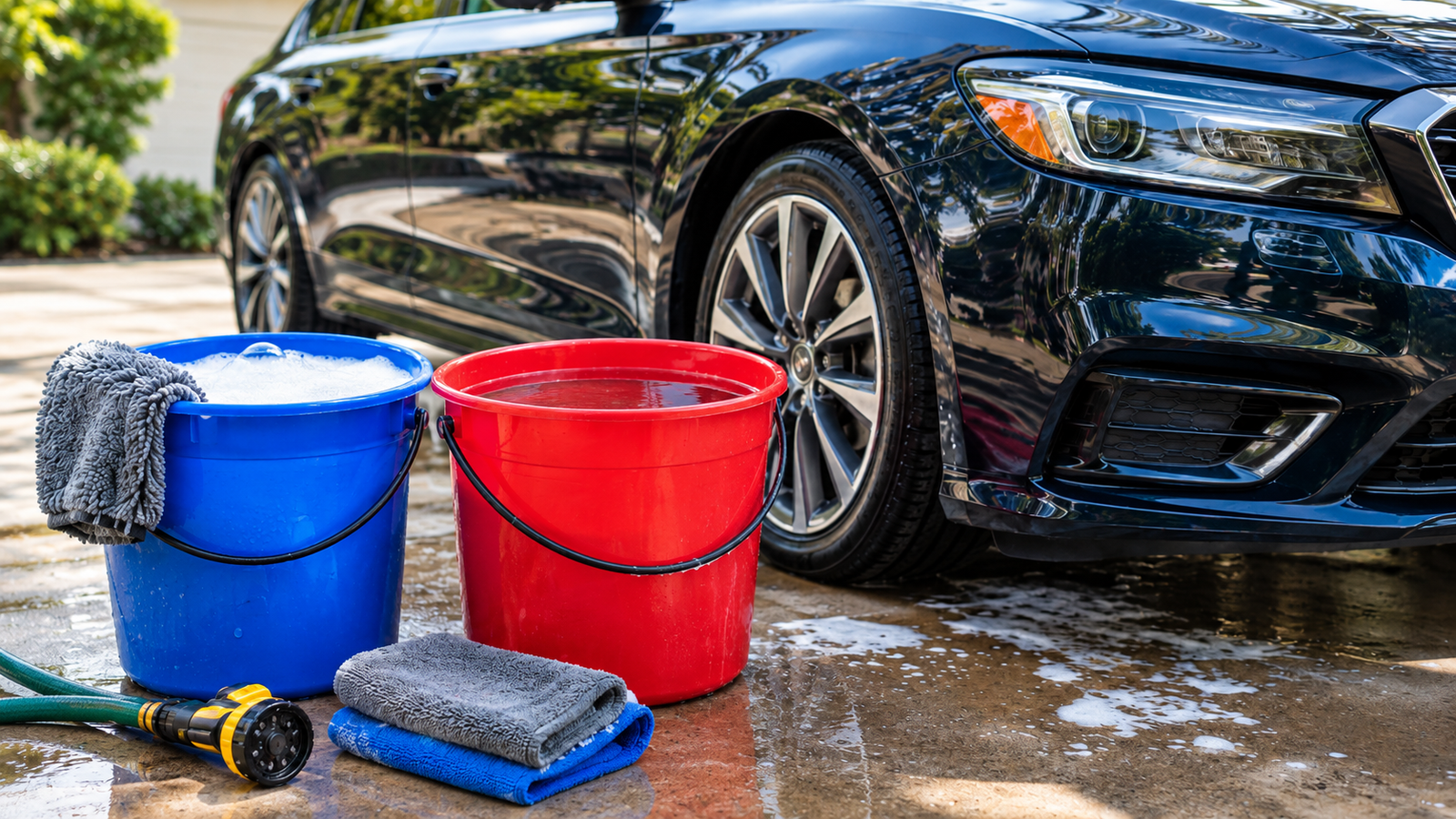
If you’ve ever pulled your car out of the driveway only to notice fine, spiderweb-like scratches under the sun, your wash routine is likely the culprit. The two-bucket wash method is the industry-standard technique that professional detailers use to protect your paint while cleaning your vehicle thoroughly.
This guide breaks down exactly what the method is, why it works, the tools you need, and how local car owners can use it at home or know when to call in a professional detailer nearby.
What Is the Two-Bucket Wash Method?
The two-bucket wash method is a car cleaning technique that uses two separate buckets, one filled with soapy water and one filled with clean rinse water, to prevent dirt and grit from being reapplied to your vehicle’s paint during washing.
Traditional one-bucket washing dips a wash mitt into soapy water repeatedly without rinsing off the grime it just picked up. Every pass reintroduces dirt particles back into the wash solution, and those particles get dragged across the paint on the next swipe. Over dozens of washes, this creates the fine scratches known in the detailing world as swirl marks.
With the two-bucket system, the wash mitt is rinsed in the second, dirt-only bucket before it goes back into the soap bucket. This keeps the soapy water clean for the entire wash and dramatically reduces the amount of grit transferred back onto the car’s finish. It’s a simple change in process, but it’s one of the most effective, low-cost ways to preserve a vehicle’s paint condition over time.
Why the Two-Bucket Method Prevents Swirl Marks and Paint Damage
Paint protection starts with understanding what actually causes damage during a wash. Most swirl marks and micro-scratches don’t come from road debris hitting the car at speed; they come from the washing process itself.
Automotive paint is remarkably soft compared to materials like glass or metal. Clear coat, the top layer that gives paint its shine and depth, can be scratched by particles as small as a grain of sand when they’re dragged across the surface under pressure. Detailing industry studies commonly cite that improper washing and drying account for the majority of visible paint defects on daily-driven vehicles, more than any other single cause, including minor road hazards.
The two-bucket method interrupts this cycle in a few key ways:
- Grit separation: Contaminants sink to the bottom of the rinse bucket instead of staying suspended in the soap solution.
- Reduced friction: A cleaner mitt glides across the paint with less abrasive material trapped in its fibers.
- Consistent lubrication: Fresh soapy water maintains the slip needed to lift dirt without dragging it.
- Lower long-term correction costs: Fewer swirl marks mean less need for paint correction or polishing down the road.
This process matters just as much for a five-year-old commuter car as it does for a brand-new vehicle still under warranty, since clear coat thickness is finite and can’t be restored once it’s polished away too many times.
Tools and Supplies You Need for a Two-Bucket Car Wash
Having the right equipment makes the two-bucket method far more effective. Most of these supplies are available at auto parts stores, big-box retailers, or specialty detailing shops in your area.
| Item | Purpose |
| Two 5-gallon buckets | One for soap solution, one for rinsing the mitt |
| Grit Guard inserts | Sit at the bottom of each bucket to trap dirt below the mitt |
| pH-neutral car shampoo | Cleans without stripping wax, sealant, or ceramic coating |
| Microfiber wash mitt | Traps dirt in deep fibers instead of pushing it across the paint |
| Wheel-specific brushes and cleaner | Wheels carry brake dust and heavy grime that shouldn’t touch the paint mitt |
| Microfiber drying towel | Absorbs water without scratching, unlike standard cotton towels |
| Hose nozzle or pressure washer | Rinses loose debris before contact washing begins |
Brands such as Chemical Guys, Meguiar’s, Griot’s Garage, and Adam’s Polishes make widely available shampoos and mitts designed specifically for this method. Grit Guard inserts, in particular, are considered a near-essential upgrade since they physically separate the settled dirt from the mitt at the bottom of the bucket.
Step-by-Step Guide: How to Wash Your Car Using Two Buckets
Following the steps in order matters more than rushing through the process. Skipping the pre-rinse or wheel-washing stages undermines the benefit of using two buckets in the first place.
Step 1: Park in the Shade
Direct sunlight causes soap and water to dry too quickly, leaving spots and streaks.
Step 2: Rinse the Entire Vehicle
Use a hose or pressure washer to remove loose dirt, dust, and debris before any contact cleaning begins.
Step 3: Wash the Wheels and Tires First
Use a separate bucket, brush, and mitt for wheels, since brake dust contains metal particles that can scratch paint if cross-contaminated.
Step 4: Fill Both Buckets
One with water and pH-neutral shampoo, one with plain rinse water. Add a Grit Guard to each if available.
Step 5: Wash Top to Bottom
Dip the mitt in the soap bucket, wash a small section, then rinse the mitt thoroughly in the rinse bucket before dipping it back into the soap.
Step 6: Work in Straight Lines, Not Circles
Straight-line motions make any scratches less visible and easier to buff out than circular swirl patterns.
Step 7: Rinse the Entire Car Again
Remove all soap residue before it dries on the surface.
Step 8: Dry With a Clean Microfiber Towel or Blower
Patting rather than dragging reduces the risk of introducing new scratches during drying.
Once you’ve mastered the sequence, the next question is how this compares to the shortcut most people grew up using: the single-bucket wash.
Two-Bucket Method vs Traditional One-Bucket Washing
Comparing the two approaches side by side makes it clear why professional detailers and paint correction specialists almost universally recommend the two-bucket system for anyone who cares about long-term paint condition.
| Factor | One-Bucket Method | Two-Bucket Method |
| Risk of swirl marks | High | Significantly reduced |
| Water and soap needed | Slightly less | Slightly more |
| Time required | Faster | A few extra minutes |
| Long-term paint condition | Deteriorates faster | Better preserved |
| Cost of supplies | Lower upfront | Modestly higher upfront |
| Recommended by detailers | Rarely | Widely, including by the International Detailing Association |
The extra bucket, a bit more water, and a few added minutes are a small trade-off compared to the cost of paint correction services, which often run into hundreds of dollars once swirl marks have accumulated across a vehicle’s panels.
Common Mistakes to Avoid When Using the Two-Bucket Method
Even with two buckets, a few habits can undo the benefits of the technique entirely.
- Skipping the Grit Guard. Without it, dirt stirred up in the rinse bucket can resettle onto the mitt.
- Washing in direct sunlight or on a hot day. This causes water spots that require additional correction.
- Using dish soap instead of pH-neutral shampoo. Dish soap strips wax, sealant, and ceramic coatings, leaving paint less protected.
- Reusing the same mitt on wheels and paint. Brake dust is abrasive and should never touch the same mitt used on the body.
- Letting the car air dry. Mineral deposits from tap water bake onto the paint and become harder to remove over time.
- Applying too much pressure while washing. Light, consistent pressure is enough; excessive force increases scratch risk.
Avoiding these mistakes ensures the extra effort of setting up two buckets actually pays off in visible, lasting results.
When to Trust a Professional Detailer Instead of DIY Washing
DIY washing works well for regular maintenance, but some situations call for a trained professional. Local detailing shops typically offer paint correction, ceramic coating application, and deep interior cleaning that go beyond a standard wash, along with access to dual-action polishers and professional-grade products not always practical for home use.
Consider a professional detailer when:
- Swirl marks or scratches are already visible under direct light.
- You’re preparing a vehicle for sale or trade-in and want maximum resale value.
- A ceramic coating or paint sealant needs to be applied correctly.
- Time constraints make a weekly or biweekly wash schedule difficult to maintain.
- The vehicle has heavy contamination like tree sap, tar, or industrial fallout.
Many local detailing businesses also offer mobile services, bringing the two-bucket method and professional-grade equipment directly to a driveway or office parking lot, which is a convenient option for busy vehicle owners in the area.
How Often Should You Wash Your Car Using This Method?
Wash frequency depends on driving conditions, climate, and where the vehicle is parked. As a general guideline:
- Every 1–2 weeks for vehicles driven daily in urban or suburban conditions.
- Weekly for vehicles exposed to road salt, coastal air, or heavy pollen season.
- Every 2–3 weeks for vehicles that are garage-kept and driven less frequently.
Washing too infrequently allows contaminants like bird droppings, tree sap, and road salt to bond with the clear coat, making them harder to remove without abrasive methods. Consistent washing using the two-bucket method is one of the simplest habits for maintaining long-term paint health and resale value.
Final Thought
The two-bucket wash method isn’t a complicated upgrade, but it makes a measurable difference in how well a vehicle’s paint holds up over time. By separating dirt from clean soap water, using the right tools, and following a consistent process, car owners can avoid the swirl marks and fine scratches that come from improper washing. For routine maintenance, this method is easy to adopt at home. For deeper correction, protection, or time-saving convenience, a local professional detailer can deliver results that are difficult to match with DIY equipment alone.
FAQs
Does The Two-Bucket Method Really Make A Noticeable Difference?
Yes. Vehicles washed this way show far fewer swirl marks over time, especially visible under sunlight or LED inspection lights.
Can I Use Dish Soap Instead Of Car Shampoo?
No. Dish soap strips wax, sealant, and ceramic coatings. Use a pH-neutral car shampoo instead.
What Size Buckets Should I Use?
Standard 5-gallon buckets work best and fit most Grit Guard inserts.
Is A Grit Guard Insert Necessary?
Not required, but it significantly improves results by trapping dirt away from the mitt.
Why Wash The Wheels Separately?
Brake dust contains abrasive metal particles that can scratch paint if the same mitt touches both wheels and body.
Can I Use A Pressure Washer With This Method?
Yes, it’s ideal for the pre-rinse and final rinse to remove loose debris before contact washing.
Will This Method Remove Existing Swirl Marks?
No. It’s preventive, not corrective. Existing scratches need professional paint correction.
How Long Does A Two-Bucket Wash Take?
About 30 to 45 minutes for an average sedan or SUV, longer for heavier contamination.
Is It Safe For Ceramic-Coated Cars?
Yes, it’s one of the best methods for maintaining a ceramic coating’s shine and hydrophobic performance.
When Should I Hire A Professional Detailer Instead?
If swirl marks or scratches are already visible, at-home washing won’t fix them. A professional can assess correction or coating needs.