
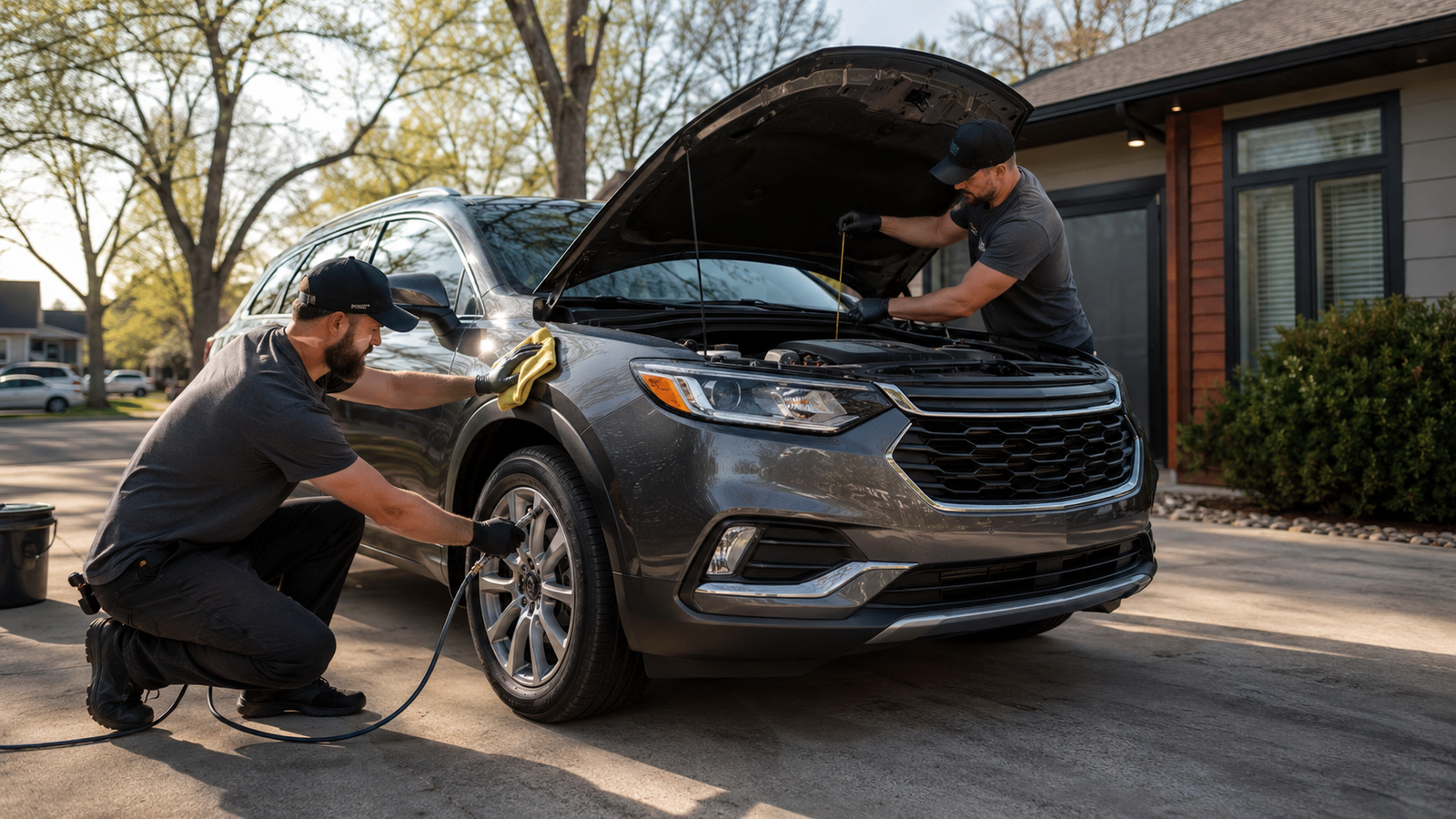
Springfield, MO drivers deal with some of the most varied and demanding weather conditions in the Midwest, blazing summers, icy winters, spring storms, and everything in between. That kind of climate doesn’t just affect your comfort on the road; it actively works against your vehicle’s paint, tires, fluids, and structural integrity every single day.
This guide covers the most practical, effective car care habits Springfield drivers can adopt to protect their vehicle’s appearance, performance, and long-term value, no matter what the season brings.
Why Springfield’s Climate Requires Extra Vehicle Care
Springfield, MO sits in a climate zone that combines the worst of several worlds. Summers regularly push temperatures above 95°F, creating intense UV exposure that fades paint, cracks dashboards, and degrades rubber seals.
Winters bring road salt, ice, and freeze-thaw cycles that attack metal surfaces, brake lines, and undercarriage components. Spring delivers heavy rain, pollen, and tree sap that coat exterior surfaces and work into paint pores if left untreated.
Unlike drivers in milder coastal or desert climates, Springfield vehicle owners face a full rotation of damaging conditions, and each one demands a different protective response.
Here’s what Springfield’s climate throws at your vehicle across the year:
| Season | Primary Threats | Affected Components |
| Summer | UV radiation, heat, humidity, bug impact | Paint, clear coat, interior, rubber seals |
| Fall | Falling leaves, tree sap, early frost | Paint, windshield, wiper blades |
| Winter | Road salt, ice, freezing temps, slush | Undercarriage, brake lines, battery, tires |
| Spring | Pollen, heavy rain, hail, temperature swings | Paint, wipers, seals, exterior surfaces |
Understanding exactly what each season does to your vehicle is the first step toward building a car care routine that actually works in southwest Missouri.
Wash Your Car Regularly to Remove Dirt and Road Salt
Regular washing is the single most impactful habit Springfield drivers can build for long-term paint and undercarriage protection. It sounds basic, but most drivers underestimate how quickly road salt, pollen, bird droppings, and industrial fallout damage paint when left sitting on the surface.
How often should Springfield drivers wash their car?
- Winter: Every 1,2 weeks, road salt bonds to paint and undercarriage metal quickly and must be removed before it accelerates oxidation
- Spring: Weekly during peak pollen season, pollen is mildly acidic and etches a clear coat over time
- Summer: Every 1,2 weeks, bug splatter and bird droppings become increasingly corrosive in the heat
- Fall: Every 2 weeks, decomposing leaves leave tannin stains that are difficult to remove once dried
Washing best practices for Springfield drivers:
- Use a pH-neutral car shampoo, dish soap, and household cleaners to strip wax and damage the clear coat
- Always use the two-bucket method, one for clean soapy water, one for rinsing your mitt, to prevent dragging grit across the paint
- Use a microfiber wash mitt, not a sponge. Microfiber lifts dirt away from the surface rather than dragging it across
- Include an undercarriage rinse every wash, particularly critical after winter road salt exposure
- Dry with a microfiber drying towel, air drying leaves mineral deposits that etch the surface over time
A clean vehicle isn’t just about appearance, it’s the foundation of every other paint protection strategy on this list.
Protect Your Paint from UV Rays and Oxidation
Springfield’s summer sun is one of the most consistent threats to vehicle paint in the region. Prolonged UV exposure breaks down the clear coat layer, causing paint to fade, oxidize, and lose its depth and gloss. Once oxidation sets in, restoration requires machine polishing, a preventable expense with the right protective habits.
UV protection strategies for Springfield drivers:
Park in shade or covered spaces whenever possible: Even a few hours of daily shade reduces cumulative UV exposure significantly. Garage parking during peak summer months makes a measurable difference in how long your paint stays vibrant.
Apply paint protection regularly: Your options from basic to premium include:
- Carnauba wax: Affordable, provides 2,3 months of UV protection and gloss
- Synthetic paint sealant: lasts 6,12 months, stronger UV and chemical resistance than wax
- Ceramic coatinG: Professionally applied, lasts 5,10 years, bonds directly to clear coat for maximum UV blocking and hydrophobic performance
- Graphene coating: The latest generation of professional coating with superior heat dissipation, particularly valuable in Springfield’s intense summer heat
Use a car cover for outdoor parking: A quality UV-resistant car cover provides a physical barrier between your paint and the sun when garage parking isn’t available.
Address paint chips and scratches promptly: Exposed base coat and primer have no UV protection. Rock chips and scratches left unrepaired become oxidation entry points that spread beneath the surrounding clear coat.
The right UV protection strategy keeps your paint vibrant, your clear coat intact, and your vehicle looking years newer than its actual age.
Keep Your Interior Safe from Heat and Sun Damage
Springfield summers don’t just damage exterior paint, they bake the interior of your vehicle every time it sits in direct sun. Cabin temperatures can exceed 130°F on a hot summer day, causing dashboard cracking, seat fading, leather drying and splitting, and plastic trim warping.
Interior protection tips for Springfield’s heat:
- Use a windshield sunshade every time you park, a reflective shade can reduce cabin temperature by 30,40°F and directly protects the dashboard from UV cracking
- Apply UV-protectant products to leather, vinyl, and plastic trim surfaces, these prevent fading, cracking, and surface degradation caused by UV penetration through glass
- Condition leather seats every 3,6 months, Springfield’s heat and humidity cycles dry leather quickly, leading to cracking and surface wear without regular conditioning
- Tint your windows, quality ceramic window tint blocks up to 99% of UV rays and significantly reduces cabin heat buildup, protecting both passengers and interior surfaces
- Use seat covers or protective covers for vehicles parked outdoors long-term, physical protection for upholstery that sees direct sun exposure through side windows
An interior that’s been protected from heat and UV holds its value better and creates a more comfortable driving experience through Springfield’s long, hot summers.
Maintain Your Tires for Better Safety and Performance
Tires are your vehicle’s only contact point with the road, and Springfield’s roads demand a lot from them. Temperature extremes cause tire pressure fluctuations, while highway driving, gravel roads, and wet winter conditions accelerate wear patterns that compromise handling and safety.
Tire care essentials for Springfield drivers:
- Check tire pressure monthly: Tire pressure drops approximately 1 PSI for every 10°F drop in temperature. Springfield’s dramatic temperature swings between seasons mean pressure needs regular monitoring. Under-inflated tires wear unevenly, reduce fuel efficiency, and compromise wet-road handling.
- Rotate tires every 5,000,7,000 miles: Regular rotation promotes even tread wear across all four tires, extending their service life and maintaining balanced handling. Springfield’s mix of highway and surface street driving makes rotation particularly important.
- Inspect tread depth regularly: Use the penny test, insert a penny into the tread groove with Lincoln’s head pointing down. If you can see the top of Lincoln’s head, the tread is below 2/32″ and the tire needs replacing. For wet Missouri road conditions, replacing at 4/32″ is a safer threshold.
- Check alignment after hitting potholes: Springfield’s roads, particularly after winter freeze-thaw damage, can be rough on alignment. A vehicle pulling to one side, uneven tire wear, or steering wheel vibration all indicate alignment issues that accelerate tire wear and reduce handling precision.
- Consider seasonal tires for winter: For drivers in Nixa, Ozark, Republic, and surrounding areas who face significant winter ice and snow, all-season tires are the minimum, dedicated winter tires provide meaningfully better traction in sub-freezing conditions.
Keeping your tires properly inflated, rotated, and aligned is one of the most cost-effective safety investments any Springfield driver can make.
Check Fluids and Battery Before Seasonal Weather Changes
Springfield’s seasonal temperature swings put more stress on fluids and batteries than many drivers realize. A battery that handles summer heat fine may fail on the first truly cold morning in January. Fluids that perform well in summer can thicken and lose effectiveness in winter temperatures.
Fluid checks for Springfield’s seasonal transitions:
| Fluid | Check Frequency | Why It Matters in Springfield |
| Engine oil | Every 3,000,5,000 miles or per manufacturer spec | Viscosity must suit the temperature range |
| Coolant/antifreeze | Every 6 months | Prevents freezing in winter, overheating in summer |
| Brake fluid | Annually | Absorbs moisture over time, reducing braking effectiveness |
| Power steering fluid | Annually | Low fluid affects steering response in cold temps |
| Windshield washer fluid | Before each season | Use winter-rated fluid to prevent freezing in the reservoir |
| Transmission fluid | Per the manufacturer’s schedule | Heat degrades fluid faster in Springfield summers |
Battery maintenance for Springfield weather:
- Have your battery load-tested annually, most auto parts stores offer free testing
- Battery life shortens significantly in extreme heat, summer is often when battery failure begins, even if it doesn’t show until a cold winter morning
- Clean corrosion from battery terminals with a baking soda solution and a wire brush
- If your battery is more than 3 years old, test it before each winter season
A few minutes checking fluids and battery condition at each seasonal transition can prevent the kind of roadside breakdown that Springfield’s winter weather makes truly miserable.
Invest in Professional Detailing and Paint Protection
Routine home washing handles surface maintenance, but professional detailing addresses what everyday washing can’t. A thorough professional detail removes embedded contaminants, corrects paint defects, and applies protection that keeps your vehicle looking and performing its best between seasonal treatments.
What professional detailing covers that home washing doesn’t:
- Paint decontamination, iron remover and clay bar treatment pull embedded fallout, tar, and industrial particles from paint pores
- Paint correction, machine polishing removes swirl marks, water spot etching, and light scratches that accumulate from regular washing and environmental exposure
- Ceramic or graphene coating application, professional-grade coatings bond to the clear coat and provide 5,10 years of UV, chemical, and hydrophobic protection
- Interior deep cleaning, carpet shampooing, leather conditioning, headliner cleaning, and odor elimination restore the cabin to a fresh, well-maintained condition
Recommended professional detailing schedule for Springfield drivers:
| Service | Recommended Frequency |
| Full exterior and interior detail | Every 3,6 months |
| Paint decontamination (clay bar) | Every 6 months |
| Ceramic coating inspection and topper | Annually |
| Paint correction | As needed, typically every 2,3 years |
| Undercarriage wash and inspection | Every season |
For Springfield drivers, Essential Autowerks provides comprehensive detailing, ceramic coating, graphene coating, paint protection film, and paint correction services across Nixa, Ozark, Republic, Battlefield, and the greater Springfield metro area.
Create a Year-Round Car Care Routine
Consistency is what separates drivers who maintain their vehicle’s value from those who react to problems after they develop. A structured, seasonal routine removes the guesswork and keeps every aspect of your vehicle protected throughout Springfield’s demanding annual weather cycle.
Springfield driver’s year-round car care calendar:
Spring (March, May)
- Full undercarriage wash to remove accumulated winter salt
- Inspect paint for winter damage, chips, scratches, and water spot etching
- Clay bar decontamination to remove pollen and winter fallout
- Apply fresh wax or sealant ahead of summer UV exposure
- Check tire pressure and alignment after winter road damage
- Replace wiper blades worn by winter ice scraping
Summer (June, August)
- Wash every 1,2 weeks, more frequently during peak bug season
- Apply windshield sunshade daily when parked outdoors
- Check coolant level and condition before peak heat months
- Condition leather seats and apply UV protectant to interior trim
- Inspect tires for heat-related pressure changes monthly
Fall (September, November)
- Remove leaf debris from hood, windshield, and roof drains promptly
- Apply fresh undercoating or corrosion inhibitor before winter
- Have battery load-tested before temperatures drop
- Switch to winter-rated windshield washer fluid
- Schedule a full professional detail before winter road salt season
Winter (December, February)
- Wash undercarriage every 1,2 weeks after salt road exposure
- Check tire pressure weekly during temperature fluctuations
- Keep washer fluid reservoir full with winter-rated formula
- Avoid automatic brush car washes, use touchless only to protect ceramic coating
- Clear ice and snow with a soft-bristle brush, never a metal scraper on paint
Follow this routine consistently and your vehicle will handle everything Springfield’s weather delivers without the costly repairs that come from reactive rather than proactive care.
Why Springfield Drivers Trust Professional Auto Detailing
DIY car care covers the basics, but when it comes to paint protection, surface restoration, and long-term vehicle preservation, professional detailing delivers results that home products and effort simply can’t replicate.
Springfield drivers trust professional detailing services for several consistent reasons:
- Access to professional-grade products
- Paint correction expertise
- Time and convenience
- Long-term cost savings
Local knowledge Springfield-area detailers understand the specific seasonal threats, road salt from MoDOT winter applications, spring hail risk, summer UV intensity, and the particular contamination profile of southwest Missouri roads, and tailor their service recommendations accordingly.
Final Thoughts
Springfield, MO’s climate demands more from your vehicle and more from your car care routine than most drivers initially expect. From summer UV damage and spring pollen to winter road salt and freeze-thaw corrosion, every season brings a new set of threats that compound over time without the right protective habits.
Regular washing, seasonal fluid checks, professional detailing, and quality paint protection are not optional, they’re the foundation of keeping your vehicle safe, attractive, and valuable through years of Missouri driving.
FAQs
How Often Should I Wash My Car In Springfield, MO?
During winter months when roads are salted, washing every 1,2 weeks is recommended. In spring during peak pollen season, weekly washing helps prevent clear coat etching. In summer and fall, every 1,2 weeks is sufficient for most drivers under normal conditions.
Is Ceramic Coating Worth It For Springfield’s Weather?
Yes. Springfield’s combination of intense UV summers, road salt winters, spring pollen, and humidity makes ceramic coating one of the most practical paint protection investments available. A professionally applied coating lasts 5,10 years, blocks UV rays, repels road salt, and significantly reduces wash frequency and long-term detailing costs.
How Does Road Salt In Springfield Affect My Vehicle?
Road salt accelerates oxidation on exposed metal surfaces, particularly undercarriage components, brake lines, and frame rails. It also damages paint if left bonded to the surface for extended periods. Regular undercarriage washing and professional undercoating application are the most effective defenses against road salt corrosion in Missouri winters.
When Should I Check My Car Battery In Springfield?
Have your battery load-tested every year, ideally in early fall before temperatures drop. Springfield’s summer heat shortens battery life by accelerating internal chemical degradation, and cold winter mornings are when weakened batteries fail. A battery more than 3 years old should be tested at every seasonal transition.
What’s The Best Way To Protect My Car’s Interior From Springfield’s Summer Heat?
Use a reflective windshield sunshade every time you park, apply UV-protectant products to leather and plastic trim surfaces, condition leather seats every 3,6 months, and consider ceramic window tint, which blocks up to 99% of UV rays and significantly reduces cabin temperature buildup during Springfield’s hot summers.
How Often Should I Rotate My Tires In Springfield, MO?
Every 5,000,7,000 miles is the standard recommendation. Springfield’s mix of highway driving, surface streets, and seasonal road conditions creates uneven wear patterns that regular rotation corrects. Always check alignment after hitting significant potholes, a common issue on Springfield roads after freeze-thaw winter damage.
Does Springfield’s Spring Pollen Damage Car Paint?
Yes. Pollen is mildly acidic and bonds to paint surfaces quickly in humid conditions. Left on the paint without washing, it can etch the clear coat over time, particularly on darker colored vehicles where the damage is most visible. Weekly washing during peak spring pollen season and a quality paint sealant or ceramic coating provide the best protection.
How Do I Prevent Rust On My Vehicle In Springfield?
The most effective rust prevention strategy combines regular undercarriage washing after winter salt exposure, professional undercoating application before each winter season, prompt repair of paint chips and scratches, and annual undercarriage inspections. Addressing surface rust immediately, before it penetrates to structural metal, is always significantly cheaper than treating advanced corrosion.
Is Professional Detailing Worth It For Everyday Drivers In Springfield?
Absolutely. Professional detailing removes embedded contaminants and corrects paint defects that routine washing can’t address, applies longer-lasting protective coatings, and preserves interior condition, all of which directly support your vehicle’s resale value. For Springfield drivers, a full detail every 3,6 months provides the most cost-effective long-term vehicle care.
What Tire Pressure Should I Use In Springfield’s Cold Winters?
Follow your vehicle manufacturer’s recommended tire pressure, found on the door jamb sticker or owner’s manual. In Springfield’s winter, check pressure monthly since tire pressure drops approximately 1 PSI for every 10°F decrease in temperature. Maintaining correct pressure improves traction on icy roads, prevents uneven wear, and supports fuel efficiency through the colder months.