
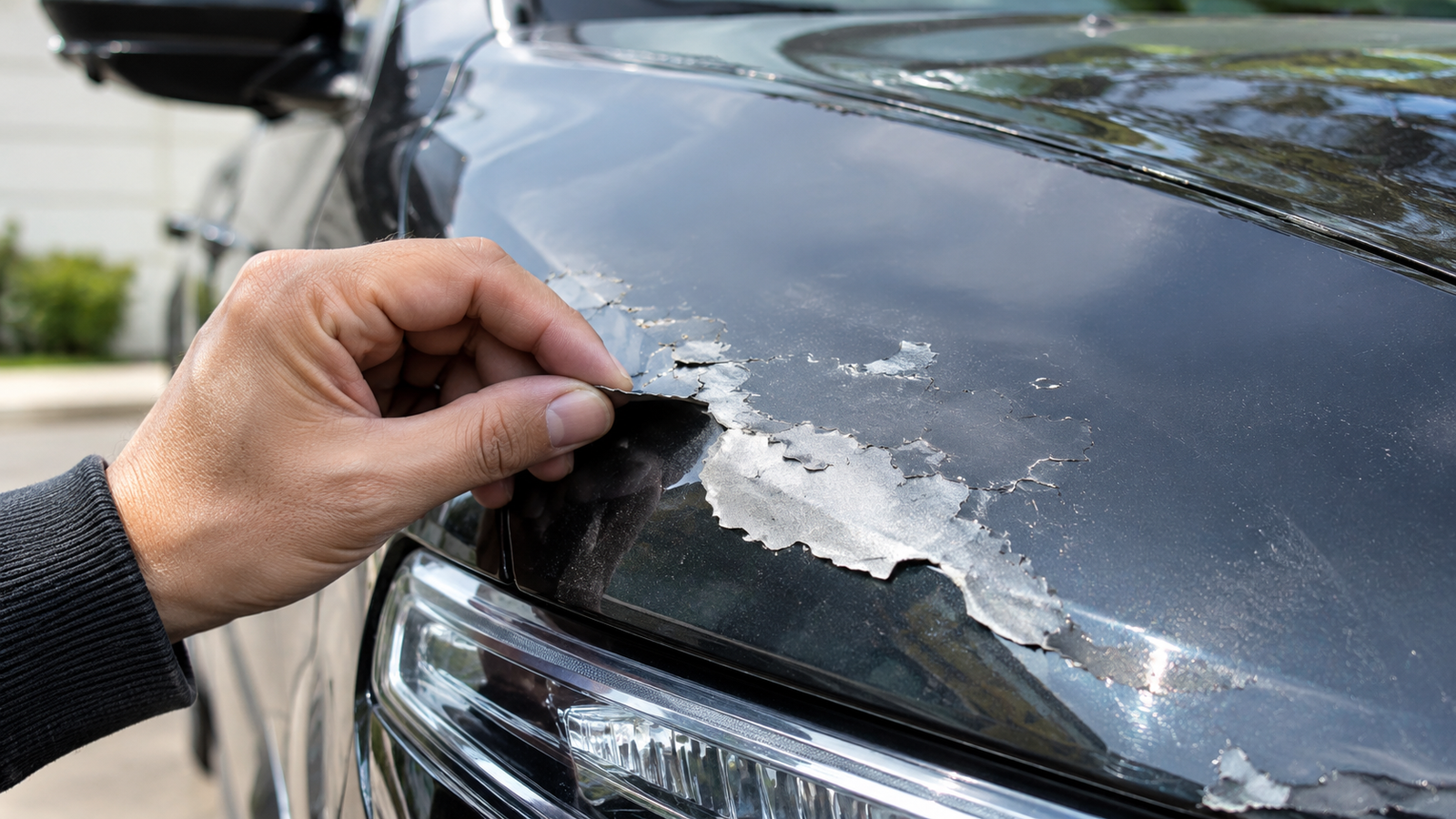
Clear coat peeling is one of the most common paint problems car owners face, especially on vehicles over five years old or those parked outdoors in harsh climates. Left untreated, peeling clear coat exposes the base paint to UV rays, moisture, and road grime, accelerating rust and permanent damage.
This guide walks through what causes clear coat failure, how to diagnose it accurately, and the practical repair options available, from DIY touch-ups to professional resprays, so you can restore your car’s finish and protect its long-term value.
What Causes Clear Coat Peeling on a Car?
A clear coat is the transparent top layer of automotive paint that protects the color coat underneath from UV exposure, oxidation, and environmental contaminants. When this layer breaks down, it separates from the base coat and begins to flake or peel.
Several factors contribute to clear coat failure:
- UV exposure: Prolonged sun exposure breaks down the resins in the clear coat, causing it to become brittle over time.
- Poor original application: Factory defects or a bad aftermarket paint job can leave the clear coat improperly bonded to the base coat.
- Age: Most clear coats are rated to last 10 to 15 years, but climate and maintenance habits affect this significantly.
- Chemical exposure: Bird droppings, tree sap, gasoline spills, and harsh cleaning chemicals can eat through the clear coat.
- Automatic car washes: Abrasive brushes and high-pressure jets can wear down and lift the clear coat over repeated washes.
- Extreme temperature swings: Rapid expansion and contraction between hot and cold cycles stress the paint layers, especially in regions with harsh winters and hot summers.
Understanding the root cause matters because it determines whether a localized repair will hold or whether a full repaint is the more durable, cost-effective solution.
How to Tell If Your Clear Coat Is Peeling (Signs and Diagnosis)
Before starting any repair, it is important to confirm that what you are seeing is genuine clear coat failure and not surface-level oxidation, which is often fixable with polishing alone.
Common signs of clear coat peeling include:
- Visible flakes or curling edges of clear material, usually starting at the roof, hood, or trunk.
- A cloudy, hazy appearance across large panel sections, even after washing.
- Small white or gray spots that look like sun-bleached patches.
- Sections where the paint feels rough or catches on a fingernail.
- Color that looks dull in some areas and glossy in others on the same panel.
A simple diagnostic test is the water test: splash water on the affected area. If the paint underneath still looks glossy and vibrant once wet but dull when dry, the clear coat has likely failed and is no longer sealing the base coat properly. This distinction is what separates a true clear coat repair from a routine detailing job, and it directly shapes the next step you take.
Tools and Materials Needed for a DIY Clear Coat Repair
Having the right supplies on hand before starting prevents mid-project delays and helps achieve a smoother, more professional-looking finish.
For a basic DIY clear coat repair, gather the following:
- Wet/dry sandpaper in 800, 1500, and 2000 grit
- Automotive-grade clear coat spray (brands like Dupli-Color, SEM, or Spray Max are widely used)
- Rubbing compound and polishing compound
- Microfiber towels
- Painter’s tape and masking paper
- Isopropyl alcohol or a wax and grease remover
- A dual-action polisher (optional but improves results)
- Clean water and a spray bottle
- Safety gloves and a dust mask
Using automotive-specific products rather than generic hardware store sealants matters because automotive clear coats are formulated to bond correctly with OEM base coats and resist UV breakdown far better than general-purpose clear sprays.
Step-by-Step Guide: How to Fix Peeling Clear Coat at Home
Once the affected area is diagnosed and supplies are ready, the repair process follows a fairly standard sequence used by detailers and hobbyists alike.
Step 1: Wash and Dry the Panel
Remove dirt, wax, and grease with soap and water, then wipe the area with isopropyl alcohol to strip any remaining residue. Starting with a completely clean surface prevents debris from getting trapped under the new clear coat.
Step 2: Sand the Peeling Area
Using 800-grit sandpaper, feather the edges of the peeling clear coat until it blends smoothly into the surrounding paint. Avoid sanding into the base coat, since going too deep can expose bare metal and create a bigger repair than you started with.
Step 3: Refine With Finer Grit
Move to 1500-grit, then 2000-grit sandpaper to smooth the surface and eliminate visible sanding marks. Working through progressively finer grits is what allows the new clear coat to bond evenly and lay flat.
Step 4: Clean and Mask the Area
Wipe down the panel again and apply painter’s tape around the repair zone to protect surrounding paint from overspray. Taking a few extra minutes here keeps the repair contained to a clean, well-defined area.
Step 5: Apply Clear Coat in Thin Layers
Spray 3 to 4 light coats, allowing 10 to 15 minutes of flash time between coats as directed on the product label. Thin, even layers reduce the risk of runs, drips, or an uneven finish.
Step 6: Let It Cure
Most automotive clear coats need 24 to 48 hours to cure fully before further handling or washing. Rushing this stage is one of the most common reasons DIY repairs fail prematurely.
Step 7: Wet Sand the New Clear Coat
Once cured, wet sand with 2000-grit sandpaper to level the new layer with the surrounding panel. This step removes any texture or unevenness left behind from the spray application.
Step 8: Compound and Polish
Use a rubbing compound followed by a polishing compound to restore gloss and blend the repaired area seamlessly. This is where the repair starts to disappear into the rest of the panel.
Step 9: Apply Wax or Sealant
Finish with a coat of carnauba wax or a synthetic paint sealant to protect the new clear coat and extend its lifespan. A fresh layer of protection helps the repaired area hold up as well as the rest of the vehicle’s finish.
Patience during the curing and polishing stages makes the biggest difference between a repair that looks patched and one that blends invisibly into the original finish.
How Much Does It Cost to Fix Clear Coat Peeling?
Costs vary widely depending on the extent of the damage, the size of the affected area, and whether you choose a DIY approach or professional service. Here’s what drivers across Nixa, Springfield, Ozark, Republic, Battlefield, Rogersville, Strafford, and Willard can realistically expect to pay.
- Small DIY spot repair: $30 to $80 in materials.
- Full DIY panel repair: $80 to $180, factoring in sandpaper, clear coat cans, compounds, and tape.
- Professional single-panel respray: $250 to $700, depending on the shop and region.
- Full vehicle clear coat respray: $900 to $3,000 or more, depending on the make, model, and paint type (metallic and pearl finishes typically cost more to match).
- Insurance coverage: Comprehensive auto insurance sometimes covers clear coat damage if it resulted from environmental events like hail or a falling tree branch, though normal wear from age is generally not covered.
Getting written quotes from two or three local body shops across the Springfield corridor is the most reliable way to compare pricing, labor rates and paint-matching technology vary meaningfully between independent shops in Nixa and Ozark versus dealership service centers in Springfield.
How to Prevent Clear Coat Peeling in the Future
Prevention is far cheaper than repair, and a few consistent habits can significantly extend the life of a car’s clear coat.
Limit UV Exposure With Garage Parking or Car Covers
Park in a garage or use a car cover to limit direct UV exposure. Since UV breakdown is one of the leading causes of clear coat failure, reducing daily sun exposure is one of the most effective long-term protections available.
Choose Hand Washing or Touchless Car Washes
Wash the car by hand or use touchless car washes instead of brush-based automatic washes. Automatic brushes accumulate grit over repeated use, and that grit acts like fine sandpaper against the clear coat every time the car goes through.
Apply Wax or Ceramic Coating Regularly
Apply a quality wax or ceramic coating every three to six months to add a protective barrier. This sacrificial layer absorbs UV rays and environmental contaminants before they can reach the clear coat itself.
Remove Bird Droppings, Tree Sap, and Bug Residue Promptly
Remove bird droppings, tree sap, and bug residue promptly, as these substances are acidic and degrade clear coats quickly. The longer these contaminants sit on a hot panel, the faster they etch into the surface.
Avoid Parking Under Trees
Avoid parking under trees where sap and falling debris are common. This simple habit prevents many of the acidic contaminants mentioned above from ever landing on the paint in the first place.
Use pH-Balanced Car Soap
Use pH-balanced car soap rather than dish soap or household cleaners, which strip protective wax layers. Household cleaners are formulated to cut through grease, which also means they strip away the very protection your clear coat depends on.
Address Small Chips and Scratches Early
Address small chips and scratches early before they expose the base coat to the elements. A small touch-up today is far less expensive and time-consuming than a full panel repair after moisture and UV exposure spread the damage.
These habits are especially useful for owners in regions with intense sun exposure or heavy winter road salt, both of which accelerate clear coat breakdown.
Can You Fix a Clear Coat Peeling Yourself? DIY vs Professional Repair
Whether a DIY fix makes sense depends on the size and location of the damage. Small spots, chips, or a single peeling patch smaller than a few inches are reasonable DIY projects. Widespread peeling across a hood, roof, or multiple panels is almost always better handled by a professional body shop or paint specialist.
| Factor | DIY Repair | Professional Repair |
| Damage size | Small spots or chips | Large panels or multiple areas |
| Cost | $30–$150 in materials | $300–$1,500+ per panel |
| Tools required | Sandpaper, clear coat spray, basic buffer | Spray booth, paint matching system, professional buffer |
| Time investment | A weekend project | 1–5 days depending on shop |
| Finish quality | Good for minor blemishes | Factory-matched, seamless finish |
| Best for | Localized peeling, budget repairs | Widespread damage, resale-value vehicles |
If you are preparing a car for resale or the peeling affects a highly visible panel like the hood or roof, professional refinishing at a certified auto body shop, such as those affiliated with I-CAR or ASE-certified technicians, typically delivers a longer-lasting and more uniform result.
Final Thought
Clear coat peeling is a common but manageable problem when it is caught early and addressed with the right approach. Small, isolated peeling can often be handled with a weekend DIY repair using basic sanding and spray clear coat products, while widespread damage across multiple panels is usually better left to a professional body shop for a factory-quality finish. Whichever route you choose, pairing the repair with consistent preventive care, like garage parking, regular waxing, and prompt cleaning of contaminants, will help protect your investment and keep your car’s paint looking its best for years to come.
FAQs
What Does Clear Coat Peeling Look Like When It First Starts?
Early signs are hazy or cloudy patches on horizontal surfaces like the roof and hood, sometimes with small white specks before actual flaking appears.
Is It Safe To Drive A Car With A Peeling Clear Coat?
Yes, it doesn’t affect drivability, but it exposes the base coat to moisture and UV damage that can eventually lead to rust.
Can Clear Coat Peeling Spread If I Don’t Fix It?
Yes, moisture and air can get under the surrounding clear coat and cause the peeling to expand over time.
Will Polishing Or Buffing Fix Clear Coat Peeling?
No, polishing helps with mild oxidation but can’t reattach a clear coat that has already been lifted, and it may even worsen the peeling.
How Long Does A Clear Coat Repair Last?
A proper DIY repair can last several years, while a professional respray can last 10 years or more when color-matched correctly.
Does Clear Coat Peeling Affect A Car’s Resale Value?
Yes, visible peeling is a cosmetic flaw that can lower resale value, so repairing it beforehand often helps with negotiations.
Can I Use Clear Nail Polish Or Generic Clear Spray Paint Instead Of Automotive Clear Coats?
No, these lack UV inhibitors and flexible resins, so they tend to yellow, crack, or fail quickly.
What Is The Difference Between Clear Coat Peeling And Oxidation?
Oxidation is surface dulling fixable with polishing, while peeling is a deeper failure where the clear coat separates from the base coat and needs sanding and reapplication.
How Do I Match The Clear Coat Repair To The Rest Of The Car’s Finish?
The clear coat is transparent, so matching comes down to blending gloss and texture through sanding and polishing, not color matching.
When Should I Take My Car To A Professional Instead Of Doing It Myself?
If the peeling covers a large area, spans multiple panels, or involves metallic or pearl paint, a professional shop will give a more durable, uniform result.