
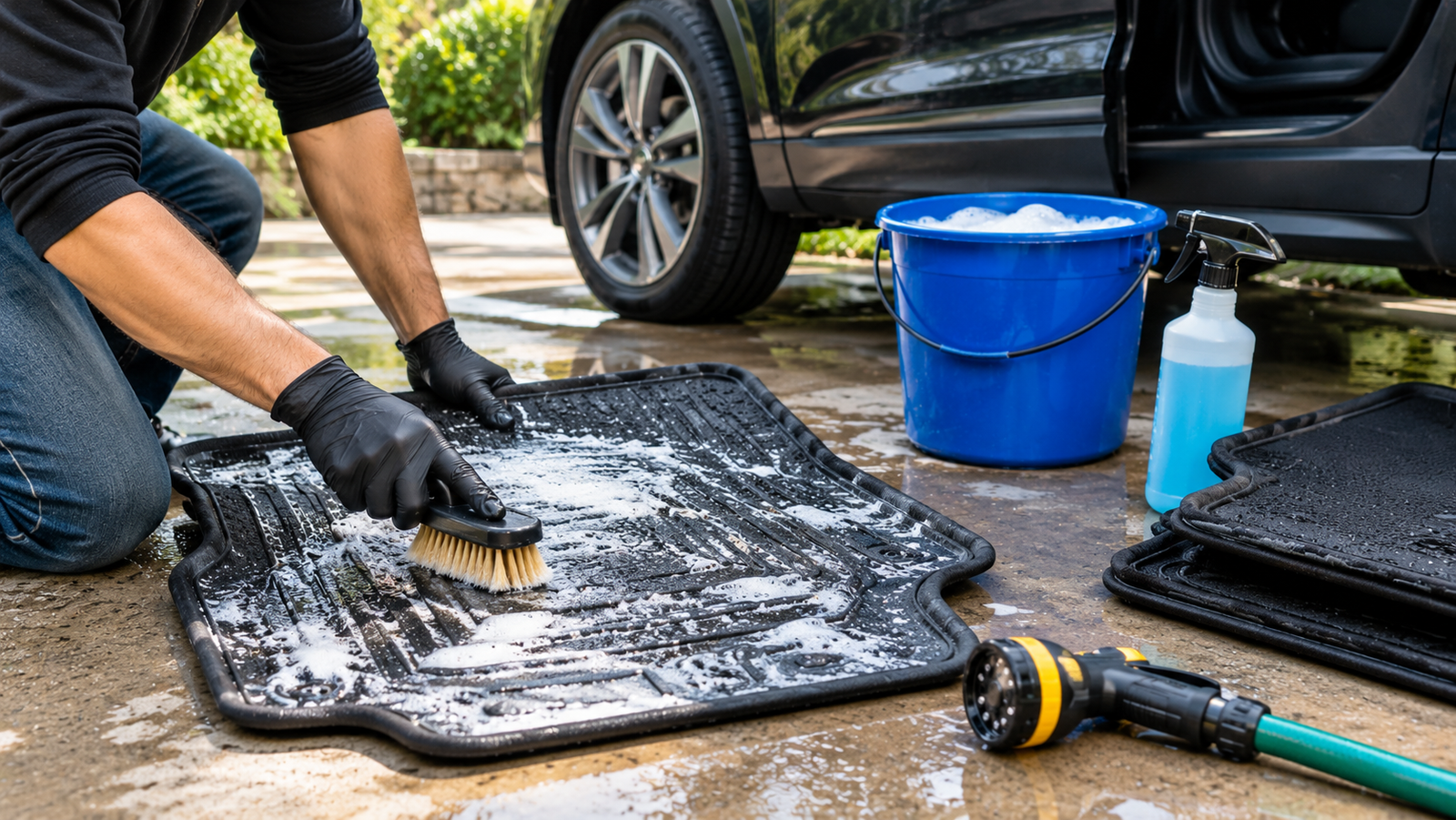
Car floor mats trap dirt, road salt, spilled coffee, and bacteria faster than almost any other part of your vehicle’s interior. Over time, this buildup causes odors, stains, and premature wear that a quick vacuum simply cannot fix.
This guide walks through a complete deep cleaning process for rubber, carpet, and all-weather mats, including the right tools, stain removal techniques, and drying methods that protect your car’s interior air quality and resale value.
Why Deep Cleaning Your Car Floor Mats Matters
A regular vacuum only removes surface debris, leaving ground-in dirt, allergens, and moisture trapped in the mat’s fibers or texture. Deep cleaning goes further, lifting embedded grime that contributes to musty odors and can even affect indoor air quality inside the cabin.
Floor mats are also one of the first things a buyer or passenger notices when they step into a vehicle. Stained or grimy mats make the entire interior feel neglected, even if the rest of the car is spotless. Regular deep cleaning:
- Extends the lifespan of rubber and carpet mats
- Reduces allergens like dust mites and mold spores
- Prevents permanent staining from mud, salt, and spills
- Improves resale value and overall cabin appearance
Understanding why this matters sets the foundation for choosing the right cleaning approach, which depends heavily on the type of mat you own.
Types of Car Floor Mats and How They Affect Your Cleaning Method
Not all floor mats respond to the same cleaning process. Identifying your mat type before you start prevents damage and wasted effort.
| Mat Type | Material | Best Suited Cleaning Method |
| Carpet mats | Woven nylon or polyester fibers | Shampooing, steam cleaning, soft brushing |
| Rubber mats | Solid or textured rubber/vinyl | Pressure rinsing, degreasing, scrubbing |
| All-weather (TPE/TPO) mats | Thermoplastic elastomer | Soap and water, hose rinsing |
| OEM factory mats | Often carpet with rubber backing | Combination method for top and backing |
Carpet mats generally require gentler tools since aggressive scrubbing can fray fibers. Rubber and all-weather mats can tolerate stronger scrubbing and even a garden hose. Once you know your mat category, you can gather supplies suited to that specific material.
Tools and Supplies You’ll Need for Deep Cleaning
Having the right supplies on hand before you begin saves time and prevents mid-task trips to the store. Most items are affordable and widely available at auto parts stores or retailers like Walmart, Target, or Amazon.
Essential supplies include:
- A stiff-bristled brush or carpet cleaning brush
- A shop vacuum or standard vacuum with a hose attachment
- Mild dish soap or a dedicated carpet shampoo (such as Chemical Guys or Meguiar’s)
- A degreaser or all-purpose cleaner (APC) for rubber mats
- A garden hose or pressure washer set to a low setting
- Microfiber towels for drying
- A soft-bristle scrub brush for delicate carpet fibers
- White vinegar and baking soda for natural odor and stain treatment
Once your supplies are ready, the cleaning method itself splits into two main paths depending on whether your mats are rubber-based or carpet-based.
How to Deep Clean Rubber and All-Weather Floor Mats
Rubber and all-weather mats are the easiest to deep clean because they tolerate water, pressure, and stronger cleaning agents without damage.
Step 1: Remove the Mats and Shake Off Loose Debris
Take the mats out of the vehicle and give them a firm shake to knock loose dried mud, sand, and dust before any liquid touches the surface. Doing this first prevents loose debris from turning into a muddy paste once cleaner or water is applied.
Step 2: Vacuum Both Sides Thoroughly
Run a shop vacuum or a standard vacuum with a hose attachment over both the top and underside of each mat. The underside often holds just as much trapped dirt and grit as the visible surface, especially on textured or ridged designs.
Step 3: Apply a Degreaser or All-Purpose Cleaner
Spray an all-purpose cleaner or automotive degreaser evenly across the mat, paying extra attention to grooves, edges, and heel areas where grime tends to concentrate. Let the solution sit for a minute or two so it can start breaking down oils and ground-in dirt.
Step 4: Scrub With a Stiff-Bristled Brush
Work a stiff-bristled brush into the textured grooves and raised patterns, using firm circular motions to lift embedded debris. Rubber and all-weather materials can handle more aggressive scrubbing than carpet, so it’s fine to apply real pressure on stubborn spots.
Step 5: Rinse Thoroughly
Rinse the mat completely using a garden hose or a pressure washer set to a low pressure setting, making sure no soap or degreaser residue remains. Leftover cleaner residue can attract more dirt over time or leave a dull, sticky film once dry.
Step 6: Shake Off Excess Water and Set Aside to Dry
Give the mat a final shake to remove standing water, then set it aside in a well-ventilated or sunny spot to dry completely before reinstalling. Skipping this step risks trapping moisture against the vehicle’s floor pan once the mat goes back in.
For heavily soiled mats, a soak in warm water mixed with dish soap for 15 to 20 minutes before scrubbing helps loosen caked-on grime. This method works well whether you are cleaning at home, using a driveway hose setup, or visiting a self-service car wash bay. With rubber mats handled, carpet mats require a more delicate touch.
How to Deep Clean Carpet Floor Mats
Carpet mats hold onto dirt, pet hair, and odors more stubbornly than rubber because debris settles deep between fibers.
Follow this process for the best results:
- Vacuum thoroughly, using a crevice tool along the edges and stitching.
- Apply a carpet shampoo or a mixture of warm water and mild dish soap.
- Work the solution in using a soft-bristle brush in small circular motions.
- Let the solution sit for 5 to 10 minutes to break down embedded dirt.
- Blot with a clean microfiber towel to absorb the loosened grime and moisture.
- Rinse the brush frequently and repeat on heavily soiled sections.
Avoid soaking carpet mats completely, since excess moisture trapped in the fibers or backing can lead to mold growth or a lingering musty smell. A steam cleaner, if available, offers an even deeper clean by loosening dirt with heat while pulling moisture back out through suction. With the main cleaning complete, the next challenge is tackling stubborn stains and odors that a standard wash may not fully remove.
How to Remove Tough Stains, Salt Residue, and Odors
Certain contaminants, like winter road salt, coffee spills, and pet accidents, need targeted treatment beyond general cleaning.
Salt Stains
Mix one part white vinegar with one part water, apply the solution directly to the white, chalky residue, and blot with a clean cloth. Vinegar’s acidity breaks down the salt crystals effectively, lifting the residue without leaving rubber or carpet fibers damaged.
Coffee or Food Stains
Blot the stain immediately with a mixture of dish soap and warm water, working from the outside of the stain inward to avoid spreading it further. Acting quickly matters here, since coffee and food stains set deeper into carpet fibers the longer they’re left untreated.
Pet Odors or Accidents
Sprinkle baking soda over the affected area and let it sit for several hours to absorb moisture and odor at the source. Vacuum thoroughly before shampooing the spot, since removing the dry baking soda first prevents it from turning into a paste during the wash step.
General Musty Smell
A light baking soda dusting left overnight on carpet mats naturally neutralizes odors without added chemicals. This works especially well for mats that smell stale from trapped humidity rather than a specific spill or stain.
For persistent or old stains, a repeat treatment is often necessary since one application may only lighten the discoloration. Once stains and odors are addressed, proper drying becomes the final step before mats go back into the vehicle.
Drying and Reinstalling Your Floor Mats the Right Way
Improper drying is one of the most common reasons mats develop odors again shortly after cleaning.
Best practices for drying include:
- Hang rubber and all-weather mats over a railing, fence, or drying rack in direct sunlight when possible, since UV exposure helps kill lingering bacteria.
- Lay carpet mats flat in a well-ventilated area, flipping periodically to dry both sides evenly.
- Use a wet/dry shop vacuum to pull excess moisture out of carpet fibers before air drying, cutting drying time significantly.
- Avoid placing mats back in the vehicle while damp, as trapped moisture against the vehicle’s carpet or floor pan can encourage mold growth.
Full drying typically takes 4 to 12 hours depending on humidity, sunlight, and airflow. Once mats are completely dry, reinstall them making sure rubber backing sits flat and factory retention clips or hooks are properly aligned. With the cleaning cycle complete, it helps to know how often this process should be repeated.
How Often Should You Deep Clean Car Floor Mats?
Cleaning frequency depends on driving habits, climate, and how the vehicle is used day to day.
| Usage Type | Recommended Deep Cleaning Frequency |
| Daily commuter, dry climate | Every 2 to 3 months |
| Daily commuter, snowy/salted roads | Monthly during winter season |
| Family vehicle with children or pets | Every 4 to 6 weeks |
| Rarely driven or garaged vehicle | Every 6 months |
Light vacuuming should happen weekly or biweekly regardless of mat type, with a full deep clean layered in on the schedule above. Vehicles used for rideshare services or frequent passenger transport generally benefit from more frequent cleaning to maintain a professional appearance. Knowing your ideal frequency helps prevent the common mistakes many people make when they skip steps or rush the process.
Common Mistakes to Avoid When Cleaning Floor Mats
Even a well-intentioned cleaning routine can backfire if a few key details are overlooked.
- Using too much water on carpet mats: Excess moisture soaks into the padding and backing, leading to mold and lingering odors.
- Skipping the pre-vacuum step: Wet dirt turns into mud when cleaner is applied before loose debris is removed.
- Using harsh chemicals on rubber: Some solvents can cause rubber and TPE mats to crack, fade, or become brittle over time.
- Reinstalling mats while damp: This traps moisture against the vehicle floor and undoes much of the cleaning effort.
- Ignoring the underside of mats: Dirt and moisture collect underneath just as much as on top, especially on carpet-backed OEM mats.
Avoiding these pitfalls ensures the time invested in deep cleaning actually pays off with longer-lasting, fresher-smelling results.
Final Thought
Deep cleaning car floor mats is a simple but often overlooked part of vehicle maintenance that pays off in a fresher, healthier, and better-looking interior. By identifying your mat type, using the right tools, treating stains and odors properly, and drying mats fully before reinstalling them, you can keep your car’s interior looking and smelling like new for years. Building this into a seasonal or monthly routine, based on your driving habits, is the most practical way to stay ahead of dirt, salt, and stains before they become permanent.
FAQs
Can I Put Car Floor Mats In The Washing Machine?
No, for rubber or all-weather mats. Only thin, all-carpet mats without rubber backing may be machine-safe on a gentle cycle.
What Household Products Work Best For Cleaning Rubber Floor Mats?
Mild dish soap and warm water for everyday dirt, diluted white vinegar for salt residue, and a degreaser for grease or oil stains.
How Do I Get Rid Of A Musty Smell In Carpet Floor Mats?
Sprinkle baking soda over the mat, let it sit overnight, then vacuum. Shampoo afterward if the smell lingers.
Is It Safe To Pressure Wash Car Floor Mats?
Yes for rubber and all-weather mats on a low setting. Carpet mats are better cleaned with a garden hose or gentle sprayer.
How Long Does It Take For Floor Mats To Fully Dry After Cleaning?
Usually 4 to 12 hours. Rubber mats dry faster; carpet mats take longer and benefit from a shop vacuum pass first.
What’s The Difference Between Cleaning Oem Mats And Aftermarket All-Weather Mats?
OEM mats are carpet-based and need gentler shampoo cleaning. Aftermarket all-weather mats are more durable and can handle hosing and scrubbing.
Can Vinegar Damage Car Floor Mats?
Diluted vinegar (1:1 with water) is safe for most mats. Full-strength vinegar left too long can occasionally dull rubber finishes.
Why Do My Floor Mats Still Smell After Cleaning Them?
Trapped moisture is usually the cause. Make sure mats are fully dry before reinstalling, and use baking soda for stubborn odors.
Should I Clean The Carpet Underneath My Floor Mats Too?
Yes. Dust, sand, and moisture build up underneath mats too, so vacuum and spot-clean the carpet during each deep clean.
What’s The Best Way To Protect Floor Mats Between Deep Cleanings?
Vacuum weekly, shake mats out often, and treat spills immediately. All-weather mats also help during wet or snowy seasons.