
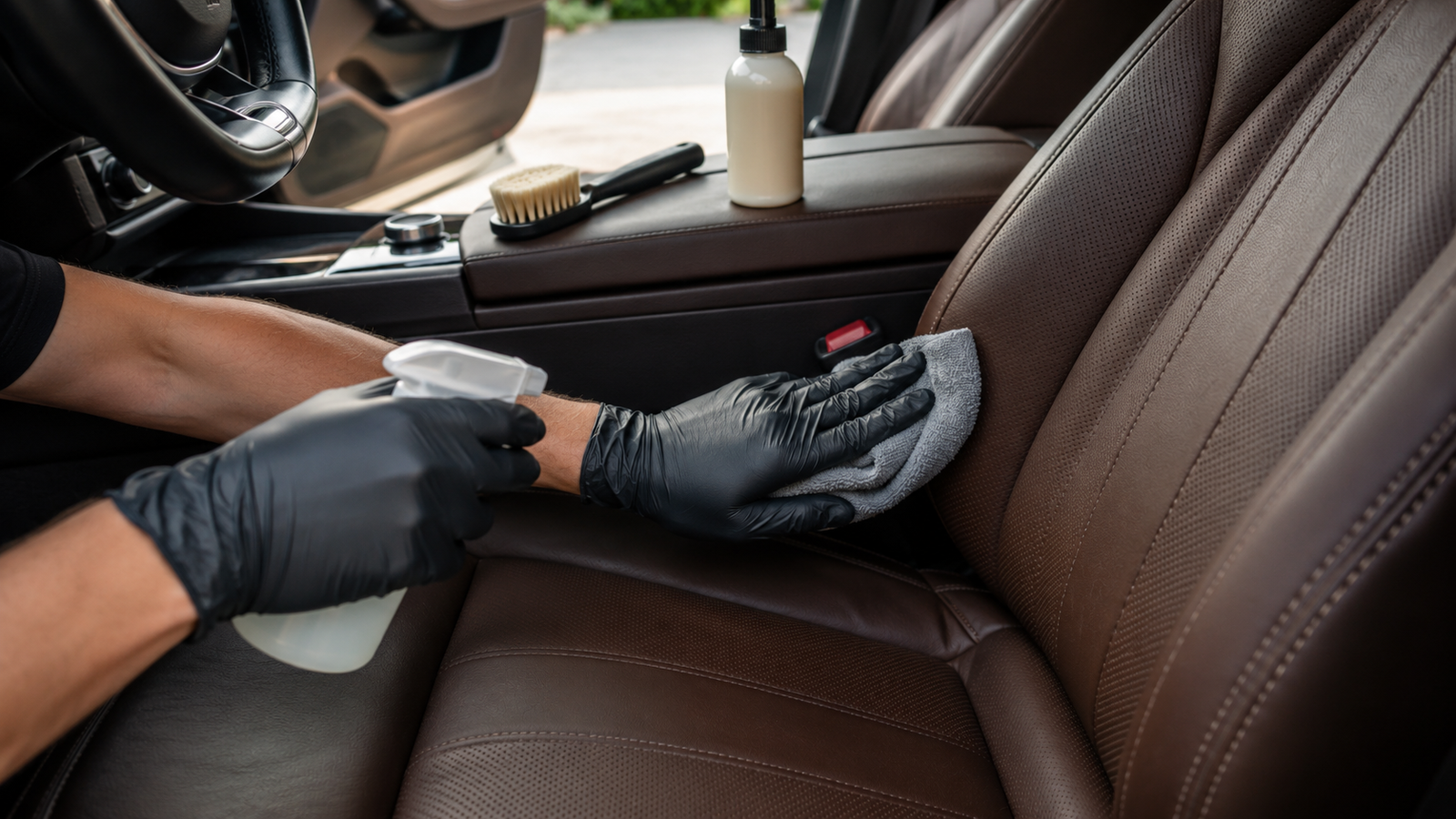
Leather car seats add comfort, style, and resale value to any vehicle. But without proper care, they can crack, fade, and lose their texture fast. This guide covers everything from basic cleaning routines to deep conditioning methods, so your seats stay supple, fresh, and long-lasting. From pigmented factory leather to premium aniline hides, this guide gives you the exact process detailers use.
What You Need Before You Start Cleaning Leather Car Seats
Before applying any product, gather the right tools. Using the wrong materials, like harsh household cleaners or paper towels, can damage the leather’s surface coating and lead to premature wear.
Essential supplies:
- pH-balanced leather cleaner (specifically formulated for automotive leather)
- High-quality leather conditioner
- Two or three soft microfiber cloths
- A soft-bristle detailing brush
- A vacuum cleaner with a brush attachment
- Leather-safe detailing spray bottle (avoid metal nozzles)
Avoid products that contain alcohol, bleach, or ammonia. These strip the natural oils from the hide and cause surface dryness. Always do a patch test on a hidden area, such as the underside of a seat, before applying any cleaner to visible surfaces.
How to Remove Dirt and Debris from Leather Car Seats
The first step in any leather cleaning routine is dry removal, and most people skip it. Running a wet cloth directly over dusty or debris-covered leather grinds particles into the grain, causing micro-scratches that dull the finish over time.
What to do first:
- Use a vacuum with a soft brush attachment to cover the full seat surface
- Work slowly over stitching lines, seam gaps, and side bolsters, these areas trap the most crumbs, dust, and grit
- Use a soft-bristle detailing brush to loosen stubborn debris from textured grain areas before vacuuming
- Never use a stiff brush, it scratches the leather coating
Pay attention to these zones:
- The headrest contact area collects body oils and hair product residue
- The seat-to-backrest seam traps food particles and fine dust
- Side bolsters, high-friction area where debris embeds deepest
This dry pre-clean takes less than 5 minutes but makes a significant difference. It protects the leather surface coating during the wet cleaning phase and reduces the risk of permanent surface damage.
Skip this step and even the best leather cleaner cannot undo the abrasion damage caused by trapped debris.
Step-by-Step Guide: How to Clean Leather Car Seats Properly
Cleaning leather seats without a proper sequence can do more harm than good. Here is the exact 7-step process professional detailers follow to clean automotive leather safely, effectively, and without causing surface damage.
- Step 1 – Pre-vacuum the surface
Run the vacuum over the entire seat, including headrests, side bolsters, and seat backs, to lift loose debris. - Step 2 – Apply leather cleaner
Spray a pH-balanced automotive leather cleaner onto a microfiber cloth (not directly onto the seat). This gives you better control and prevents over-saturation. - Step 3 – Scrub gently in circular motions
Work the cleaner into the leather using a soft-bristle brush or cloth in slow, circular movements. Focus on soiled zones like the driver’s seat bolster and headrest contact areas. - Step 4 – Wipe clean
Use a separate dry microfiber cloth to lift the loosened dirt and excess product. - Step 5 – Allow to dry
Let the seats air dry fully before moving to conditioning. Avoid direct sunlight or using a heat gun to speed up drying this can stiffen the leather. - Step 6 – Apply leather conditioner
Once dry, apply a high-quality leather conditioner in a thin, even layer. This restores moisture, prevents cracking, and keeps the leather supple. - Step 7 – Buff to finish
Buff gently with a clean cloth to remove any excess conditioner and bring out a subtle sheen.
Following all 7 steps in order every time, rushing the process or skipping conditioning after cleaning is the single most common reason leather seats crack, stiffen, and lose their finish within a few years. Full process takes 30 to 45 minutes and protects your investment long-term.
How to Remove Common Stains from Leather Car Seats
Leather seats stain easily, body oils, spilled coffee, ink marks, and dye transfer from dark clothing are among the most common causes of permanent discoloration. The key is knowing exactly which treatment works for each stain type before you reach for the wrong product and make the damage worse.
| Stain Type | Recommended Treatment | What to Avoid |
| Food and grease | pH-balanced cleaner + soft brush | Dish soap or all-purpose sprays |
| Ink | Isopropyl alcohol (diluted) on a cotton swab | Rubbing aggressively |
| Coffee or tea | Damp microfiber cloth, blot immediately | Saturating the leather |
| Body oils and sweat | Leather cleaner + conditioner after | Skipping conditioning step |
| Mold or mildew | Diluted white vinegar on a cloth | Bleach or harsh disinfectants |
For stubborn stains that don’t respond to basic treatment, a professional auto detailer may be the better option. Attempting aggressive DIY stain removal on aged or vented leather can cause permanent discoloration.
Best Leather Conditioners and Cleaners to Use
Choosing the right products is just as important as the cleaning technique itself. The automotive leather care market offers a range of options from budget-friendly everyday cleaners to professional-grade conditioning systems.
What to look for in a leather conditioner:
- Water-based formula with natural oils like lanolin or neatsfoot oil
- UV protection to prevent fading from sun exposure
- Non-greasy finish that absorbs fully into the hide
- Compatible with both pigmented and aniline leather
Top-rated options used by professional detailers:
- Leather Honey Leather Conditioner, known for deep penetration and long-lasting protection
- Chemical Guys Leather Cleaner and Conditioner Kit, good for routine maintenance
- Meguiar’s Gold Class Leather Conditioner, widely available and trusted for pigmented leather
Avoid silicone-based products. They coat the surface rather than nourishing the leather, giving a temporary shine while causing long-term brittleness.
How to Clean Perforated Leather Car Seats
Perforated leather requires a slightly different approach due to the small holes across the surface. Excess moisture and cleaning solution can seep into the foam padding beneath, leading to mold growth and unpleasant odors.
Key tips for perforated leather:
- Use a dry or barely damp microfiber cloth rather than a wet one
- Spray cleaner onto the cloth rather than directly onto the seat
- Avoid foam-based cleaners that can get trapped in the perforations
- Use a soft detailing brush to lift debris from the tiny holes without saturating them
- Allow extra drying time before applying conditioner
This type of leather is common in ventilated seat systems and premium trims from manufacturers like BMW, Mercedes-Benz, Lexus, and Audi.
How Often Should You Clean Leather Car Seats
The frequency of cleaning depends on how often the vehicle is used and how much traffic the interior sees. Here is a general maintenance schedule:
| Maintenance Task | Recommended Frequency |
| Light wipe-down | Every 2 weeks |
| Full leather cleaning | Every 1-2 months |
| Deep conditioning | Every 3-4 months |
| UV protectant application | Every 6 months |
High-use vehicles, such as rideshare cars, family SUVs, or work trucks, may need more frequent attention. Seats exposed to direct sunlight through unshaded parking also need conditioning more regularly to combat UV-related drying and fading.
According to detailing industry data, leather seats that are conditioned at least 3-4 times per year last significantly longer and maintain their original color and texture far better than those left untreated.
Common Mistakes to Avoid When Cleaning Leather Car Seats
Even experienced car owners make these errors. Avoiding them can extend the life of your leather seats by years.
Mistakes that damage leather:
- Using baby wipes or household cleaning sprays, these contain surfactants and fragrances harmful to leather coatings
- Over-wetting the surface during cleaning
- Applying conditioner to dirty leather (always clean first)
- Skipping the conditioning step after cleaning
- Using dark-colored cloths that may transfer dye onto light-colored seats
- Cleaning in direct sunlight, which speeds up drying and causes streaking
Small oversights in the cleaning routine can compound over time, leading to surface cracking, color fading, and stitching breakdown.
How to Protect Leather Car Seats After Cleaning
Cleaning is only half the job. Long-term protection requires an ongoing care routine that shields leather from UV rays, heat cycles, and daily friction.
Protection tips:
- Apply a UV-protective leather sealant after conditioning
- Use windshield sunshades when parked in open lots to reduce interior heat
- Place seat covers when transporting pets or children for extended periods
- Avoid wearing rough denim or sharp accessories that cause abrasion on seat bolsters
- Park in shaded areas when possible, interior temperatures in parked cars can reach over 70°C (160°F) on hot days, accelerating leather degradation
A well-maintained leather interior can last the full lifespan of a vehicle. Neglected leather typically begins showing visible wear within 3-5 years.
Final Thoughts
Leather car seats are an investment and like any investment, they reward consistent care. The cleaning process does not need to be complicated or expensive. With a pH-balanced cleaner, a good conditioner, and the right technique, you can keep your seats looking fresh, feeling soft, and holding their value for years to come.
Start with a proper vacuuming routine, build in monthly wipe-downs, and condition every few months. Avoid shortcuts and harsh products. Your leather will thank you with decades of durability and comfort.
FAQs
Can I Use Dish Soap To Clean Leather Car Seats?
No. Dish soap is too alkaline for leather and can strip away the protective coating and natural oils. Always use a pH-balanced leather cleaner designed for automotive use.
How Do I Remove Ink Stains From Leather Seats?
Dab a small amount of diluted isopropyl alcohol onto a cotton swab and gently work the stain from the outside inward. Never rub aggressively. Follow up with a conditioner to restore moisture.
Is Olive Oil Good For Leather Car Seats?
No. While olive oil is sometimes suggested as a home remedy, it can go rancid over time, attract bacteria, and leave greasy residue. Use a dedicated leather conditioner instead.
How Do I Prevent Leather Seats From Cracking?
Regular conditioning every 3-4 months is the most effective method. Conditioning replenishes the natural moisture content of the hide and prevents the dryness that leads to surface cracking.
Can I Use A Steam Cleaner On Leather Car Seats?
Steam cleaning at high temperatures can damage or warp leather. If you use a steam cleaner, keep it on a low-moisture, low-heat setting and test on a hidden area first.
What Is The Difference Between Pigmented And Aniline Leather In Cars?
Pigmented leather has a protective top coating that makes it more resistant to stains and fading most vehicle leather is pigmented. Aniline leather is untreated and more absorbent, requiring gentler products and more frequent care.
How Do I Clean White Or Light-Colored Leather Seats?
Use a gentle leather cleaner and avoid dark-colored clothes. A soft detailing brush works well for seam areas. Apply a UV protectant regularly to prevent yellowing from sun exposure.
Can Mold Grow On Leather Car Seats?
Yes, especially if moisture gets trapped in perforations or under seat covers. A diluted white vinegar solution applied with a damp cloth can remove light mold growth. For heavy mold, professional detailing is recommended.
How Long Does It Take For A Leather Conditioner To Absorb?
Most conditioners need around 15-30 minutes to absorb. Wipe off any excess with a clean cloth after that window to prevent a greasy surface feel.
What Is The Best Way To Maintain Leather Seats In Extreme Heat Climates?
In hot climates, use a UV-blocking window tint, apply a UV-protective leather sealant every 6 months, and park in shaded or covered areas whenever possible. Interior heat is one of the leading causes of leather degradation worldwide.