
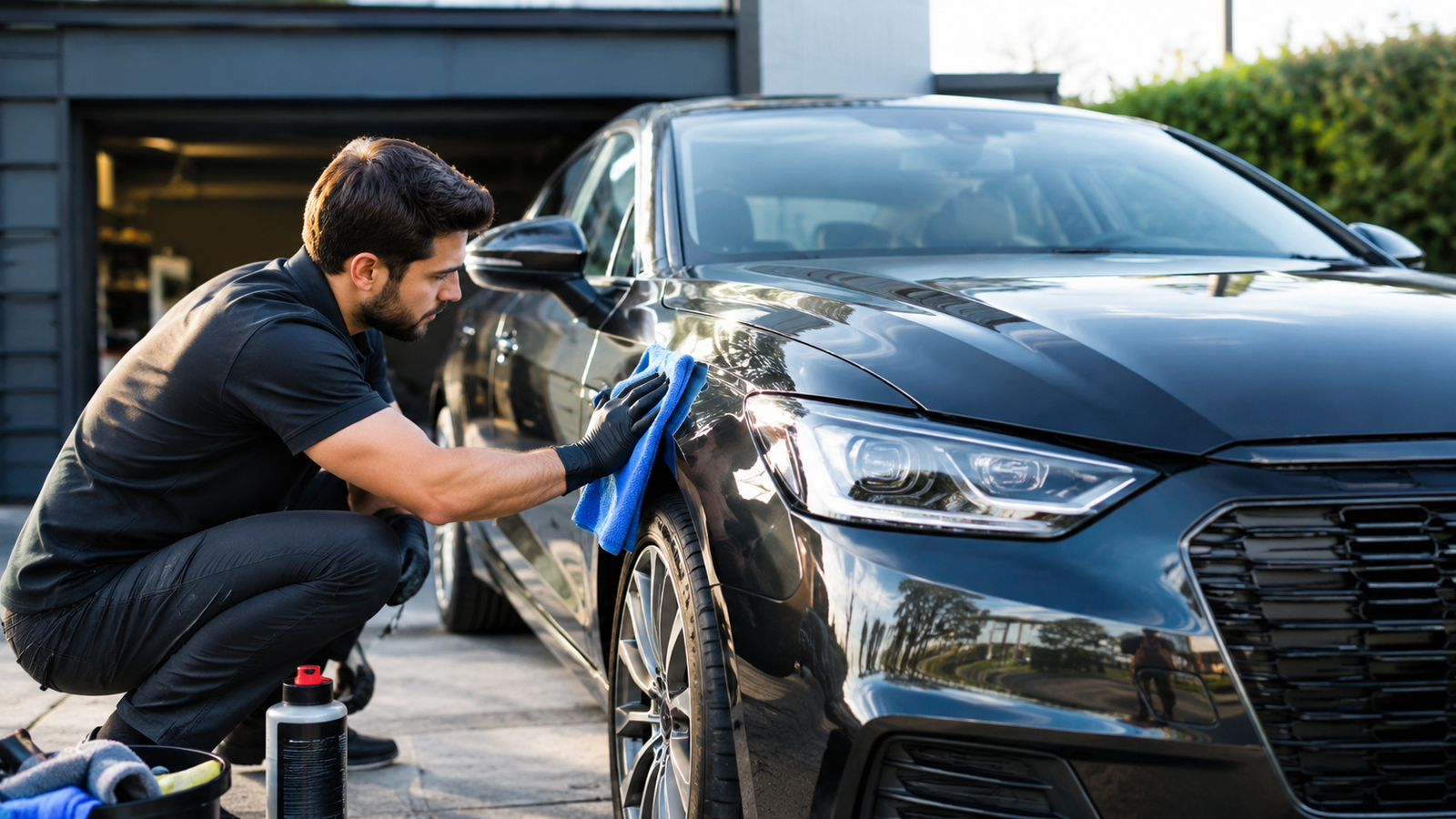
Most car sellers focus on mechanical condition and pricing, but overlook the one thing buyers judge first: how the car looks and smells. Professional car detailing directly targets that perceived condition, influencing whether a buyer makes a full-price offer or negotiates down.
This guide breaks down exactly how much resale value detailing can add, which services deliver the strongest return on investment, and how to time your detail strategically before listing or heading to a trade-in appraisal.
What Is Car Detailing and Why It Matters for Resale Value
Car detailing is a deep, methodical cleaning process that goes far beyond a standard car wash. It typically includes interior shampooing, leather conditioning, engine bay cleaning, paint correction, and protective coatings applied to both the exterior and interior surfaces.
Resale value is shaped by two things: mechanical condition and perceived condition. A well-maintained engine matters, but most buyers can’t inspect that in a parking lot. What they can see immediately is paint gloss, upholstery cleanliness, odor, and overall presentation. Detailing directly targets that perceived condition, which is often the deciding factor between a buyer making an offer or walking away.
Services like CarMax, Carvana, and traditional dealerships all use trained appraisers who factor in cosmetic condition alongside vehicle history reports from sources like CARFAX or AutoCheck. A clean, well-kept car signals fewer hidden problems, even when the mechanical condition is identical to a neglected one.
This sets the stage for the core question: does that cosmetic investment actually translate into more money at the sale?
Does Car Detailing Actually Increase Resale Value? Direct Answer
Yes, car detailing increases resale value in most cases, typically by improving both the offer, price and the speed of sale. Detailing does not add value the way a new transmission would, but it removes the visual red flags that cause buyers or dealers to negotiate the price down.
Industry estimates from appraisal guides such as Kelley Blue Book (KBB) and Edmunds suggest that a thorough detail can raise a vehicle’s private-party or trade-in value by roughly 3% to 8%, depending on the car’s age, condition, and market segment. On a $20,000 vehicle, that translates to an added $600 to $1,600, often for a detailing cost of $150 to $400.
The bigger effect is psychological. A clean, fresh-smelling interior and glossy paint create a sense of trust. Buyers assume a well-presented car has been well maintained mechanically too, even before a test drive or inspection.
That said, detailing has limits. It won’t offset major mechanical issues, accident history, or high mileage. Understanding where its impact is strongest helps you decide how much to invest before selling.
How Much Value Can Detailing Add to Your Car?
The dollar impact of detailing depends heavily on the vehicle’s starting condition and market position. Here’s a general breakdown based on typical private-sale and trade-in scenarios:
| Vehicle Condition Before Detailing | Estimated Value Increase | Typical Detailing Cost |
| Heavily soiled interior, dull paint | 5% to 8% | $250 to $500 |
| Moderately dirty, minor scratches | 3% to 6% | $150 to $350 |
| Already clean, needs polish only | 1% to 3% | $100 to $200 |
| Pet hair, smoke odor, stains | 4% to 7% (odor removal critical) | $200 to $450 |
Vehicles with strong odor problems, especially from smoking or pets, see some of the sharpest value recovery after detailing because odor is one of the fastest deal breakers for buyers. A 2023 survey by CarGurus found that interior cleanliness ranked among the top three factors buyers use to judge a used car’s overall condition, alongside mileage and exterior paint quality.
Luxury and near-new vehicles tend to see a smaller percentage increase because they typically start in better condition, but the dollar amount can still be significant given their higher base price.
Interior vs Exterior Detailing: Which Matters More to Buyers
Both interior and exterior detailing influence buyer perception, but research and appraiser feedback consistently point to the interior as the higher-impact area.
| Interior Detailing | Exterior Detailing |
| Deep carpet and upholstery shampooing | Hand wash and clay bar treatment |
| Leather cleaning and conditioning | Paint correction to remove swirl marks and light scratches |
| Dashboard and vent cleaning | Wax, sealant, or ceramic coating application |
| Odor elimination, often through ozone treatment | Wheel and tire cleaning |
| Window and glass polishing from the inside | Engine bay degreasing |
A buyer sitting in a car for a test drive spends far more time noticing the seats, dashboard, and smell than they do inspecting paint under direct sunlight. That’s why appraisers at franchises like CarMax often weigh interior conditions heavily during their inspection process.
Exterior work still matters, especially paint correction, since deep scratches or oxidized paint suggest neglect. Ideally, a pre-sale detail addresses both areas, but if budget is limited, prioritizing the interior generally produces a better return.
Key Detailing Services That Boost Resale Value Most
Not every detailing add-on delivers the same return. Some services matter far more to buyers and appraisers than others.
- Odor removal: Smoke, mildew, and pet odors are among the fastest ways to lose a sale or trigger a lowball offer.
- Paint correction: Removing swirl marks and light scratches restores gloss without the cost of a full repaint.
- Headlight restoration: Cloudy, yellowed headlights make a car look older than it is; restoration costs under $100 in most shops.
- Engine bay cleaning: A clean engine bay signals maintenance discipline to mechanically minded buyers.
- Ceramic coating or sealant: Adds shine and protection, useful for buyers who plan to keep the car long-term.
- Upholstery and carpet shampooing: Removes stains and allergens, directly affecting first impressions.
Services like full paint protection film (PPF) installation or extensive wet sanding are usually not worth the cost purely for resale purposes, since they’re expensive and buyers rarely pay a premium proportional to that investment.
Professional Detailing vs DIY: What’s Worth It Before Selling
Both approaches can work, but they suit different budgets and timelines.
| Factor | Professional Detailing | DIY Detailing |
| Typical cost | $150 to $450, depending on vehicle size and service level | $30 to $80 in supplies |
| Equipment access | Ozone generators, steam cleaners, paint correction machines | Limited to consumer-grade tools |
| Time required | Usually 2 to 5 hours, handled by the shop | Often 4 to 8+ hours of personal labor |
| Consistency of results | High, backed by trained technicians | Variable, depends on skill level |
| Risk of damage | Low, when done by an experienced detailer | Higher, especially with paint correction |
| Best suited for | Sellers with a tight deadline or limited time | Budget-conscious sellers with time to spare |
A practical middle ground many sellers use: handle basic cleaning tasks themselves, such as vacuuming and trash removal, then hire a professional for odor treatment and paint correction, where skill and equipment make the biggest difference.
Whichever route you choose, timing the work correctly is just as important as the quality of the job itself.
Timing Your Detailing: When to Detail Before Selling or Trading In
Detailing too early risks the car collecting dust, pet hair, or new scuffs before a buyer ever sees it. Detailing too late means rushing the job or skipping steps that need time to properly cure, such as ceramic coatings.
A general timeline that works well:
- 2 to 3 weeks before listing: Schedule paint correction and any coating application, since these need time to cure properly.
- 3 to 5 days before listing or showings: Complete interior deep cleaning and odor treatment.
- The day before or morning of a showing: Do a quick wash, vacuum, and wipe-down to keep everything fresh.
For trade-ins at a dealership, a detail within the same week as the appraisal appointment tends to produce the best results, since dealers assess the car’s condition on the spot.
Once the timing is right, it’s worth weighing the cost of detailing against the value it’s expected to return.
Detailing Costs vs Return on Investment
Understanding car detailing costs and ROI can help sellers choose the right services to improve vehicle appeal, value, and resale potential.
| Detailing Package | Average Cost | Typical Value Added | Estimated ROI |
| Basic wash and interior vacuum | $45 to $90 | $100 to $200 | 100% to 160% |
| Full interior and exterior detail | $120 to $280 | $380 to $850 | 150% to 300% |
| Detail plus paint correction | $275 to $475 | $650 to $1,350 | 130% to 250% |
| Detail plus ceramic coating | $450 to $1,100 | $550 to $1,400 | 20% to 60% |
The sweet spot for most sellers is a full interior and exterior detail without premium add-ons like ceramic coating, which tends to appeal more to long-term owners than resale buyers. Spending more doesn’t always mean earning more, so matching the service level to the car’s age and market segment is key.
Common Mistakes That Reduce Resale Value Despite Detailing
Even a good detail can fall short if these mistakes happen alongside it:
- Masking odors instead of removing them. Air fresheners cover smoke or mildew smell temporarily, but buyers often notice it returning within minutes.
- Ignoring small mechanical fixes. A detailed car with a check engine light on still raises red flags.
- Over-polishing thin clear coat. Aggressive paint correction on older vehicles can strip protective coating and cause long-term damage.
- Skipping the trunk and glove compartment. Buyers often check these areas, and clutter or grime here undercuts an otherwise clean impression.
- Detailing too far in advance. A car sitting for weeks after detailing collects dust and loses that fresh appeal.
Avoiding these pitfalls helps make sure the money and effort spent on detailing actually shows up in the final offer.
Final Thought
Car detailing does increase resale value in most situations, typically adding several hundred dollars for a modest investment, while also helping the car sell faster. The biggest returns come from interior cleaning and odor removal, followed by exterior paint correction. Skip expensive add-ons that mainly benefit long-term owners, time the work strategically before listing or trade-in appointments, and address any lingering mechanical issues alongside the cosmetic work. A clean, well-presented vehicle consistently earns stronger offers than an identical car left untouched.
FAQs
How Much Value Does Detailing Actually Add To A Used Car?
Typically 3% to 8% of the car’s value, per estimates from guides like Kelley Blue Book. On a $20,000 car, that’s roughly $600 to $1,600.
Is It Worth Detailing A Car Before Trading It In At A Dealership?
Yes. Appraisers weigh cosmetic condition heavily, and a clean, odor-free interior usually raises the trade-in offer more than the detailing cost.
Does Ceramic Coating Increase Resale Value?
Not much. It adds shine and protection but rarely pays back its full cost, since it mainly appeals to long-term owners.
How Soon Before Selling Should I Get My Car Detailed?
Interior cleaning and odor treatment 3 to 5 days before listing. Paint correction or coatings 2 to 3 weeks ahead so they can cure.
Can Detailing Remove Smoke Or Pet Odor Completely?
Usually yes, with ozone treatment or enzyme cleaners. Severe, long-term odor may need more than one treatment.
Is Professional Detailing Worth It Compared To Washing The Car Myself?
Generally, yes, before a sale. Pros have equipment like steam cleaners and correction tools that deliver more consistent results.
Does Detailing Help With Carfax Or Vehicle History Reports?
No, it doesn’t change the report itself, but a clean car makes buyers trust that report more during inspection.
What Detailing Services Give The Best Return On Investment?
Interior deep cleaning, odor removal, and headlight restoration. They’re affordable and fix the issues buyers notice fastest.
Does Paint Correction Remove Deep Scratches?
Only light swirl marks and shallow scratches. Deep scratches down to the base coat need touch-up paint or bodywork instead.
Should I Detail An Older Car With High Mileage Before Selling It?
Yes, often even more valuable here, since buyers lean harder on cosmetic cues to judge how well an older car was maintained.