
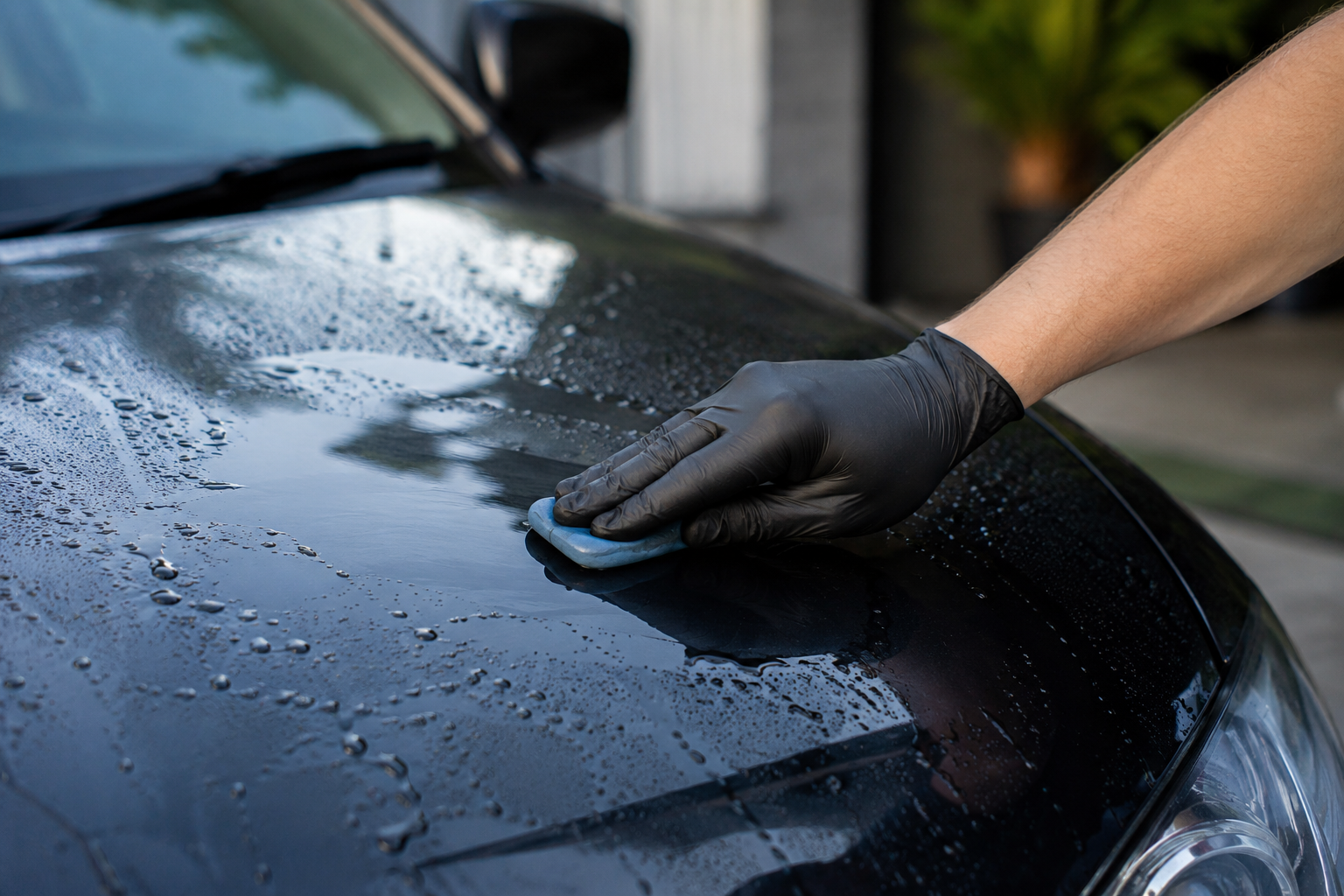
Even a freshly washed car can feel rough to the touch, almost like fine sandpaper, and that texture is a warning sign your paint is holding onto contaminants soap and water simply can’t remove. Paint decontamination is the detailing process that strips away these bonded particles, restoring a glass-smooth finish and protecting your vehicle’s clear coat from long-term damage.
This guide explains what the process involves, why it matters, and how often you should have it done.
What Is Paint Decontamination in Car Detailing?
Paint decontamination refers to the removal of embedded surface contaminants that regular washing cannot lift away. These particles physically bond to the clear coat rather than simply sitting on top of it, which is why a standard wash with car shampoo leaves them behind.
Common contaminants include:
- Iron particles from brake dust that oxidize and etch into paint
- Industrial fallout from factories, refineries, and construction sites
- Tree sap and tar picked up from parking under trees or on fresh asphalt
- Overspray from nearby paint jobs or road resurfacing
- Mineral deposits left behind by hard water spots
- Bug residue and bird droppings with acidic properties that eat into clear coat
A true decontamination service typically combines a chemical decontamination step, using an iron remover and tar remover, with a mechanical step known as claying, where a detailing clay bar or clay mitt physically shears off anything the chemicals could not dissolve. Together, these steps leave paint completely smooth and free of embedded debris.
Understanding the terminology matters because many shops advertise a wash and wax package as “full detailing” when it skips decontamination entirely. Knowing the difference helps you ask for the right service and avoid paying for surface-level cleaning that doesn’t address bonded contaminants underneath.
Why Does Your Car’s Paint Need Decontamination?
Paint decontamination isn’t a cosmetic luxury; it’s a preventative maintenance step that protects the investment you’ve made in your vehicle’s finish. Skipping it allows contaminants to keep working against the clear coat every single day, even when the car looks clean from a distance.
Here’s what happens when contamination is left untreated:
- Iron particles oxidize and expand. Brake dust contains ferrous metal that rusts on contact with moisture, causing tiny orange specks that swell and create micro pits in the clear coat.
- Acidic residues etch the surface. Bird droppings, bug splatter, and tree sap are chemically aggressive and can permanently etch paint within hours in hot weather.
- Bonded grit causes swirl marks. Any contaminant sitting proud of the paint surface acts like sandpaper the moment a wash mitt or microfiber towel passes over it, creating fine scratches that dull the finish.
- Wax and sealant won’t bond properly. Protective coatings need a clean, smooth substrate to adhere to. Applying wax over contaminated paint traps particles underneath and shortens the coating’s lifespan.
- Resale value takes a hit. A dull, contaminated finish is one of the first things a potential buyer or appraiser notices, and it can lower a vehicle’s perceived condition even if the paint has no scratches.
The Society of Automotive Engineers and paint manufacturers like PPG and BASF both recognize surface contamination as a leading cause of premature clear coat failure, which is why decontamination is considered a foundational step, not an optional add-on, in professional detailing.
Signs Your Car Needs Paint Decontamination
You don’t need a trained eye to spot most contamination. A few simple checks at home can tell you whether it’s time for a decontamination service.
| Test | What to Do | What It Means |
| Plastic bag test | Wash the car, then run your hand wrapped in a sandwich bag over the paint | Roughness or grittiness indicates bonded contaminants |
| Visual inspection | Look closely at the hood and roof in direct sunlight | Orange or rust colored specks suggest embedded iron particles |
| Water beading check | Spray water on the surface after washing | Uneven beading or sheeting patterns can point to a contaminated, uneven surface |
| Reflection test | Check how sharply lights or the sky reflect off the paint | A hazy or dull reflection often means the surface isn’t smooth |
If any of these tests show a positive result, the paint is likely due for a decontamination wash before any polishing, waxing, or ceramic coating work is done. Applying protective products over contaminated paint is one of the most common mistakes DIY detailers and even some quick lube style car washes make.
The Paint Decontamination Process Step by Step
A proper decontamination service follows a specific sequence, and skipping steps or doing them out of order can reduce effectiveness or even introduce new scratches.
- Pre-rinse and foam wash: The car is rinsed to remove loose dirt, then washed with a pH neutral car shampoo using the two bucket method to minimize the risk of marring.
- Chemical iron removal: An iron remover is sprayed on painted surfaces and wheels. As it reacts with ferrous contaminants, it turns purple or dark red, a visual cue that it’s dissolving embedded brake dust.
- Tar and adhesive removal: A dedicated tar remover or citrus based solvent breaks down sap, tar, and asphalt residue without damaging the clear coat.
- Clay bar or clay mitt treatment: Using a lubricant spray as a slip agent, the clay is glided across every panel to physically lift any remaining bonded particles. Detailers often re-inspect the surface with the plastic bag test between sections.
- Final rinse and inspection: The vehicle is rinsed again to remove any clay residue, then dried with a clean microfiber towel and checked under LED inspection lighting.
- Follow up protection: Once the paint is fully decontaminated, it’s ready for polishing, sealant, wax, or a ceramic coating, all of which perform better and last longer on a clean substrate.
This process typically takes 45 minutes to two hours depending on the vehicle’s size and contamination level, and it’s a standard part of paint correction and ceramic coating prep packages offered by most professional detailing studios.
How Often Should You Decontaminate Your Car’s Paint?
The right frequency depends on your driving environment, parking situation, and climate, but most detailing professionals recommend a full decontamination treatment every three to six months for daily drivers.
Factors that increase how often you’ll need it:
- Urban or industrial commutes expose paint to higher fallout and pollution levels
- Street parking near trees increases sap and bird dropping exposure
- Heavy stop-and-go traffic generates more brake dust than highway driving
- Coastal climates introduce salt air, which accelerates contamination and corrosion
- Vehicles without a ceramic coating or paint sealant lose their protective barrier faster and pick up grime more easily
Cars protected by a quality ceramic coating or paint protection film can often stretch decontamination intervals to once or twice a year, since the coating creates a slicker, less porous surface that resists bonding in the first place. Even so, a light clay treatment before reapplying wax or sealant is good practice regardless of how well protected the paint is.
Final Thought
Paint decontamination is one of the most overlooked yet essential steps in keeping a car’s finish healthy long term. It goes beyond a standard wash to remove the embedded iron particles, tar, sap, and industrial fallout that quietly damage clear coat over time. Making decontamination part of your regular car care routine, whether through a professional detailer or a well-executed DIY clay treatment, protects your paint’s gloss, smoothness, and resale value. If it’s been more than six months since your last treatment, running the plastic bag test today is a simple way to find out if your car is due.
FAQs
What’s The Difference Between Paint Decontamination And A Regular Car Wash?
A regular car wash removes loose dirt, dust, and grime sitting on top of the paint. Paint decontamination targets particles that have chemically or physically bonded to the clear coat, such as iron deposits and tree sap, using specialized products like iron removers and detailing clay that a standard shampoo and sponge cannot lift.
Can I Decontaminate My Car’s Paint At Home?
Yes, DIY paint decontamination is very achievable with an iron remover spray, a tar remover, a clay bar or clay mitt, and a quality lubricant. The key is working in small sections, keeping the surface well lubricated to avoid marring, and following the steps in order: wash first, then chemical treatment, then claying.
Does Paint Decontamination Remove Scratches Or Swirl Marks?
No. Decontamination only removes surface-bonded contaminants, not scratches, swirl marks, or oxidation in the clear coat itself. Those issues require a separate paint correction process using polishing compounds and a dual-action or rotary polisher.
How Do I Know If My Car Has Iron Contamination?
Iron contamination often shows up as tiny orange or rust colored specks, especially on the hood, roof, and trunk. Spraying an iron remover on the surface is the most reliable test, since the product will turn purple or dark red as it reacts with embedded ferrous particles from brake dust.
Is Clay Bar Treatment Safe For All Types Of Paint?
Clay bar treatment is safe for factory clear coat and most modern automotive finishes when used correctly with adequate lubrication. However, it should be used cautiously on older single-stage paint, matte finishes, or vinyl wraps, where a synthetic clay towel or a gentler decontamination method is often recommended instead.
Should I Decontaminate My Car Before Applying Wax Or Ceramic Coating?
Yes, this step is essential. Wax, sealant, and ceramic coatings all need a completely clean and smooth surface to bond properly. Applying any of these products over contaminated paint traps particles underneath, weakens adhesion, and can shorten the lifespan of the protection significantly.
How Much Does Professional Paint Decontamination Cost?
Pricing varies by vehicle size, contamination level, and region, but professional decontamination services typically range from $75 to $200 as a standalone service, or are bundled into paint correction and ceramic coating packages that often start around $300 to $600.
Can Contaminated Paint Cause Permanent Damage?
Yes, if left untreated long enough. Iron particles can oxidize and create micro-pitting, while acidic contaminants like bird droppings and bug splatter can etch through the clear coat into the base color layer, especially in hot weather. Permanent etching often requires paint correction or, in severe cases, repainting the affected panel.
What’s The Difference Between A Chemical Decontamination And A Clay Bar Treatment?
Chemical decontamination uses products like iron removers and tar removers to dissolve specific types of bonded contaminants. Clay bar treatment is a mechanical process that physically shears off whatever remains, including contaminants that chemical products alone cannot break down. Most thorough decontamination services use both methods together.
How Long Does A Paint Decontamination Service Take?
For a standard sedan or SUV, a full decontamination service typically takes 45 minutes to two hours, depending on how much contamination is present and whether it’s a standalone service or part of a larger detailing or paint correction package.